From a technical standpoint, waterproof boots are definitively more durable than water-resistant boots. This is a direct result of their construction; to achieve a truly waterproof seal that can withstand submersion, manufacturers must use more robust materials and sealing techniques designed for the most challenging conditions.
The core difference isn't just about water, it's about the level of engineering. Waterproofing is a complete system designed to be impervious, which inherently requires more durable construction, while water-resistance is a surface-level feature offering temporary protection.
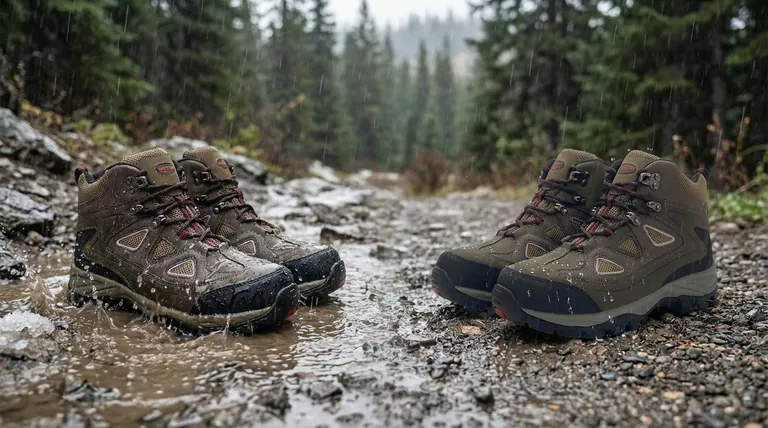
What "Waterproof" Actually Means
To be labeled waterproof, a boot must provide a complete, impenetrable barrier against moisture. This goes far beyond a simple surface coating.
A Sealed Internal System
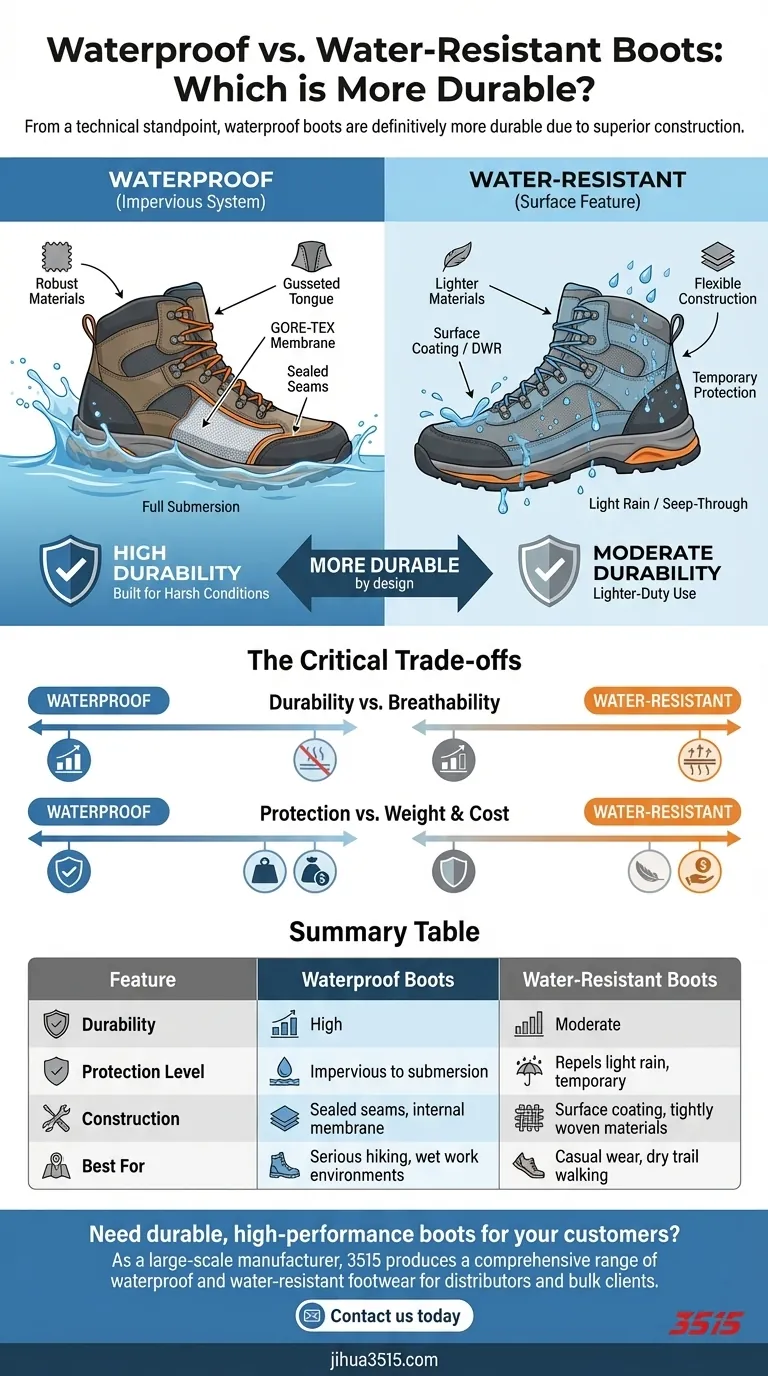
True waterproof boots often incorporate a dedicated inner membrane or bootie, with materials like GORE-TEX being a common example. This layer acts as a final barrier, ensuring no water can reach your foot.
Impervious Construction
Every component is designed to block water. This includes sealed seams, gusseted tongues (webbing that connects the tongue to the upper), and water-impermeable glues and stitching. A waterproof boot is engineered to handle full submersion for extended periods without leaking.
The Durability Connection
The materials required to create this sealed system—like synthetic membranes, robust treated leathers, and heavy-duty rubber—are inherently tougher. The entire boot is built with the expectation that it will be used in harsh, wet, and abrasive environments, leading to superior overall durability.
Understanding "Water-Resistant"
Water-resistant (often used interchangeably with water-repellent) describes a lower level of protection. It is a feature, not an impenetrable system.
A Surface-Level Defense
These boots can repel water on contact, causing it to bead up and roll off. This is typically achieved through tightly woven materials or a surface coating like a Durable Water Repellent (DWR) finish.
The Point of Failure
This protection is temporary. Under sustained exposure to rain, or if submerged, water will eventually saturate the material and seep through the seams. Think of it like a basic raincoat versus a deep-sea diving suit.
Built for Lighter Duty
Water-resistant boots are not designed for the same extreme conditions. Because they don't require a complete internal membrane, they can be made from lighter, more flexible materials. This construction is less durable by design, as it's intended for less demanding use cases.
The Critical Trade-offs
Choosing between these two types is not just about durability; it's about matching the boot's capabilities to your intended use.
Durability vs. Breathability
The very membrane that makes a waterproof boot impervious to water can also trap sweat and heat. While modern materials are constantly improving, a water-resistant boot will almost always offer better breathability, making it more comfortable in dry, warm conditions.
Protection vs. Weight and Cost
The advanced materials and complex construction of waterproof boots make them heavier and more expensive. Water-resistant boots are typically lighter, more flexible, and more affordable, making them a practical choice for less intense activities.
Making the Right Choice for Your Needs
Selecting the correct boot means aligning its technical specifications with your goals.
- If your primary focus is maximum protection and durability: Choose waterproof boots for serious hiking, stream crossings, or working in consistently wet environments.
- If your primary focus is everyday comfort and light protection: Choose water-resistant boots for casual city wear, dry trail walking, or situations where you only anticipate light rain.
- If your primary focus is breathability and a lighter feel: Water-resistant boots provide superior ventilation and are more comfortable for activities in dry or warm climates.
Ultimately, understanding this distinction ensures your footwear is an asset, not a liability, for your intended activity.
Summary Table:
| Feature | Waterproof Boots | Water-Resistant Boots |
|---|---|---|
| Durability | High (built for harsh conditions) | Moderate (lighter-duty use) |
| Protection Level | Impervious to submersion | Repels light rain, temporary |
| Construction | Sealed seams, internal membrane (e.g., GORE-TEX) | Surface coating, tightly woven materials |
| Best For | Serious hiking, wet work environments | Casual wear, dry trail walking |
Need durable, high-performance boots for your customers? As a large-scale manufacturer, 3515 produces a comprehensive range of waterproof and water-resistant footwear for distributors, brand owners, and bulk clients. Our advanced production capabilities ensure every pair is built to last in the toughest conditions. Contact us today to discuss your specific needs and leverage our expertise in durable boot manufacturing!
Visual Guide
Related Products
- Premium Wholesale Waterproof Safety Boots High Performance Protection for Industrial Markets
- High Performance Fire-Retardant Waterproof Safety Boots
- Wholesale Premium Waterproof Nubuck Safety Shoes Boots
- Premium Flame-Retardant Waterproof Safety Boots and Shoes
- Durable Waterproof Rain Boots | Custom Manufacturer for Wholesale & Brands
People Also Ask
- What weather and chemical protections do premium boots offer? Your Complete Guide to Safety & Performance
- Why are waterproof safety boots recommended for certain work environments? Essential Protection for Wet & Hazardous Jobs
- What are the primary protective functions of industrial safety boots in oil palm plantations? Master Rough Terrain Safety
- Why are oil-resistant and anti-slip properties critical for industrial safety boots? Expert Outsole Engineering Guide
- What are the best types of shoes for different gardening conditions? Find Your Perfect Match.