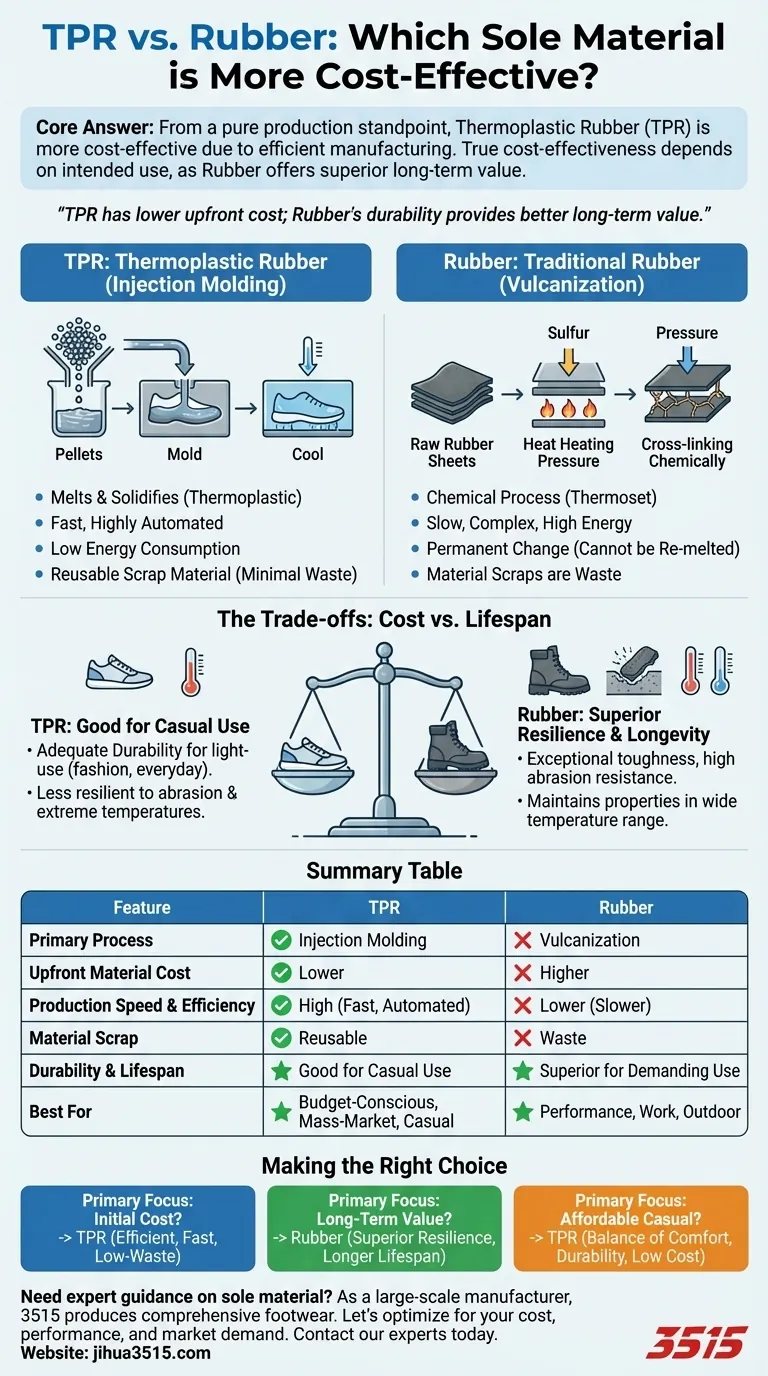
From a pure production standpoint, Thermoplastic Rubber (TPR) is the more cost-effective sole material. Its lower cost is primarily due to a more efficient and less energy-intensive manufacturing process compared to traditional rubber, making it a go-to choice for budget-conscious and mass-market footwear.
While TPR offers a lower upfront cost, true cost-effectiveness depends entirely on the intended use. Rubber's superior durability and performance often translate to better long-term value in demanding applications, making the initial price only one part of the equation.
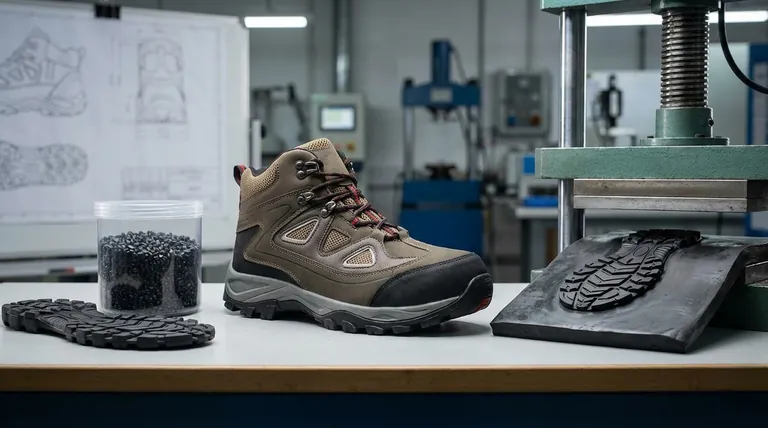
The Core Reason for the Cost Difference: Manufacturing
The fundamental price disparity between TPR and rubber is rooted in how they are made. The two materials undergo vastly different production processes, which directly impacts labor, energy, and material waste costs.
TPR: The Advantage of Injection Molding
TPR is a thermoplastic, meaning it can be melted down with heat and then solidified by cooling without chemical change. This property allows for a highly efficient process called injection molding.
Pellets of TPR are melted and injected into a sole-shaped mold. The process is fast, highly automated, and requires relatively low energy. Crucially, any scrap material can be re-melted and reused, significantly minimizing waste.
Rubber: The Intensity of Vulcanization
Traditional rubber, on the other hand, is a thermoset material. It must undergo a chemical process called vulcanization, where it's heated with sulfur to create strong cross-links between polymer chains.
This process is more complex, slower, and consumes far more energy than injection molding. Once rubber is vulcanized, it cannot be melted down and reformed, meaning any manufacturing scraps are waste.
Understanding the Trade-offs: Cost vs. Lifespan
A lower initial price does not always mean a product is more "cost-effective." The true value is determined by comparing the upfront cost to the product's functional lifespan.
TPR's Durability Profile
TPR soles offer adequate durability for casual, light-use footwear like fashion sneakers or everyday shoes. Their wear resistance is good for the price, but they are less resilient than rubber against heavy abrasion or extreme temperatures.
Rubber's Superior Resilience
Vulcanized rubber is known for its exceptional toughness and longevity. It offers superior abrasion resistance, meaning it wears down much more slowly under friction. This makes it the standard for performance, work, and outdoor footwear where durability is non-negotiable.
The Impact of Environment
Rubber maintains its physical properties, like grip and flexibility, across a much wider range of temperatures. TPR can become stiff and brittle in the cold or overly soft in high heat, which can impact both comfort and a shoe's lifespan.
Making the Right Choice for Your Goal
Your definition of "cost-effective" must align with your specific performance needs and priorities.
- If your primary focus is minimizing initial manufacturing cost: TPR is the clear winner due to its efficient, fast, and low-waste injection molding process.
- If your primary focus is long-term value and user satisfaction: Rubber is the superior investment, as its resilience against wear and environmental factors leads to a much longer product lifespan.
- If your primary focus is creating affordable, casual footwear: TPR provides an excellent balance of comfort, acceptable durability, and low cost for non-demanding, everyday use.
Ultimately, choosing the right material requires matching its inherent production costs and performance characteristics to your specific goals.
Summary Table:
| Feature | Thermoplastic Rubber (TPR) | Traditional Rubber |
|---|---|---|
| Primary Manufacturing Process | Injection Molding | Vulcanization |
| Upfront Material Cost | Lower | Higher |
| Production Speed & Efficiency | High (Fast, Automated) | Lower (Slower, More Complex) |
| Material Scrap | Reusable | Waste |
| Durability & Lifespan | Good for Casual Use | Superior for Demanding Use |
| Best For | Budget-Conscious, Mass-Market, Casual Footwear | Performance, Work, Outdoor Footwear |
Need expert guidance on the right sole material for your footwear line?
As a large-scale manufacturer, 3515 produces a comprehensive range of footwear for distributors, brand owners, and bulk clients. Our production capabilities encompass all types of shoes and boots. We can help you navigate material selection to optimize for cost, performance, and market demand, ensuring your products are both competitive and high-quality.
Contact our experts today for a consultation and let's build better footwear together.
Visual Guide
Related Products
- Wholesale Waterproof Tactical Boots Custom Suede & High-Traction Soles
- Wholesale Breathable Perforated Leather Derby Shoes with Modern Comfort Sole
- Wholesale Modern Perforated Leather Derby Shoes with Chunky Sole for Custom Branding
- Durable Rubber Sole Outdoor Shoes Wholesale & Custom Manufacturing
- Wholesale Tactical Boots High-Traction & Reflective for Bulk & Brand Orders
People Also Ask
- What waterproof technology is used in tactical boots? Unlock All-Weather Performance & Protection
- What are the advantages and disadvantages of waterproof tactical boots? A Guide to the Key Trade-Offs
- What is the significance of waterproof functionality in tactical boots? Essential for Health & Performance
- What is the role of professional 3D medical imaging software in optimizing tactical boot design and performance?
- What features enhance breathability and comfort in tactical boots? A Guide to Superior Footwear Performance