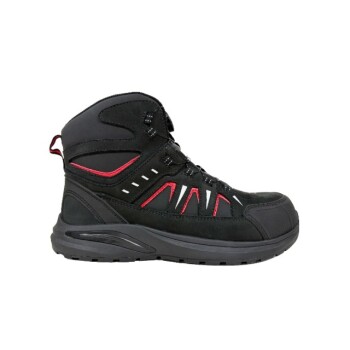
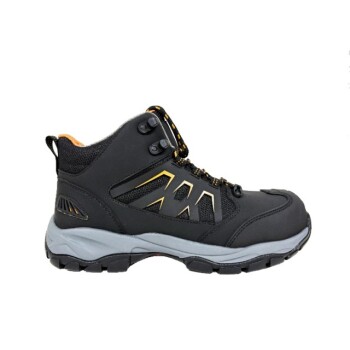
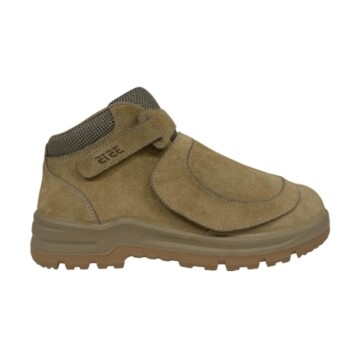
Metal protective toecaps create a specific hazard when the internal cushioning meant to shield the foot fails. The risk centers on the hard rear edge of the steel cap; if the internal padding is too thin or degrades from wear, this rigid edge digs directly into the skin of the dorsal foot (the top of the foot).
While steel toecaps are essential for impact protection, they become a liability if the internal lining wears down. This exposes the foot to the hard metal edge, creating a pressure point that frequently leads to ulcers in workers who lack pain sensation, such as those with diabetes.
The Mechanics of the Injury
The "Rigid Edge" Problem
Metal toecaps, typically constructed from steel, are designed to remain unyielding under heavy impact.
However, this rigidity creates a distinct hard metal edge where the cap ends inside the shoe.
Without a sufficient buffer, this edge acts as a focal point for mechanical pressure against the soft tissue of the foot.
The Critical Role of Internal Padding
To prevent injury, safety shoes rely on internal padding to separate the steel edge from the skin.
If this padding is initially insufficient due to poor design, the risk exists from the first day of wear.
More commonly, this padding is worn down over time through long-term use, gradually reducing the protective barrier.
Direct Dorsal Pressure
Once the padding is compromised, the metal edge exerts continuous mechanical trauma on the dorsal foot.
This friction and pressure occur with every step as the shoe flexes and the foot moves against the now-exposed edge.
The Hidden Risk for Vulnerable Populations
Loss of Pain Perception
This mechanical trauma is particularly dangerous for workers with diabetes.
Due to neuropathy, these individuals often suffer from a loss of pain perception in their extremities.
The "Silent" Ulcer formation
Because the worker cannot feel the metal edge digging into their skin, they do not adjust their gait or change shoes.
This allows the mechanical trauma to continue unnoticed until a high-frequency ulcer forms on the top of the foot.
Understanding the Safety Trade-off
Protection vs. Pressure Risks
You must recognize that the very feature providing safety (the rigid steel shell) introduces a new risk factor regarding soft tissue integrity.
While the toecap protects against crushing injuries from above, it introduces a rigid boundary inside the shoe that flexible materials do not have.
The False Sense of Security
A common pitfall is assuming that a safety shoe remains protective indefinitely.
The steel cap may remain intact for years, but the soft internal components degrade much faster.
Ignoring the condition of the internal lining turns a protective device into a source of injury.
Ensuring Safety and Comfort
To mitigate these risks, you must evaluate both the equipment and the user's specific health profile.
- If your primary focus is Equipment Maintenance: regularly inspect the internal lining of safety shoes to ensure the padding covering the metal edge has not thinned or worn away.
- If your primary focus is Worker Health (specifically Diabetes): implement strict monitoring for employees with neuropathy, as they cannot rely on pain signals to warn them of edge pressure.
True foot safety requires maintaining the buffer between the rigid steel shield and the vulnerable skin beneath it.
Summary Table:
| Factor | Description | Risk Level |
|---|---|---|
| Rigid Edge Design | The hard rear edge of the steel cap creates a sharp mechanical boundary. | High |
| Padding Degradation | Internal lining wears down over time, exposing the foot to the metal edge. | Critical |
| Neuropathy/Diabetes | Workers with loss of pain sensation cannot feel the edge digging into skin. | Severe |
| Repetitive Motion | Continuous friction during walking accelerates skin breakdown and ulceration. | Moderate |
Ensure Maximum Protection for Your Workforce with 3515 Footwear
Don't let your safety equipment become a hazard. As a large-scale manufacturer serving distributors and brand owners, 3515 offers comprehensive production capabilities for all footwear types, anchored by our flagship Safety Shoes series. We understand the critical importance of internal padding durability and ergonomic design to prevent dorsal pressure injuries.
Our extensive portfolio covers work and tactical boots, outdoor shoes, training shoes, and sneakers, as well as Dress & Formal shoes to meet your diverse bulk requirements. We provide high-quality manufacturing standards that ensure the protective barrier between the rigid steel shield and the wearer's skin remains intact through long-term use.
Ready to upgrade your safety footwear supply chain? Contact us today to discuss our bulk manufacturing solutions and how we can add value to your brand with superior safety engineering.
References
- Sunetra Mondal, Riddhi Dasgupta. Prevalence and predictors of infected diabetic foot ulcers (DFU) and DFU-related osteomyelitis amongst industrial workers wearing occupational safety footwear. DOI: 10.1038/s41598-025-86013-y
This article is also based on technical information from 3515 Knowledge Base .
Related Products
- Advanced KPU Athletic Safety Shoe with Steel Toe Cap Anti-Slip Rotary Lacing System
- Wholesale Safety Footwear Manufacturer for Bulk & Custom OEM Orders
- Durable Steel Toe Safety Boots Wholesale & Custom Manufacturing
- Wholesale Mesh Steel Toe Safety Shoes with Dial Closure Factory Production
- Heavy Duty Nubuck Safety Boots Safety Shoes for Global Distribution
People Also Ask
- What are the key differences between steel toe and composite toe caps? Choose the Right Safety for Your Job
- What impact do steel toe caps have on toe skin health? Prevent Friction and Pressure in Your Safety Shoes
- What are the primary protective functions of safety shoes with steel toes in the automotive repair industry?
- What type of safety shoe is recommended for workers exposed to heavy machinery? Steel Toe Boots for Ultimate Protection
- How does defining specific friction interface models in FEA assist in predicting safety shoe toe cap failure modes?