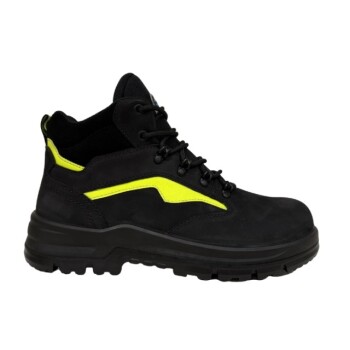
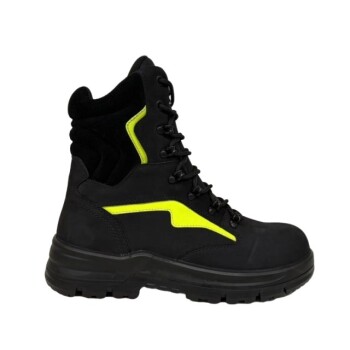
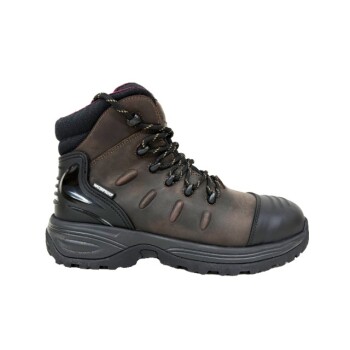
The use of safety work boots is a requirement across a vast range of industries, far beyond just construction. Professions that commonly mandate this protective footwear include emergency services like firefighters and EMS, heavy industries such as manufacturing and mining, skilled trades from logging to landscaping, and specialized fields like agriculture, food processing, and chemical handling. The specific type of boot required is dictated by the unique hazards of each job.
The critical factor is not the job title, but the specific set of risks present in the work environment. The right safety boot is a precise tool, chosen to counter distinct hazards, from impact and puncture to chemical spills and electrical shock.

Why Safety Boots Are Non-Negotiable: A Hazard-Based View
The need for safety footwear is fundamentally about risk mitigation. Different professions face different dangers, and boot design has evolved to provide specialized protection for each.
Protection from Impact and Compression
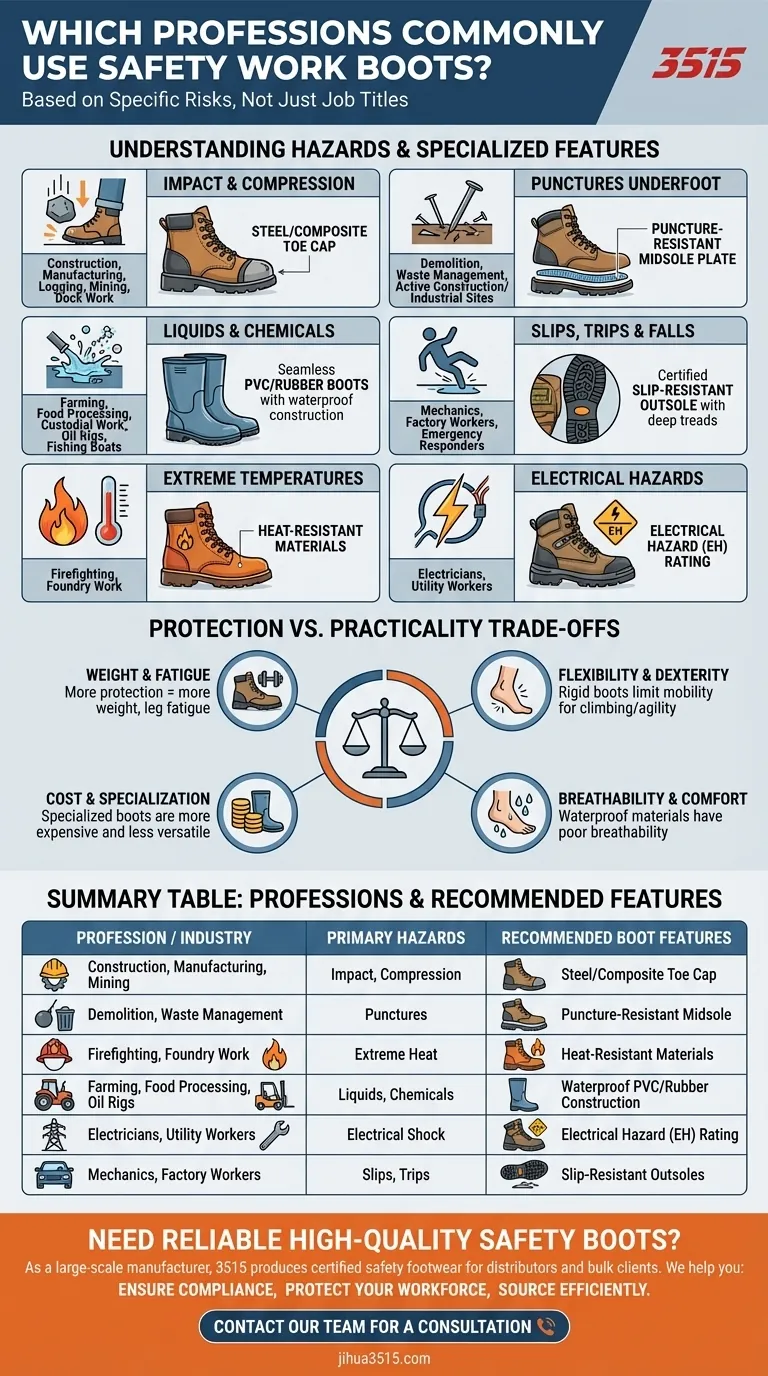
This is the most recognized function of a safety boot. Steel or composite toe caps protect the foot from falling objects and compression from heavy machinery.
This feature is standard in construction, manufacturing, logging, mining, and dock work, where heavy materials and equipment are constantly in motion.
Shielding Against Punctures
Sharp objects on the ground, such as nails, screws, and metal shards, pose a significant risk in many environments.
Boots with puncture-resistant midsole plates are crucial for workers in demolition, waste management, and on any active construction or industrial site.
Resistance to Liquids and Chemicals
For many jobs, the primary threat is exposure to harmful or simply hazardous liquids.
PVC or rubber boots are essential in farming, food processing, custodial work, and on oil rigs or fishing boats. Their seamless, waterproof construction protects against water, chemicals, fertilizers, and other contaminants.
Ensuring Stability on Treacherous Surfaces
Slips, trips, and falls are among the most common workplace accidents. A boot's outsole is its first line of defense.
Professions working on wet, oily, or uneven ground—such as mechanics, factory workers, and emergency responders—rely on boots with certified slip-resistant soles to maintain secure footing.
Defense Against Environmental Dangers
Some jobs expose workers to extreme temperatures or electrical currents.
Specialized boots offer heat resistance for firefighters and foundry workers or an Electrical Hazard (EH) rating to protect electricians and utility workers from accidental contact with live circuits.
Understanding the Trade-offs: Protection vs. Practicality
Selecting safety footwear is rarely about finding a single "best" boot. It is an exercise in balancing non-negotiable protection with the practical needs of the job.
Weight and Fatigue
Increased protection often comes with increased weight. A heavy-duty steel-toe boot with a thick puncture plate offers maximum defense but can contribute to leg fatigue over a long shift.
Flexibility and Dexterity
Rigid, highly protective boots can limit ankle mobility. This can be a significant downside for arborists or other professionals who require agility and the ability to climb or navigate complex terrain.
Breathability and Comfort
Materials like rubber and PVC are excellent for waterproofing but offer zero breathability. In hot climates or during strenuous work, this can lead to extreme discomfort and foot health issues.
Cost and Specialization
A boot designed for a very specific hazard, like a logger's caulked boot or a chemical-resistant boot, will be more expensive and less versatile for general use than a standard safety-toe work boot.
Making the Right Choice for Your Goal
Your choice must be guided by a clear-eyed assessment of the risks you face daily.
- If your primary focus is protection from falling objects: You need a boot with a certified safety toe, made from steel, a lighter-weight alloy, or a non-metallic composite.
- If your primary focus is working in wet or chemical-exposed areas: Prioritize a boot made from a seamless, waterproof, and chemical-resistant material like high-grade PVC or rubber.
- If your primary focus is preventing slips and falls: Scrutinize the outsole and ensure it is rated for oil-and-slip resistance, with a tread pattern designed for the surfaces you encounter.
- If your primary focus is safeguarding against sharp objects underfoot: Confirm the boot is built with an integrated, puncture-resistant plate in the midsole.
Ultimately, the right safety boot is a critical piece of personal protective equipment that empowers you to work with confidence and security.
Summary Table:
| Profession / Industry | Primary Hazards | Recommended Boot Features |
|---|---|---|
| Construction, Manufacturing, Mining | Impact, Compression | Steel/Composite Toe Cap |
| Demolition, Waste Management | Punctures | Puncture-Resistant Midsole |
| Firefighting, Foundry Work | Extreme Heat | Heat-Resistant Materials |
| Farming, Food Processing, Oil Rigs | Liquids, Chemicals | Waterproof PVC/Rubber Construction |
| Electricians, Utility Workers | Electrical Shock | Electrical Hazard (EH) Rating |
| Mechanics, Factory Workers | Slips, Trips | Slip-Resistant Outsoles |
Need a reliable source for high-quality safety work boots?
As a large-scale manufacturer, 3515 produces a comprehensive range of certified safety footwear for distributors, brand owners, and bulk clients. Our production capabilities encompass all types of protective boots tailored to the specific hazards of your industry.
We help you:
- Ensure Compliance: Meet industry safety standards with certified footwear.
- Protect Your Workforce: Equip your team with boots designed for their specific job hazards.
- Source Efficiently: Get a reliable supply of high-volume orders with consistent quality.
Let's discuss your requirements. Contact our team today for a consultation and quotation.
Visual Guide
Related Products
- Customizable Anti-Smash Safety Boots for Wholesale & Private Label Manufacturing
- Wholesale Durable Safety Boots Manufacturer Customizable Steel Toe Work Boots
- Wholesale Customizable Safety Boots Durable & Protective Footwear Manufacturing
- Wholesale Premium Waterproof Nubuck Safety Shoes Boots
- Wholesale Durable 6-Inch Work Boots | Custom & Private Label Manufacturer
People Also Ask
- What are the requirements of BS EN345 safety regulations for security guard safety boots? | EN ISO 20345 Guide
- What are the key performance benchmarks set by the EN ISO 20345 standard for safety boots? A Guide to Selecting the Right Protection
- What additional protections are defined by the EN ISO 20345 norm? Match Footwear to Specific Hazards
- How is compliance with the EN ISO 20345 standard certified? The Path to Independent Verification
- Why are industrial safety boots with steel toes necessary for machine operators? Essential Foot Protection for Safety