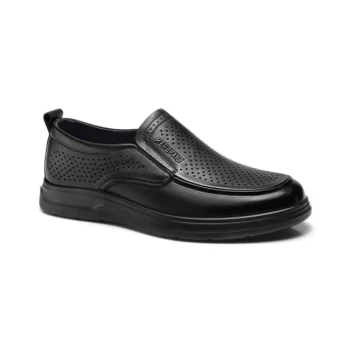
To determine if a shoe is non-slip, you should first look for an explicit "slip-resistant" statement on the product tag, in the online product description, or inscribed on the shoe's sole or tongue. This official labeling is the most direct confirmation of the shoe's intended purpose and safety rating.
The most reliable way to verify a shoe's non-slip capability is to look for third-party certification codes, like ASTM F-2913. If certification isn't available, you must evaluate the shoe's physical design, specifically the outsole material and tread pattern.
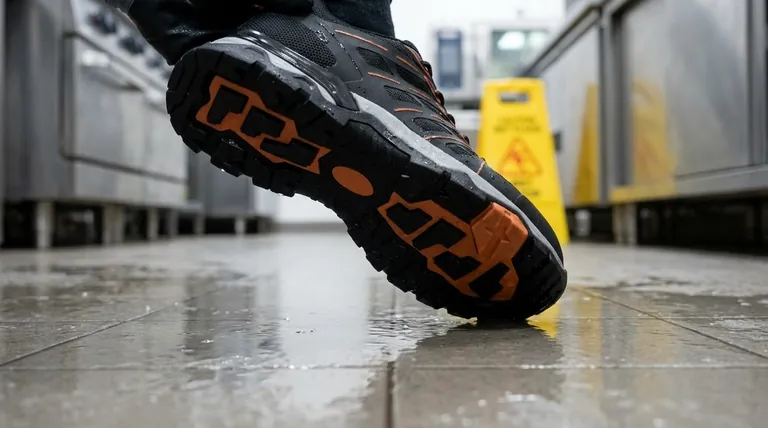
Official Labels and Certifications
The most trustworthy indicators are the official statements and ratings provided by the manufacturer or independent testing bodies. These remove the guesswork from your decision.
Product Tags and Descriptions
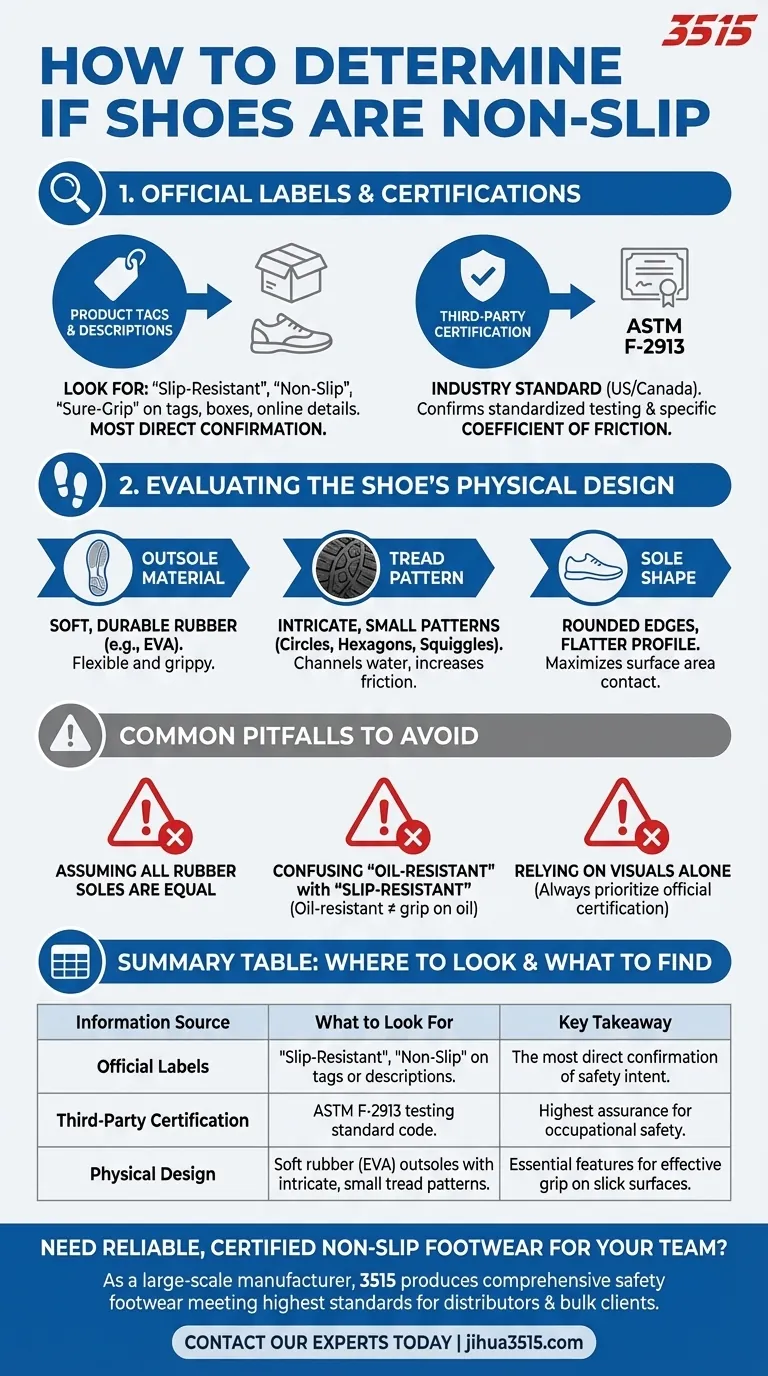
When shopping, your first check should always be the product's official information. Look for keywords like "slip-resistant," "non-slip," or "sure-grip." This information is typically found on the box, on a tag attached to the shoe, or prominently in the online product details.
Third-Party Certification
For occupations where safety is critical, look for proof of third-party testing. In the United States and Canada, the industry standard is ASTM F-2913.
This certification confirms the shoe has been tested on various surfaces and meets a specific coefficient of friction (a measure of grip), ensuring it performs under standardized hazardous conditions.
Evaluating the Shoe's Physical Design
If official labels are unclear or unavailable, you can assess the shoe's physical characteristics. A true non-slip shoe is engineered with specific materials and patterns designed to maximize grip.
The Outsole Material
The outsole—the part of the shoe that contacts the ground—should be made of a soft, durable rubber. Many high-quality non-slip shoes use EVA (ethylene vinyl acetate) rubber, which remains flexible and grippy.
The Tread Pattern
Examine the pattern on the bottom of the sole. Effective non-slip treads feature small, intricate patterns, such as tiny circles, hexagons, or squiggles.
These small patterns create more friction and are designed to channel water and other liquids out from under the shoe, maintaining contact with the ground. A wide, blocky tread is less effective on slick, wet surfaces.
The Sole Shape
Look for a sole design with slightly rounded edges and a flatter overall profile. This design maximizes the surface area in contact with the floor, which helps improve stability and prevent slipping.
Common Pitfalls to Avoid
Not all "work shoes" are truly slip-resistant. Understanding common misconceptions can prevent a poor choice.
Assuming All Rubber Soles are Equal
A rubber sole does not automatically mean a shoe is non-slip. The specific compound of the rubber and the design of the tread are what provide the slip-resistant properties.
Confusing "Oil-Resistant" with "Slip-Resistant"
While often found together, these terms mean different things. "Oil-resistant" means the sole material won't degrade when exposed to oil, but it does not guarantee grip on an oily surface. You need the "slip-resistant" rating for safety.
Relying on Visuals Alone
While a good tread pattern is a positive sign, it is not a substitute for an official slip-resistant certification. Always prioritize shoes that have been formally tested and rated.
Making the Right Choice for Your Goal
Your specific needs should guide your evaluation.
- If your primary focus is maximum occupational safety (e.g., restaurant, healthcare): Prioritize shoes that explicitly state they meet a third-party standard like ASTM F-2913.
- If your primary focus is general daily wear with improved traction: Look for shoes marketed as "slip-resistant" and visually confirm they have a soft rubber sole with a dense, intricate tread pattern.
Ultimately, choosing the right footwear is a critical step in ensuring your personal safety on any surface.
Summary Table:
| Information Source | What to Look For | Key Takeaway |
|---|---|---|
| Official Labels | "Slip-Resistant," "Non-Slip" on tags or descriptions. | The most direct confirmation of safety intent. |
| Third-Party Certification | ASTM F-2913 testing standard code. | Highest assurance for occupational safety. |
| Physical Design | Soft rubber (EVA) outsoles with intricate, small tread patterns. | Essential features for effective grip on slick surfaces. |
Need reliable, certified non-slip footwear for your team or brand?
As a large-scale manufacturer, 3515 produces a comprehensive range of safety footwear for distributors, brand owners, and bulk clients. Our production capabilities ensure every pair meets the highest standards for slip resistance, durability, and comfort.
Let us help you equip your workforce with confidence. Contact our experts today to discuss your specific needs and explore our catalog.
Visual Guide
Related Products
- Advanced KPU Athletic Safety Shoe with Steel Toe Cap Anti-Slip Rotary Lacing System
- Premium Suede Sport Safety Shoes for Wholesale & Bulk Orders
- Durable High-Traction Canvas Sneakers Wholesale & Custom Manufacturing
- Durable Goodyear Welt Leather Work Boots for Wholesale & Private Label
- Heavy-Duty Waterproof Nubuck Safety Boots Safety Shoes for Bulk Supply
People Also Ask
- What are the key differences between steel toe and composite toe caps? Choose the Right Safety for Your Job
- What impact do steel toe caps have on toe skin health? Prevent Friction and Pressure in Your Safety Shoes
- What are the primary protective functions of safety shoes with steel toes in the automotive repair industry?
- What type of safety shoe is recommended for workers exposed to heavy machinery? Steel Toe Boots for Ultimate Protection
- How does defining specific friction interface models in FEA assist in predicting safety shoe toe cap failure modes?