
The appropriate time to apply leather conditioner is whenever your boots exhibit signs of dehydration, specifically when they appear pale, feel dried out, or show surface cracking. Rather than adhering to a strict calendar schedule, you should treat conditioning as a restorative measure to replenish the natural oils and moisture that leather inevitably loses over time.
Leather acts like skin; without proper hydration, it loses flexibility and structural integrity. Conditioning is the preventative maintenance that stops irreversible cracking and significantly extends the lifespan of your footwear.
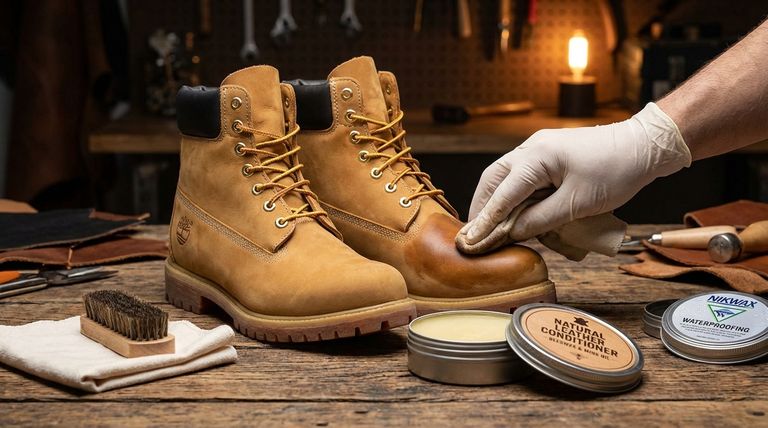
Identifying the Signals
Visual Indicators
You do not need to guess when your boots need attention. The leather will lighten in color or look "chalky" as it loses moisture.
Structural Warning Signs
If you see small fissures or cracks developing in the creases where the boot flexes, the leather is critically dry. Immediate conditioning is required to prevent permanent damage.
Choosing the Right Chemistry
Ingredients to Prioritize
To maintain the leather’s natural ecosystem, select conditioners formulated with natural ingredients. Look for products containing beeswax or mink oil.
Chemical Compounds to Avoid
Not all oils are beneficial. You must strictly avoid products containing mineral oil or petroleum.
The Danger of Harsh Chemicals
While these ingredients may offer a temporary shine, they can ultimately dry out the leather and accelerate damage. Similarly, never use harsh cleaners containing bleach or ammonia.
The Application Protocol
Preparation is Key
Never condition a dirty boot. Clean the surface first using a mild soap or a dedicated leather cleaner to ensure the conditioner can penetrate the pores.
The Spot Test
Before applying a new product to the entire boot, test it on a small, discreet area. This ensures the product does not discolor or damage the finish.
Proper Dosage and Technique
Dispense a quarter-sized amount of conditioner onto a clean, soft cloth. Massage the product into the leather, ensuring the entire boot is covered.
Addressing Extreme Dryness
If the boots are severely dehydrated, a single application may not be enough. You may need to apply more conditioner to fully saturate the fibers.
The Final Step
Once the leather is conditioned, it is recommended to apply a waterproofing product, such as Nikwax, to seal in the moisture and protect the boot from the elements.
Common Pitfalls to Avoid
The Petroleum Trap
Many cheap conditioners rely on petroleum bases. While cost-effective, these can degrade the leather over time, defeating the purpose of conditioning.
Ignoring the Cleanliness Factor
Applying conditioner over dirt seals the grime into the leather. This leads to abrasion and deterioration of the material from the inside out.
Making the Right Choice for Your Goal
To get the most out of your footwear, align your maintenance routine with your specific objectives.
- If your primary focus is longevity: Prioritize natural ingredients like beeswax to keep the leather flexible and prevent cracking.
- If your primary focus is aesthetics: Regular conditioning will maintain a shiny, polished appearance that looks professional.
- If your primary focus is weather resistance: Always follow your conditioning routine with a waterproofing treatment like Nikwax to create a protective barrier.
Treat your boots as an investment, and they will return the favor with years of reliable service.
Summary Table:
| When to Condition | Key Indicators | Recommended Products |
|---|---|---|
| As Needed | Leather looks pale, chalky, or feels stiff | Conditioners with beeswax or mink oil |
| Immediately | Small cracks appear in the flex points | Avoid products with mineral oil or petroleum |
Need durable, high-quality leather boots that are built to last?
As a large-scale manufacturer, 3515 produces a comprehensive range of footwear for distributors, brand owners, and bulk clients. Our production capabilities encompass all types of durable shoes and boots designed to withstand the elements and proper maintenance. Let us help you build a robust product line. Contact our team today to discuss your manufacturing needs!
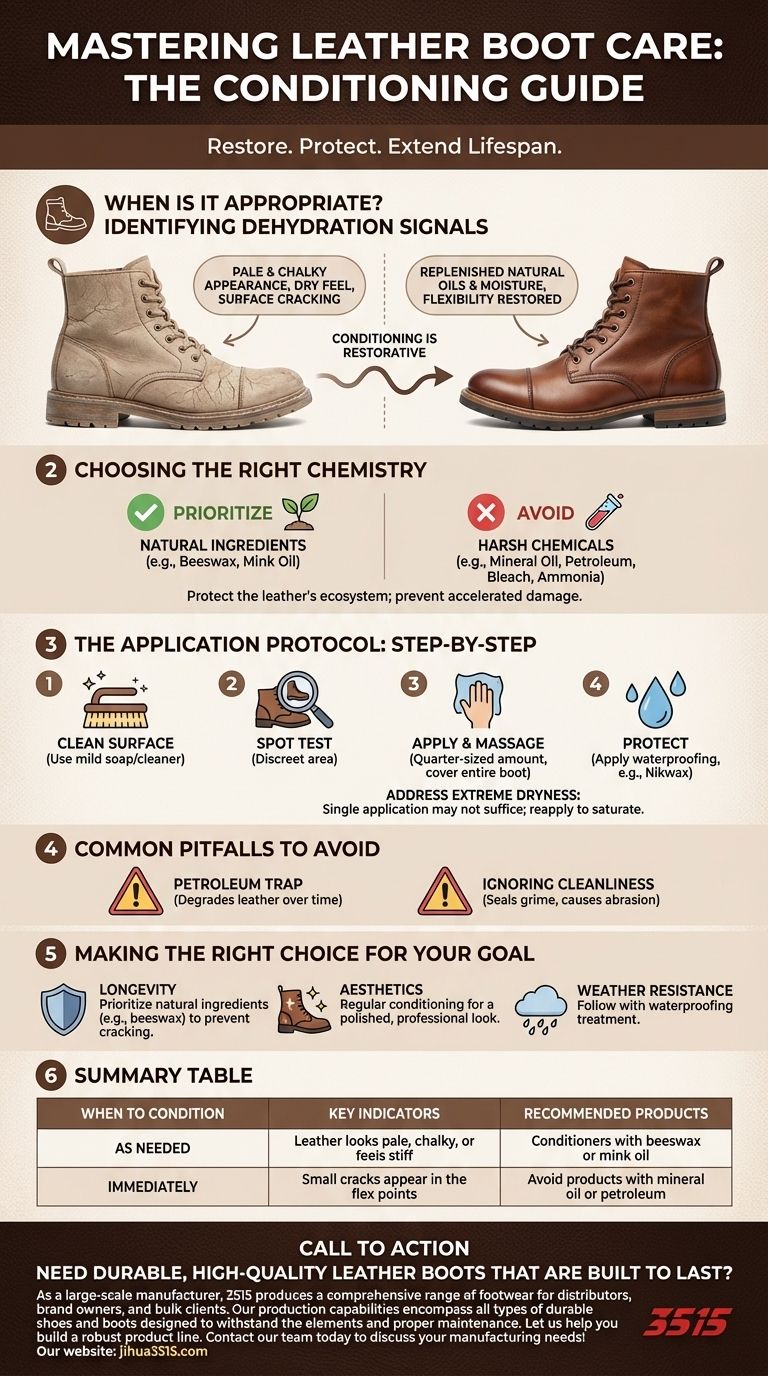
Visual Guide
Related Products
- Wholesale Leather Work Boots with Customizable Wedge Sole for Brands
- Durable Leather Work Boots for Wholesale & Custom OEM Manufacturing
- Durable Leather Work Boots for Wholesale & Custom Manufacturing
- Durable Leather Work Boots Wholesale Manufacturer & Custom Factory
- Durable Goodyear Welt Leather Work Boots for Wholesale & Private Label
People Also Ask
- What is the difference between full-grain and top-grain leather? Premium Material Guide for Boot Manufacturers
- What are the advantages of leather as an upper material for work boots? Unmatched Durability & Custom Comfort
- How can leather work boots be protected from environmental elements? A 3-Step Guide to Lasting Durability
- What is the complete process for deep cleaning leather work boots? A Step-by-Step Guide to Preserve Your Investment
- What are the key qualities of leather for work boots? Superior Durability, Breathability & Custom Fit

















