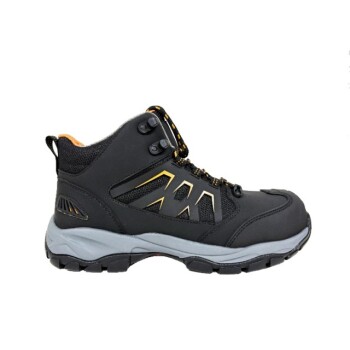
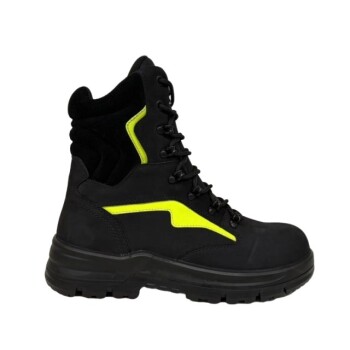
Steel-toe boots are required in any work environment where there is a tangible risk of foot injury from falling objects, rolling equipment, or sharp materials. This requirement is typically mandated by an employer's safety policy or as a result of guidelines set by the Occupational Safety and Health Administration (OSHA) to mitigate workplace hazards.
The decision to wear steel-toe boots is driven by a direct risk assessment of your environment. If there is a credible threat of heavy objects falling on, rolling over, or piercing your feet, protective footwear is the essential, non-negotiable line of defense.
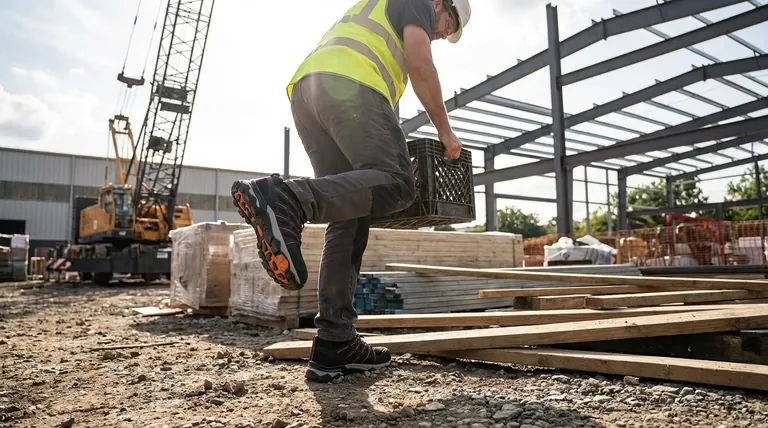
The Core Principle: Identifying Workplace Hazards
Understanding why a steel-toe boot is necessary comes down to identifying specific types of physical threats. Protective footwear is designed to shield you from injuries that can be both severe and permanently disabling.
Impact from Falling or Dropped Objects
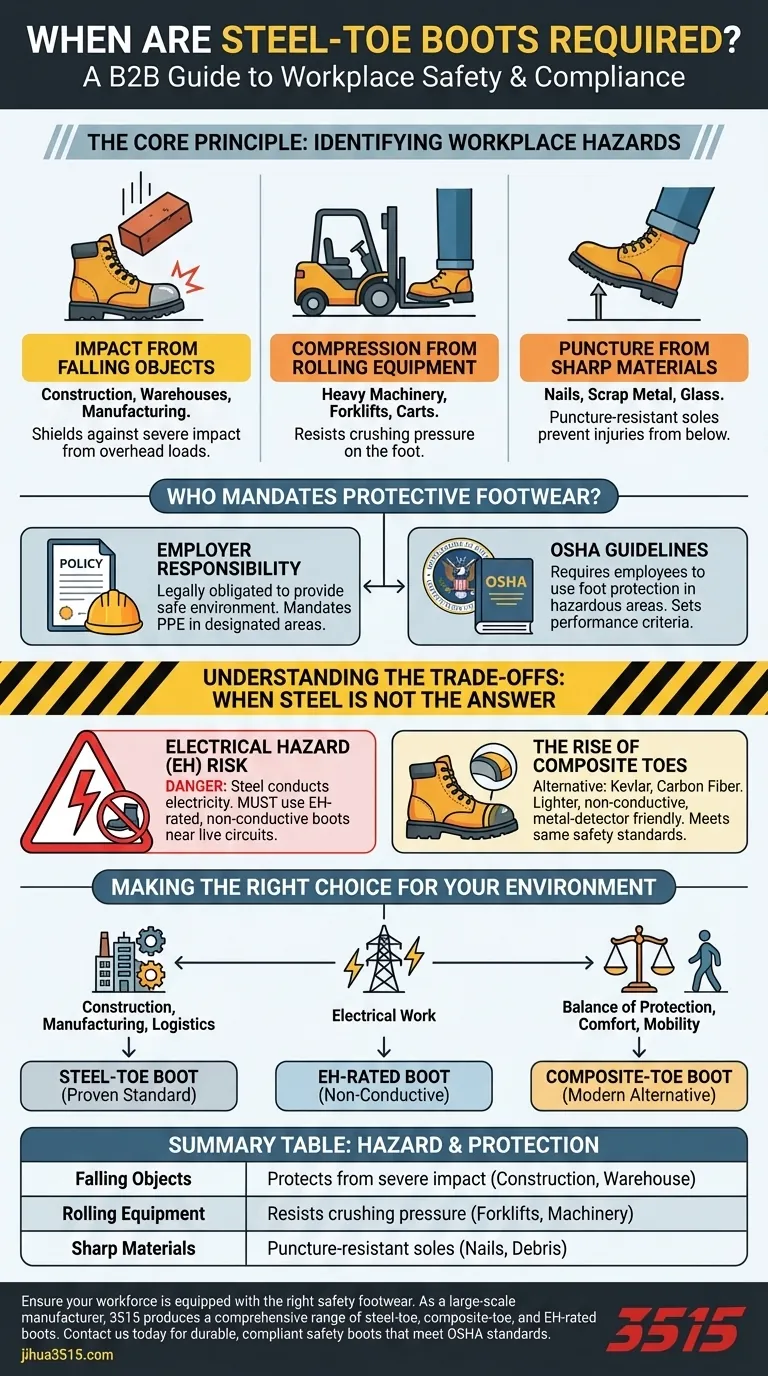
This is the most common reason for a steel-toe mandate. Any environment where heavy materials are lifted, moved, or stored overhead presents a significant risk.
Think of construction sites with building materials, warehouses with stacked pallets, or manufacturing floors where heavy parts are handled. A steel cap is designed to withstand a direct, heavy impact.
Compression from Rolling Equipment
Heavy equipment that moves on the ground, such as forklifts, heavy carts, or pallet jacks, can easily roll over a foot, causing crushing injuries.
The reinforced toe box of a safety boot is engineered to resist this immense pressure, preventing the bones in the foot from being crushed.
Puncture from Sharp Materials
While the steel toe protects from impact, many high-risk jobs also involve threats from below. Sharp objects like nails, scrap metal, or glass on the floor can easily pierce a standard sole.
Many safety boots, including steel-toe models, often include a puncture-resistant plate in the sole to protect against this specific hazard.
Who Mandates Protective Footwear?
The requirement for steel-toe boots isn't arbitrary. It's an established safety control based on an assessment of risk, enforced by both employers and federal regulators.
Employer Responsibility
Employers are legally obligated to provide a safe working environment. They identify areas where Personal Protective Equipment (PPE) is required, often marking them as "PPE-designated areas."
If your job site or a specific task requires foot protection, your employer will mandate it as a condition of work.
OSHA Guidelines
OSHA requires employers to ensure their employees use protective footwear when working in areas with foot hazards.
While OSHA provides the framework and performance criteria for safety footwear, it does not specifically mandate "steel" as the material. It mandates a level of protection that steel reliably provides.
Understanding the Trade-offs: When Steel Is Not the Answer
While steel is the traditional standard for foot protection, it is not the universally correct choice. Understanding its limitations is just as important as knowing its strengths.
The Electrical Hazard Risk
This is the most critical exception. Because steel is an excellent conductor of electricity, standard steel-toe boots must not be worn by electricians or anyone working near live circuits.
In these roles, you must use boots specifically rated for Electrical Hazard (EH) protection, which are made with non-conductive materials.
The Rise of Composite Toes
Modern safety boots often use composite materials (like Kevlar, carbon fiber, or plastic) for the protective toe cap. These materials can meet the same OSHA impact and compression standards as steel.
Composite-toe boots are lighter than steel, do not conduct electricity, and won't set off metal detectors, making them a superior choice in certain environments.
Making the Right Choice for Your Environment
Selecting the correct footwear requires matching the boot's features to your specific workplace hazards.
- If your primary focus is construction, manufacturing, or logistics: A steel-toe boot is the proven standard for protecting against severe impact and compression hazards.
- If your primary focus is electrical work: You must avoid standard steel-toe boots and select footwear specifically rated for Electrical Hazard (EH), which is often made with a composite toe.
- If your primary focus is a balance of protection, comfort, and mobility: Consider modern composite-toe boots, as they offer equivalent safety ratings to steel in a lighter, non-metallic package.
Ultimately, choosing the right protective footwear is a foundational element of professional and personal safety on the job.
Summary Table:
| Hazard Type | Why Steel-Toe Boots Are Needed |
|---|---|
| Falling Objects | Protects feet from severe impact injuries in construction, warehouses, and manufacturing. |
| Rolling Equipment | Resists crushing pressure from forklifts, carts, and heavy machinery. |
| Sharp Materials | Many models include puncture-resistant soles to prevent injuries from nails or debris. |
Ensure your workforce is equipped with the right safety footwear. As a large-scale manufacturer, 3515 produces a comprehensive range of steel-toe, composite-toe, and EH-rated boots for distributors, brand owners, and bulk clients. Our production capabilities cover all types of protective footwear tailored to your specific workplace hazards. Contact us today for durable, compliant safety boots that meet OSHA standards and protect your team.
Visual Guide
Related Products
- Durable Steel Toe Safety Boots Wholesale & Custom Manufacturing
- Wholesale Durable Breathable Safety Boots Custom OEM Manufacturer
- Wholesale Durable 6-Inch Work Boots | Custom & Private Label Manufacturer
- Puncture-Resistant Velcro Safety Boots for Wholesale & Custom Manufacturing
- Premium Sport Style Safety Boots for Bulk Orders
People Also Ask
- Why are industrial safety boots with steel toes necessary for machine operators? Essential Foot Protection for Safety
- Why is it mandatory to wear safety shoes with steel toe protection during metal loading? Prevent Crushing Injuries
- What are the main materials used in steel toe safety shoes? A Guide to Protective Footwear Construction
- What are the characteristics of steel toe safety boots? Maximum Protection, Key Trade-offs
- Is it true that steel toes can cause toes to get cut off? Debunking the Dangerous Myth