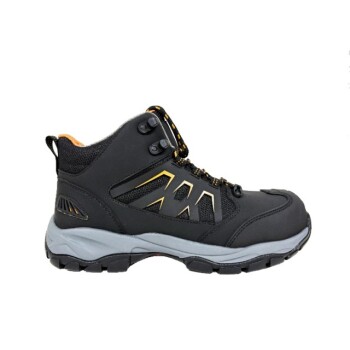
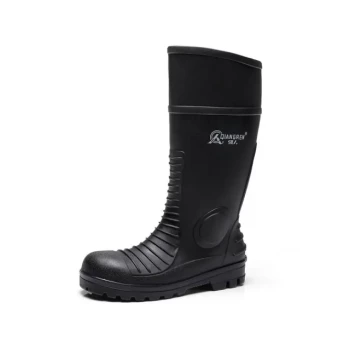
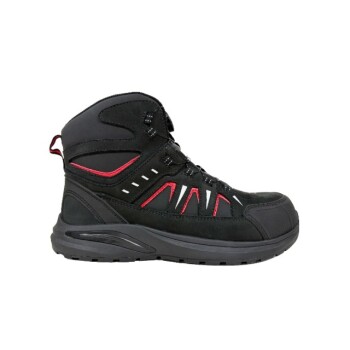
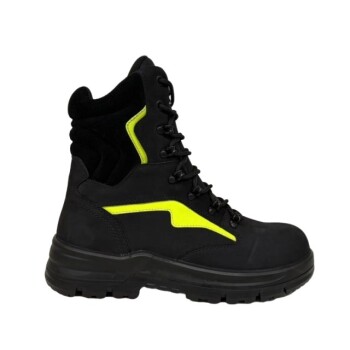
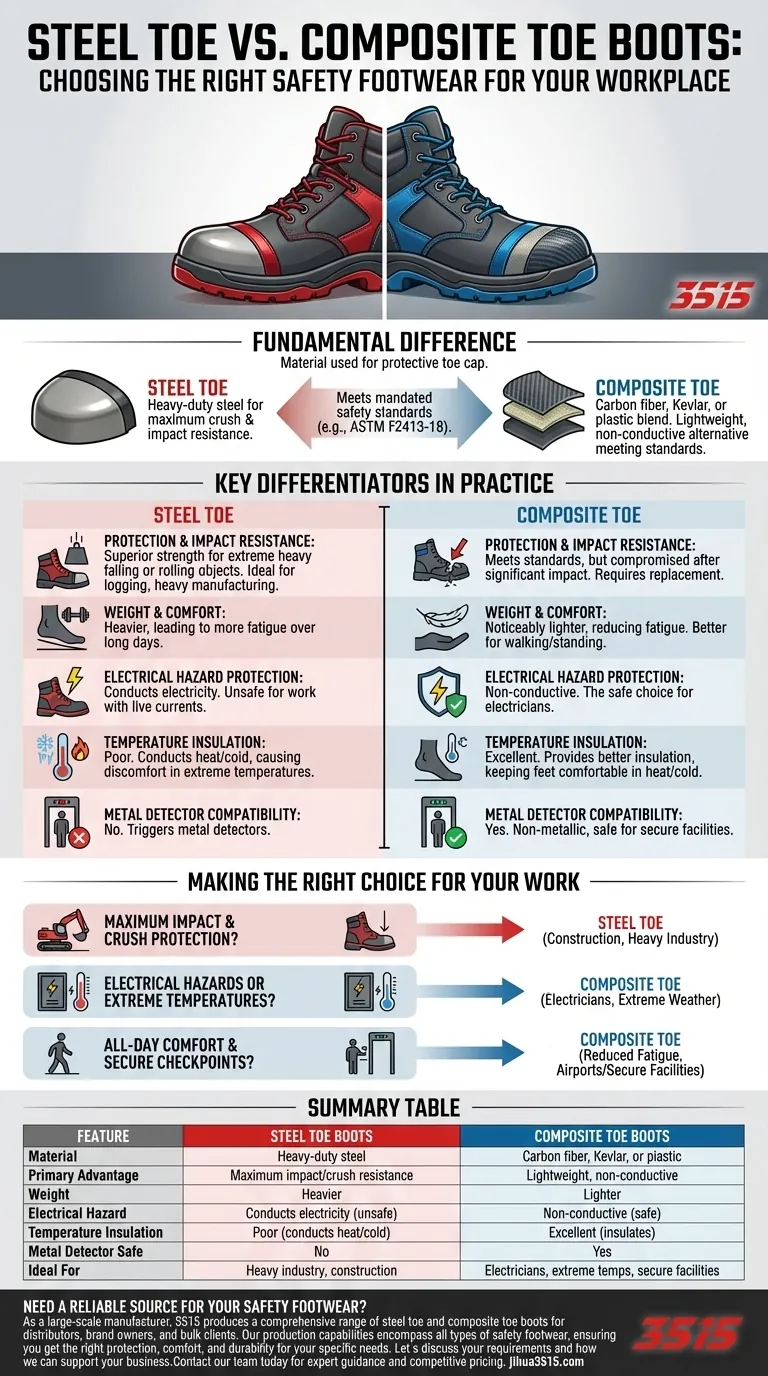
The fundamental difference between steel toe and composite toe boots lies in the material used for the protective toe cap. Steel toe boots use a heavy-duty steel cap for maximum resistance against crushing and impact. Composite toe boots use non-metallic materials like carbon fiber, Kevlar, or advanced plastics to provide a lighter-weight, non-conductive alternative that still meets mandated safety standards.
Your choice is not about which boot is universally "better," but which is strategically suited to your specific workplace hazards. Steel offers the pinnacle of strength for heavy industry, while composite provides versatile protection against a wider range of environmental risks like electricity, extreme temperatures, and security screenings.
A Head-to-Head Material Comparison
To understand which boot is right for you, we must first examine the core materials that define their function and performance.
The Steel Toe Standard
Steel toe caps are the traditional and most established form of safety footwear protection. They are forged from solid steel.
This construction gives them exceptional strength against both direct impacts from falling objects and steady compression forces, such as from a vehicle rollover.
The Composite Toe Alternative
Composite toe caps are engineered from a blend of non-metallic materials. These can include carbon fiber, plastic, fiberglass, or Kevlar.
The goal of this design is to create a protective cap that is significantly lighter than steel while still meeting the same official safety requirements.
Key Differentiators in Practice
While both boot types must pass the same baseline safety tests, their material differences lead to distinct advantages and disadvantages in the field.
Protection and Impact Resistance
Steel toe caps generally offer superior resistance to extreme impact and compression. For environments with a high risk of heavy falling or rolling objects, such as logging or heavy manufacturing, steel provides the highest level of raw strength.
Composite toes meet the same ASTM F2413-18 safety standards for impact and compression, but they may not withstand repeated impacts as effectively. After one significant impact, a composite toe's structural integrity is compromised and the boot must be replaced.
Weight and All-Day Comfort
This is the most significant advantage of composite materials. Composite toe boots are noticeably lighter than their steel counterparts.
This weight reduction translates directly to less fatigue for the wearer over a long workday, making them a preferred choice for jobs that require constant walking or standing.
Electrical Hazard Protection
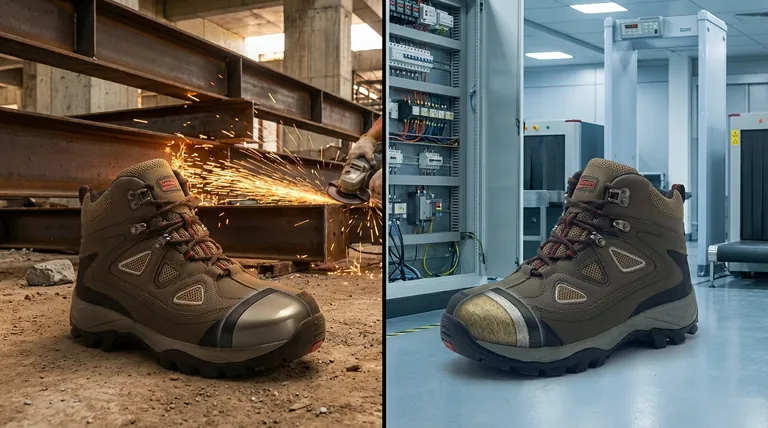
Composite materials do not conduct electricity. This makes composite toe boots the only safe choice for electricians or anyone working in environments with a risk of live electrical currents.
Steel is a highly conductive metal, making steel toe boots an unacceptable hazard in these specific situations.
Temperature Insulation
Metal is an excellent conductor of thermal energy. In very cold or hot environments, a steel toe cap will transfer the ambient temperature directly to the foot, causing significant discomfort.
Composite materials are poor thermal conductors, providing far better insulation and keeping the foot more comfortable in extreme weather conditions.
Metal Detector Compatibility
Because they are non-metallic, composite toe boots will not trigger metal detectors. This is a critical feature for workers in airports, nuclear plants, and other secure facilities that require frequent security screenings.
Understanding the Trade-offs
Neither option is perfect for every scenario. Acknowledging their limitations is key to making an informed decision.
The Cost Factor
Advanced materials often come at a higher price. Composite toe boots are typically more expensive than comparable steel toe models due to the higher cost of manufacturing carbon fiber and Kevlar components.
Durability After a Severe Impact
A steel toe cap may bend or dent under a force that exceeds its rating, but it often remains in one piece, potentially offering some residual protection.
A composite toe, upon reaching its failure point, is more likely to crack or shatter. Once this happens, it offers no further protection and presents a different kind of hazard.
The Myth of Being "Less Safe"
It is crucial to understand that any boot labeled with an ASTM safety rating provides proven protection. The choice is not between a "safe" and "unsafe" boot, but between different tools designed for different jobs.
Making the Right Choice for Your Work
To select the right boot, align its primary advantages with the most common and serious hazards you face daily.
- If your primary focus is maximum impact and crush protection: Choose steel toe boots for their unparalleled strength, which is ideal for construction, logging, or heavy industrial settings.
- If your primary focus is working around electrical hazards or in extreme temperatures: Select composite toe boots for their essential non-conductive and insulating properties.
- If your primary focus is all-day comfort and passing through metal detectors: Opt for lightweight composite toe boots to reduce fatigue and move efficiently through secure checkpoints.
Ultimately, understanding the specific demands of your job is the key to choosing footwear that offers not just compliance, but true functional safety.
Summary Table:
| Feature | Steel Toe Boots | Composite Toe Boots |
|---|---|---|
| Material | Heavy-duty steel | Carbon fiber, Kevlar, or plastic |
| Primary Advantage | Maximum impact/crush resistance | Lightweight, non-conductive |
| Weight | Heavier | Lighter |
| Electrical Hazard | Conducts electricity (unsafe) | Non-conductive (safe) |
| Temperature Insulation | Poor (conducts heat/cold) | Excellent (insulates) |
| Metal Detector Safe | No | Yes |
| Ideal For | Heavy industry, construction | Electricians, extreme temps, secure facilities |
Need a reliable source for your safety footwear?
As a large-scale manufacturer, 3515 produces a comprehensive range of steel toe and composite toe boots for distributors, brand owners, and bulk clients. Our production capabilities encompass all types of safety footwear, ensuring you get the right protection, comfort, and durability for your specific needs.
Let's discuss your requirements and how we can support your business. Contact our team today for expert guidance and competitive pricing.
Visual Guide
Related Products
- Durable Steel Toe Safety Boots Wholesale & Custom Manufacturing
- Wholesale Durable Breathable Safety Boots Custom OEM Manufacturer
- Wholesale Durable 6-Inch Work Boots | Custom & Private Label Manufacturer
- Puncture-Resistant Velcro Safety Boots for Wholesale & Custom Manufacturing
- Premium Sport Style Safety Boots for Bulk Orders
People Also Ask
- Why are industrial safety boots with steel toes necessary for machine operators? Essential Foot Protection for Safety
- Why is it mandatory to wear safety shoes with steel toe protection during metal loading? Prevent Crushing Injuries
- What are the main materials used in steel toe safety shoes? A Guide to Protective Footwear Construction
- What are the characteristics of steel toe safety boots? Maximum Protection, Key Trade-offs
- Is it true that steel toes can cause toes to get cut off? Debunking the Dangerous Myth