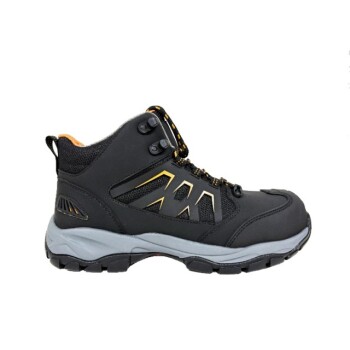
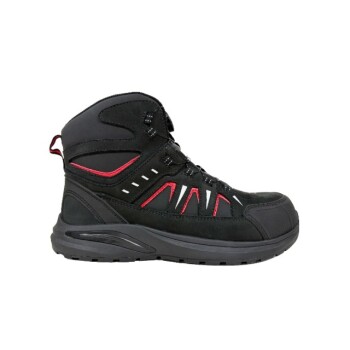
The necessity of precision metal processing and industrial heat treatment lies in the critical balance between safety and ergonomics. These technologies enable the accurate forging of specialized steels and alloys into a shape that fits comfortably within a shoe while meeting the rigorous EN ISO 20345 safety standard. By combining dimensional accuracy with controlled metallurgical properties, manufacturers ensure that toe caps can withstand a 200J impact energy without failing.
To satisfy global safety standards, protective toe caps must possess a unique metallurgical profile that allows them to be thin and lightweight yet exceptionally strong. This specific state of high hardness and toughness is only achievable through the synergy of precision shaping and strictly regulated thermal cycles.
The Role of Precision Metal Processing in Structural Integrity
Achieving Geometric Accuracy Through Forging
Precision metal processing equipment is used to forge special steel or alloys into highly specific geometries. This accuracy ensures that the component fits perfectly within the footwear's construction without creating pressure points for the wearer.
Optimizing Material Distribution for Weight Reduction
Advanced forging allows for the creation of thin-walled components that do not sacrifice strength. By precisely controlling the thickness of the metal, manufacturers can reduce the overall weight of the safety shoe, which is a critical factor for user comfort during long shifts.
Ensuring Consistent Performance
In industrial safety, consistency is as vital as strength. Precision equipment ensures that every toe cap produced is identical in its dimensions and structural integrity, guaranteeing that every pair of shoes provides the same level of protection.
The Science of Industrial Heat Treatment
Meeting the 200J Impact Energy Threshold
Industrial-grade heat treatment equipment is essential for controlling the temperature curves that dictate the final properties of the metal. This process is what allows the toe cap to meet the 200J impact energy protection level required by the EN ISO 20345 standard.
Balancing Hardness and Toughness
Heat treatment allows engineers to manipulate the metal's microstructure to achieve a balance between hardness (to resist penetration) and toughness (to absorb energy). Without this precise control, a toe cap might be hard enough to resist a strike but too brittle to prevent shattering upon impact.
Preventing Catastrophic Deformation
The primary goal of heat treatment is to ensure that the component does not undergo catastrophic deformation when struck by heavy objects. By precisely managing the cooling and heating phases, the equipment ensures the metal can bend slightly to absorb energy without collapsing onto the wearer's foot.
Understanding the Trade-offs
Complexity of Specialized Alloys
While using specialized alloys increases protection, these materials often require much tighter tolerances during heat treatment. A slight deviation in the temperature curve can result in a batch of components that are either too soft to protect or too brittle to pass safety tests.
The Cost of Precision
Investing in high-end industrial equipment significantly increases initial capital expenditure. However, the trade-off is a lower rate of product failure and the ability to produce "ultra-light" safety gear that commands a premium in the professional market.
Making the Right Choice for Your Production Goal
How to Apply This to Your Project
When evaluating your production process or sourcing protective components, consider the specific requirements of your target market:
- If your primary focus is Maximum Safety Compliance: Prioritize industrial heat treatment equipment with documented, precise temperature control to ensure every batch meets the 200J impact threshold.
- If your primary focus is User Comfort and Weight: Invest in precision metal processing that allows for thinner walls and more ergonomic forging of high-strength alloys.
- If your primary focus is Scaling Production: Focus on automated precision equipment that reduces human error in both the forging and thermal treatment stages to maintain consistent quality.
By mastering the intersection of precise forging and thermal engineering, you can produce safety components that offer uncompromising protection in a lightweight, wearable form.
Summary Table:
| Process Phase | Key Technology | Function & Benefit |
|---|---|---|
| Metal Processing | Precision Forging | Achieves thin-walled, ergonomic shapes for weight reduction and comfort. |
| Structural Integrity | Geometric Accuracy | Ensures consistent material distribution and perfect fit within footwear. |
| Heat Treatment | Thermal Cycle Control | Balances hardness and toughness to meet the 200J impact energy threshold. |
| Safety Compliance | Microstructure Optimization | Prevents catastrophic deformation and brittle failure under heavy impact. |
Partner with 3515 for High-Performance Safety Footwear
As a premier large-scale manufacturer serving global distributors and brand owners, 3515 leverages advanced metallurgical expertise and precision processing to deliver footwear that exceeds industry standards. Our flagship Safety Shoes series is engineered for maximum protection, featuring toe caps that perfectly balance lightweight comfort with rugged durability.
Whether you need work and tactical boots, outdoor gear, or formal dress shoes, our comprehensive production capabilities ensure consistent quality for all bulk requirements. Contact us today to discuss how our specialized manufacturing can elevate your product line and provide your customers with uncompromising safety.
References
- P. S. Bardyugov, M.V. Parshikov. Foot deformities in patients with diabetic foot disease (literature review). DOI: 10.18019/1028-4427-2022-28-3-452-458
This article is also based on technical information from 3515 Knowledge Base .
Related Products
- Wholesale Safety Footwear Manufacturer for Bulk & Custom OEM Orders
- Wholesale Leather Safety Boots with Customizable Protective Toe
- Advanced KPU Athletic Safety Shoe with Steel Toe Cap Anti-Slip Rotary Lacing System
- Wholesale Customizable Safety Boots Durable & Protective Footwear Manufacturing
- Safety Footwear Wholesale Manufacturer for Custom OEM/ODM Production
People Also Ask
- What type of safety shoe is recommended for workers exposed to heavy machinery? Steel Toe Boots for Ultimate Protection
- Why are industrial safety boots with steel toes necessary for machine operators? Essential Foot Protection for Safety
- What are the recommended uses for steel toe safety shoes? Essential Protection for High-Risk Industries
- Is the myth about steel toe shoes cutting off toes true? Debunking the Safety Footwear Myth
- Why are steel toes popular in safety footwear? The Ultimate Guide to Heavy-Duty Protection