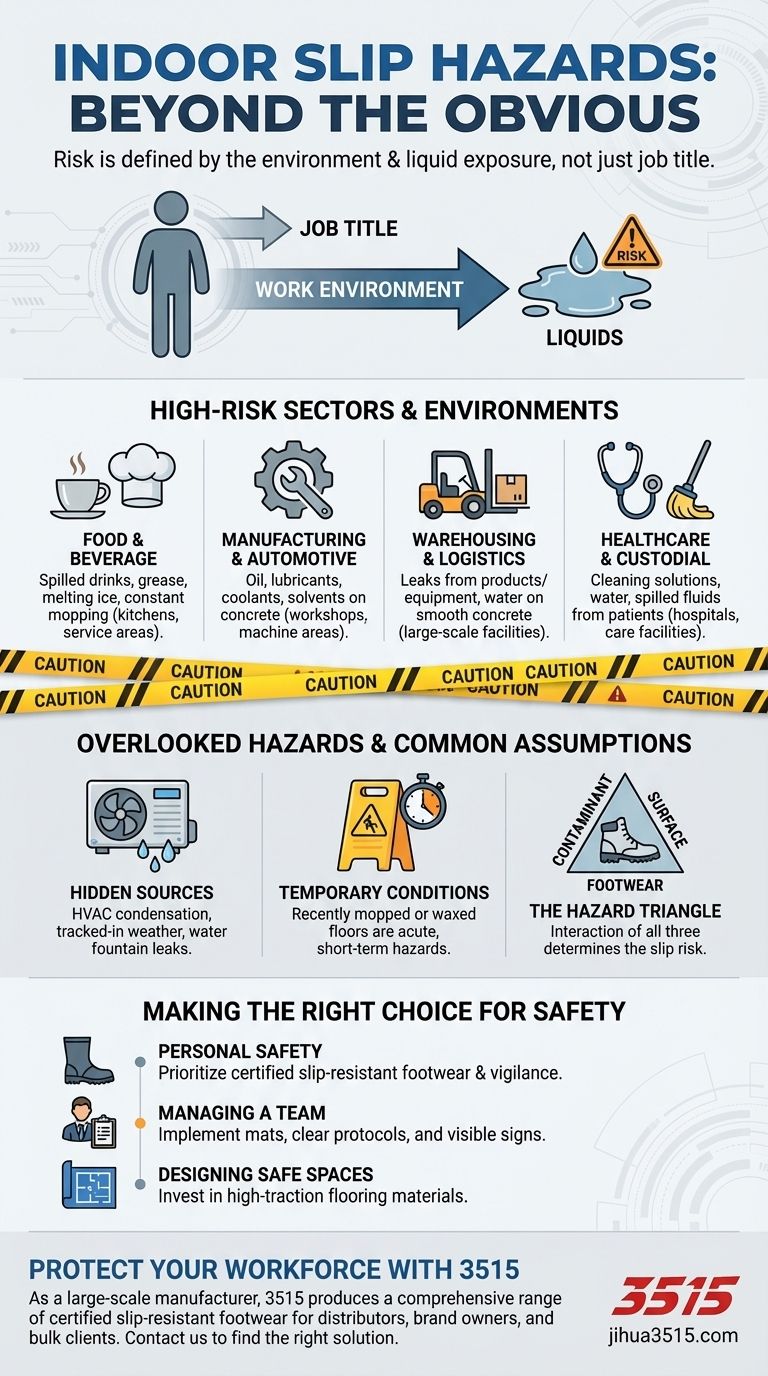
Virtually any worker can encounter a slippery floor, but the risk is most concentrated and persistent for those in the service, manufacturing, automotive, and warehouse industries. Workers in these sectors are routinely exposed to spilled fluids like water, oil, grease, and cleaning solutions as a fundamental part of their daily tasks.
The most critical insight is that risk isn't defined by job title alone, but by the work environment and its frequent exposure to liquids. While food service workers like baristas and servers face the highest frequency of these hazards, anyone working around machinery, liquids, or in high-traffic areas is at risk.
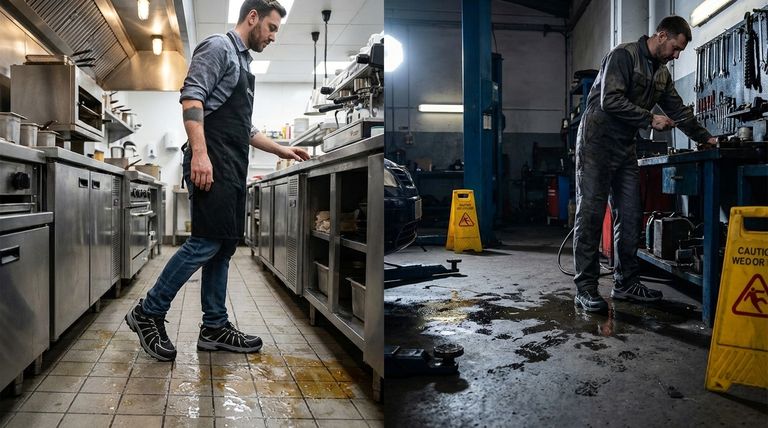
High-Risk Industries and Environments
Understanding why certain environments are prone to slippery conditions is the first step in mitigating the danger. The presence of liquids—whether from operations, spills, or cleaning—is the universal factor.
The Food and Beverage Sector
Baristas and servers are often cited as having the highest likelihood of encountering slippery surfaces. Kitchen and service areas are in a constant state of flux with spilled drinks, melting ice, and grease from cooking.
Floors are also mopped continuously during operating hours, creating predictable but persistent slip hazards.
Manufacturing and Automotive Workshops
These environments are intrinsically linked to the use of fluids. Spilled oil, lubricants, coolants, and solvents are common byproducts of machinery operation and vehicle maintenance.
These substances are often more hazardous than water because they can be less visible on concrete floors and are more difficult to clean up completely.
Warehousing and Logistics
Large warehouse floors, often made of smooth, sealed concrete, can become extremely slippery when wet. Spills may occur from damaged product containers or leaking equipment like forklifts and pallet jacks.
The sheer scale of these facilities means a small, unnoticed leak can affect a large, high-traffic area.
Healthcare and Custodial Services
Hospitals and other care facilities require constant, rigorous cleaning to maintain sanitary conditions. This means floors are frequently being mopped with cleaning solutions.
Additionally, spills of water, medication, and bodily fluids create unpredictable slip hazards that require immediate attention.
Overlooked Hazards and Common Assumptions
Recognizing the most obvious risks is important, but true safety comes from identifying the less apparent hazards that are often the cause of serious incidents.
Assuming Risk is Only in 'Obvious' Areas
A spill from a machine is easy to anticipate. However, many accidents occur from less obvious sources, such as condensation from HVAC systems, tracked-in rain or snow at building entrances, or leaks from a water fountain.
Underestimating Temporary Conditions
The most dangerous periods are often temporary. A floor that has just been mopped or waxed presents an acute, short-term hazard that is easily overlooked without proper signage and communication.
Ignoring the Surface and Footwear Interaction
The hazard is not just the spill; it's a combination of three factors: the contaminant (e.g., water or oil), the flooring surface (e.g., tile vs. textured concrete), and the worker's footwear. A lack of slip-resistant soles can turn a minor spill into a major accident.
Making the Right Choice for Safety
Your prevention strategy should align with your specific role and responsibilities within the workplace.
- If your primary focus is personal safety as a frontline worker: Prioritize wearing certified slip-resistant footwear and remain vigilant about your immediate surroundings, especially in transitional areas.
- If your primary focus is managing a team or facility: Implement systemic controls like mandatory non-slip mats in high-risk areas, clear protocols for spill cleanup, and visible warning signs for temporary hazards.
- If your primary focus is designing a safe workspace: Invest in high-traction flooring materials appropriate for the expected conditions, particularly in kitchens, entryways, and production areas.
Ultimately, preventing workplace slips begins with the fundamental understanding that any area exposed to liquids is a potential hazard zone requiring proactive attention.
Summary Table:
| High-Risk Industry | Common Slippery Conditions | Typical Job Roles |
|---|---|---|
| Food & Beverage | Spilled drinks, grease, melting ice, wet-mopped floors | Baristas, Servers, Kitchen Staff |
| Manufacturing & Automotive | Oil, lubricants, coolants, solvents on concrete floors | Machine Operators, Mechanics, Technicians |
| Warehousing & Logistics | Leaks from products/equipment, water on smooth concrete | Forklift Operators, Pickers, Packers |
| Healthcare & Custodial | Cleaning solutions, water, spilled fluids from patients | Nurses, Janitorial Staff, Orderlies |
Protect your workforce from costly slips and falls. As a large-scale manufacturer, 3515 produces a comprehensive range of certified slip-resistant footwear for distributors, brand owners, and bulk clients. Our production capabilities encompass all types of safety shoes and boots designed specifically for high-risk environments like kitchens, workshops, and warehouses. Contact our team today to find the right safety footwear solution for your business.
Visual Guide