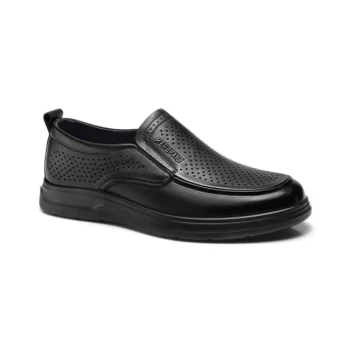
At their core, non-slip shoes are a specialized piece of safety equipment. Unlike regular shoes, which prioritize aesthetics or general comfort, non-slip shoes are specifically engineered with a unique outsole design and material composition to maximize grip and reduce the risk of falling on wet, oily, or otherwise slippery surfaces.
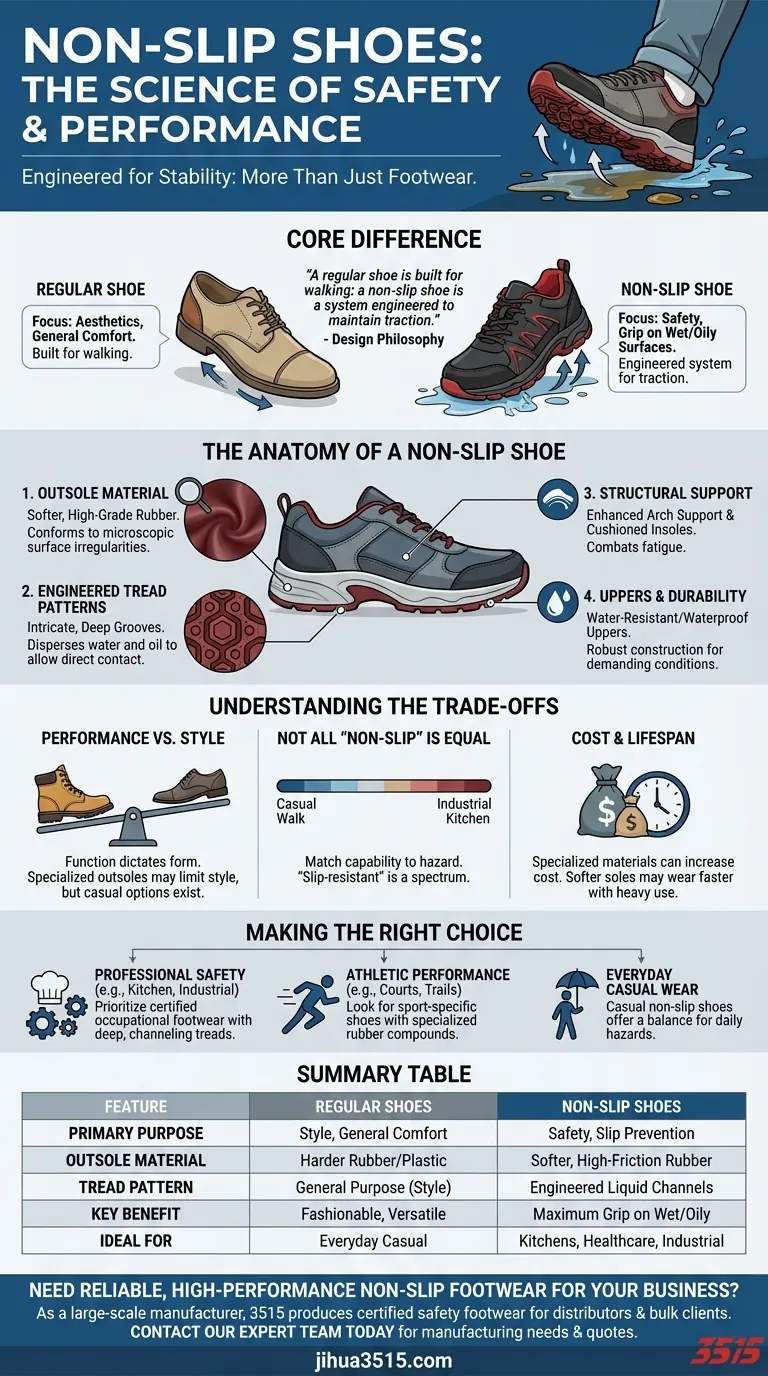
The crucial difference is not just a sticker on the box, but a fundamental design philosophy. A regular shoe is built for walking; a non-slip shoe is a system engineered to maintain traction by actively managing the surface beneath your feet.
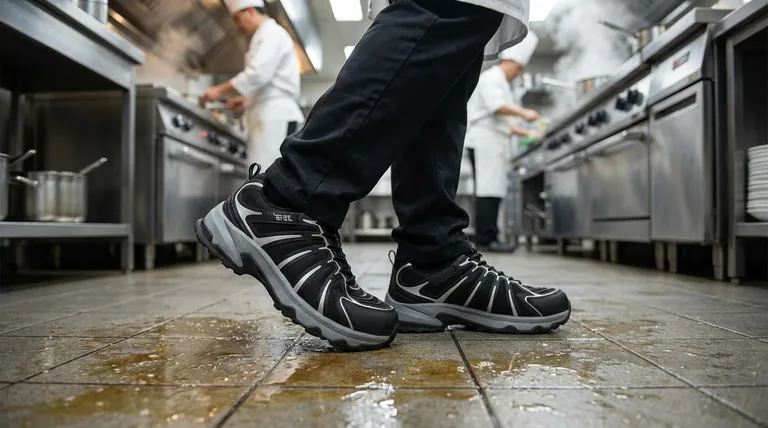
The Anatomy of a Non-Slip Shoe
A shoe's slip resistance is determined by a combination of factors that go far beyond simple appearances. It involves material science and sophisticated fluid dynamics at a micro-level.
The Critical Role of the Outsole Material
Regular shoes often use harder, less-adherent materials for their soles to increase longevity.
Non-slip shoes, however, typically use a softer, high-grade rubber or a proprietary composite. This softer material is more pliable, allowing it to conform to microscopic irregularities in a floor surface and create more friction.
Engineered Tread Patterns
The most visible difference is the tread. Regular shoe treads are designed for style or grip on dry, predictable surfaces.
Non-slip shoe treads are engineered for a specific purpose. They feature intricate, often circular or hexagonal patterns with deep grooves. These channels are not random; they are designed to disperse liquids like water or oil away from the point of contact, allowing the solid part of the sole to make direct, firm contact with the floor.
More Than Just Grip: Structural Support
True slip-resistant footwear, especially for professional environments, incorporates features for all-day wear and injury prevention.
This includes enhanced arch support and cushioned insoles to combat fatigue from standing for long hours. Many also feature roomier toe boxes to allow for natural foot spread and stability.
Uppers and Overall Durability
The upper materials of non-slip shoes are often water-resistant or waterproof. This keeps the foot dry and comfortable, preventing internal slipping and blisters.
Overall construction is generally more robust to withstand the demanding conditions of workplaces like commercial kitchens or industrial settings.
Understanding the Trade-offs
While highly effective, choosing non-slip footwear involves balancing competing priorities. It is not a one-size-fits-all solution.
Performance vs. Style
Function dictates form. The most effective non-slip shoes prioritize the outsole's performance, which can sometimes limit stylistic options compared to the vast world of fashion footwear.
However, many brands now offer casual non-slip styles, including sneakers and loafers, that blend in for everyday wear.
Not All "Non-Slip" is Created Equal
A "casual" non-slip shoe designed for walking on a rainy sidewalk will not offer the same level of protection as a certified work shoe designed for a greasy kitchen floor.
The term "slip-resistant" exists on a spectrum. It's crucial to match the shoe's capability to the specific environmental hazard you face.
The Cost and Lifespan Factor
The specialized materials and engineering in non-slip shoes often make them more expensive than comparable regular shoes.
Additionally, because the outsole is made of a softer rubber to maximize grip, it may wear down faster than the harder sole of a standard shoe, especially with heavy use.
Making the Right Choice for Your Environment
Selecting the appropriate footwear requires a clear understanding of your primary need. The goal is to match the shoe's technical capabilities to the demands of your environment.
- If your primary focus is professional safety (e.g., food service, healthcare, industrial): Prioritize certified occupational footwear with deep, liquid-channeling treads and robust structural support.
- If your primary focus is athletic performance on wet surfaces: Look for sport-specific shoes with tread patterns and rubber compounds explicitly designed for traction on courts, trails, or turf.
- If your primary focus is everyday casual wear: A casual non-slip shoe offers a valuable balance of style and moderate protection for daily hazards like rain-slicked pavement.
Choosing the right footwear is a foundational step in controlling your safety and stability in any environment.
Summary Table:
| Feature | Regular Shoes | Non-Slip Shoes |
|---|---|---|
| Primary Purpose | Style, general comfort | Safety, slip prevention |
| Outsole Material | Harder rubber/plastic | Softer, high-friction rubber |
| Tread Pattern | General purpose, often for style | Engineered channels to disperse liquids |
| Key Benefit | Fashionable, versatile | Maximum grip on wet/oily surfaces |
| Ideal For | Everyday casual wear | Kitchens, healthcare, industrial work |
Need reliable, high-performance non-slip footwear for your business or bulk order?
As a large-scale manufacturer, 3515 produces a comprehensive range of certified safety footwear for distributors, brand owners, and bulk clients. Our production capabilities encompass all types of non-slip shoes and boots, engineered with the superior grip and durability your customers demand.
Contact our expert team today to discuss your manufacturing needs and get a competitive quote.
Visual Guide
Related Products
- Advanced KPU Athletic Safety Shoe with Steel Toe Cap Anti-Slip Rotary Lacing System
- Premium Suede Sport Safety Shoes for Wholesale & Bulk Orders
- Durable High-Traction Canvas Sneakers Wholesale & Custom Manufacturing
- Heavy-Duty Waterproof Nubuck Safety Boots Safety Shoes for Bulk Supply
- Durable Goodyear Welt Leather Work Boots for Wholesale & Private Label
People Also Ask
- What are the key differences between steel toe and composite toe caps? Choose the Right Safety for Your Job
- What impact do steel toe caps have on toe skin health? Prevent Friction and Pressure in Your Safety Shoes
- What are the primary protective functions of safety shoes with steel toes in the automotive repair industry?
- What type of safety shoe is recommended for workers exposed to heavy machinery? Steel Toe Boots for Ultimate Protection
- How does defining specific friction interface models in FEA assist in predicting safety shoe toe cap failure modes?