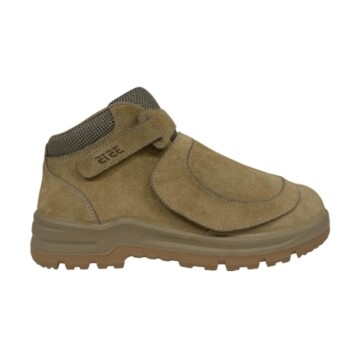
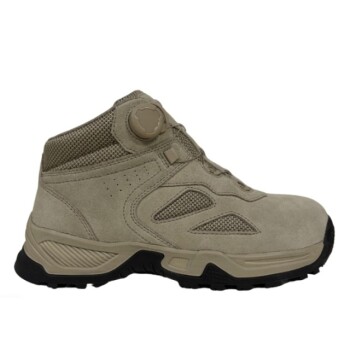
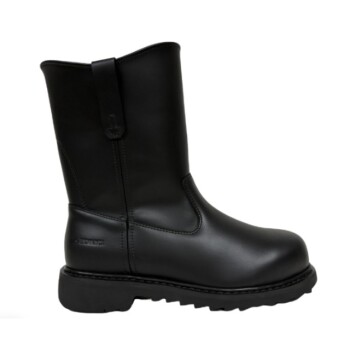
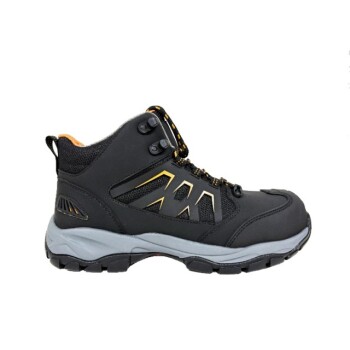
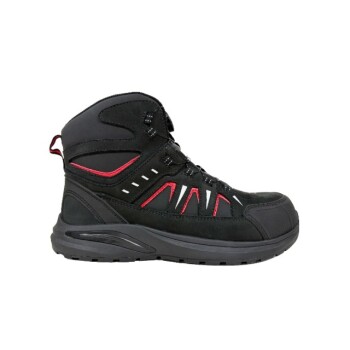
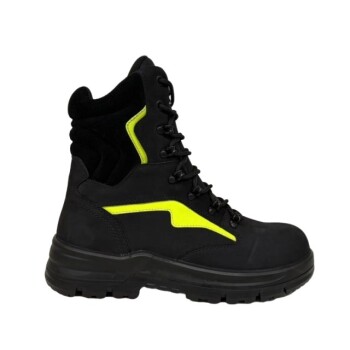
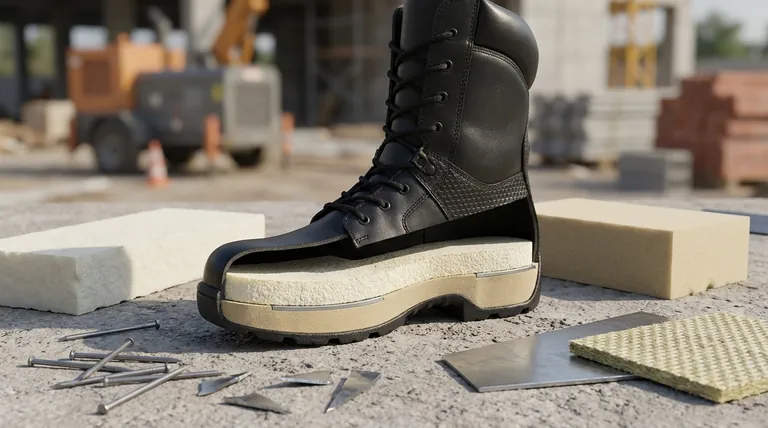
For these specific boots, the midsoles are available with either non-metallic or steel plates designed to prevent injuries from sharp objects piercing the sole. These protective plates are integrated into the boot's primary midsole, which is the essential cushioning layer made from materials like EVA or Polyurethane that absorbs shock and reduces foot fatigue.
Your question reveals a common point of confusion. A boot's midsole serves two distinct purposes: cushioning (from foam materials) and puncture protection (from plates). The options you see—steel and non-metallic—refer only to the protective plate, not the cushioning material it's paired with.
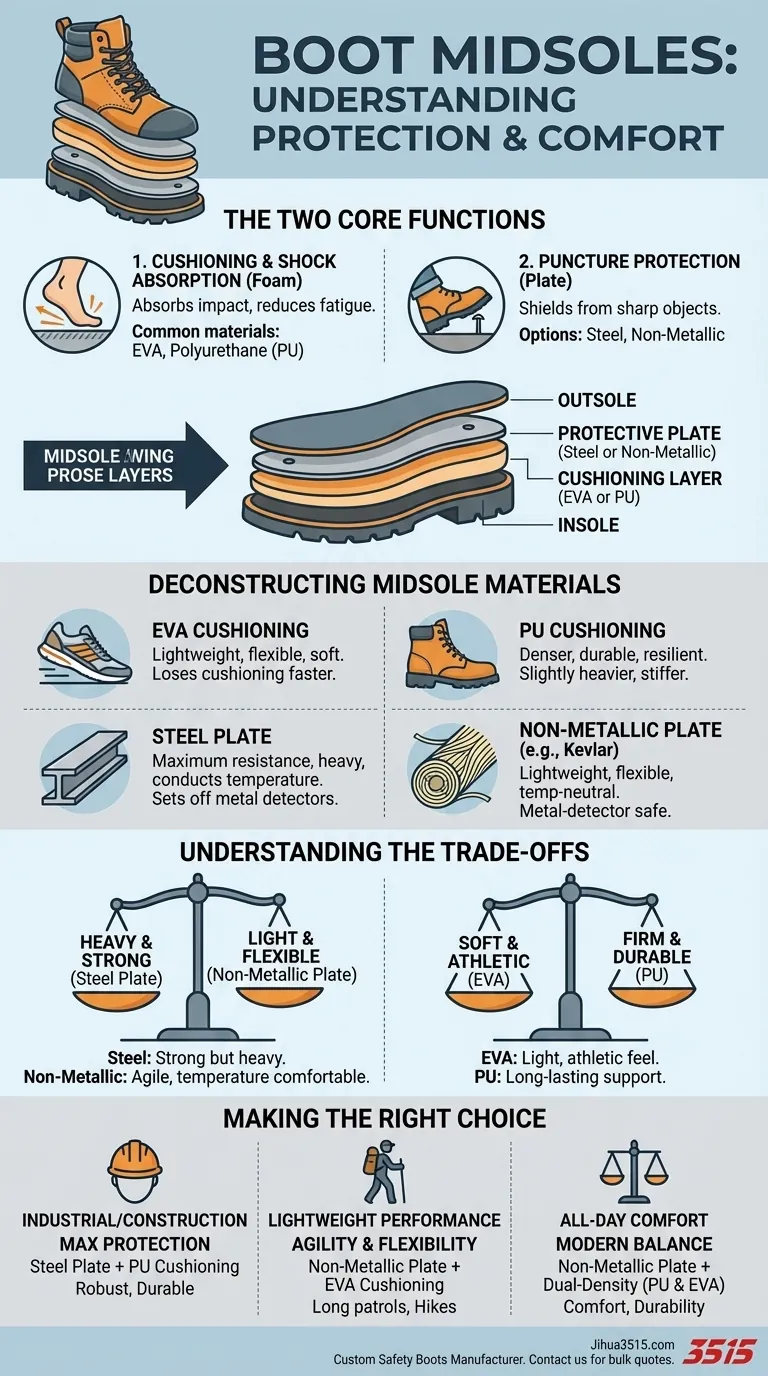
The Two Core Functions of a Boot Midsole
The term "midsole" can refer to two separate components that work together between the insole your foot rests on and the outsole that touches the ground. Understanding both is key to choosing the right boot.
Function 1: Cushioning and Shock Absorption
This is the midsole's primary role. It's a layer of foam engineered to absorb impact from walking or running, which helps reduce stress on your feet, knees, and back.
The goal here is to prevent fatigue over long periods. Common materials used for cushioning are EVA and Polyurethane (PU).
Function 2: Puncture Protection
This is a specialized safety feature. A thin, incredibly resistant plate is embedded within the foam midsole to shield your foot from nails, glass, or other sharp hazards on the ground.
The options you were given—steel and non-metallic—refer specifically to the material used for this protective plate.
Deconstructing the Midsole Materials
Each material used in the midsole structure offers a different blend of comfort, durability, weight, and protection.
EVA (Ethylene Vinyl Acetate)
EVA is a lightweight, flexible foam that provides excellent cushioning. It's the same material found in most running shoes. Phylon is a specific type of heat-compressed EVA that is very light.
PU (Polyurethane)
PU is a denser and more durable foam than EVA. While slightly heavier, it resists compression much better over time, making it a common choice for heavy-duty work and tactical boots.
Steel Plates
This is the traditional material for puncture protection. Steel offers maximum resistance to penetration but adds noticeable weight and rigidity to the boot.
Non-Metallic Plates
These are modern alternatives, often made from composite materials like Kevlar. They provide certified puncture protection while being significantly lighter and more flexible than steel.
Understanding the Trade-offs
Choosing the right midsole means balancing protection with comfort and performance. There is no single "best" option—only the best option for your specific needs.
Steel vs. Non-Metallic Protection
Steel plates are proven and exceptionally strong, but they are heavy and conduct temperature, making your feet colder in winter. They will also set off metal detectors.
Non-metallic plates are lighter, more flexible, and do not conduct heat or cold, improving comfort in extreme temperatures. They are the standard for environments with metal detectors.
EVA vs. PU Cushioning
EVA provides a softer, more "athletic" feel and makes the boot lighter overall. However, it can compress and lose its cushioning ability more quickly under heavy, repeated use.
PU offers firmer, more resilient support that lasts longer. The trade-off is a slightly heavier and stiffer boot, which can be beneficial for stability on uneven terrain.
Making the Right Choice for Your Goal
Select a midsole configuration based on your most common activity and environment.
- If your primary focus is maximum protection in a harsh industrial or construction environment: A boot with a steel plate and a durable PU cushioning midsole is your most robust option.
- If your primary focus is lightweight performance and flexibility for long patrols or hikes: A non-metallic plate combined with a cushioned EVA midsole offers protection without sacrificing agility.
- If your primary focus is a balance of all-day comfort, durability, and modern protection: Look for a boot with a non-metallic plate and a dual-density midsole that uses both PU and EVA to optimize support and cushioning.
By understanding these components, you can confidently select a boot that is engineered to perform exactly as you need it to.
Summary Table:
| Component | Material Options | Key Features |
|---|---|---|
| Puncture Protection Plate | Steel, Non-Metallic (e.g., Kevlar) | Steel: Maximum protection, heavy. Non-Metallic: Lightweight, flexible, temperature-neutral. |
| Cushioning Midsole | EVA, Polyurethane (PU) | EVA: Lightweight, soft cushioning. PU: Durable, long-lasting support. |
| Best Use Case | Industrial/Construction (Steel + PU), Lightweight Performance (Non-Metallic + EVA) | Balance protection, comfort, and durability based on your environment. |
Need custom safety boots with the perfect midsole for your team? As a large-scale manufacturer, 3515 produces a comprehensive range of footwear for distributors, brand owners, and bulk clients. Our production capabilities encompass all types of shoes and boots, including steel or non-metallic puncture protection paired with EVA or PU cushioning. We ensure durability, comfort, and safety tailored to your specific needs. Contact us today for a quote!
Visual Guide
Related Products
- Premium Suede Metatarsal Guard Safety Boots Work Shoes
- Premium Wholesale Wheat Nubuck Safety Boot with Rapid Lacing System
- Premium Wholesale Waterproof Safety Boots High Performance Protection for Industrial Markets
- Heavy-Duty Goodyear Welted Pull-On Safety Rigger Boot
- Premium Waterproof High-Cut Industrial Safety Boots for Wholesale and Bulk Orders
People Also Ask
- How does metatarsal protection in safety footwear work? The Essential Guide to Foot Safety
- What is a metatarsal guard in safety boots? Essential Protection for Your Entire Foot
- How do metatarsal guards enhance work shoe safety? Prevent Crushing Foot Injuries on the Job
- What does the 'MT' in ASTM F2413-18 stand for? Essential Metatarsal Protection Explained
- What is metatarsal protection in safety boots? Essential Defense for Top-of-Foot Hazards