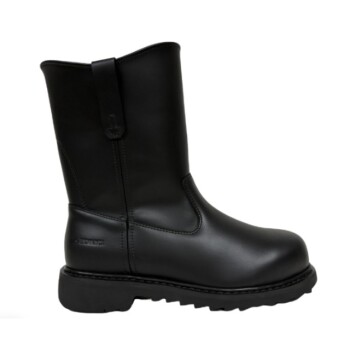
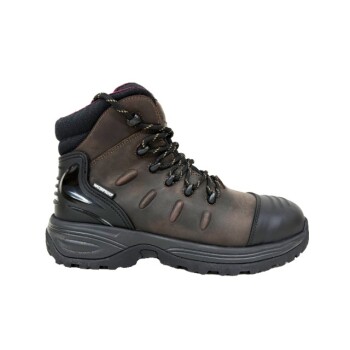
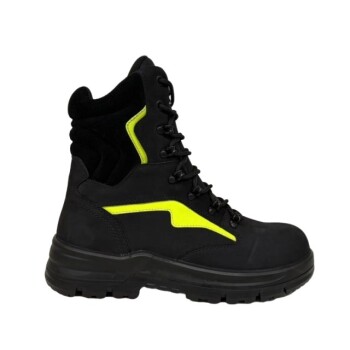
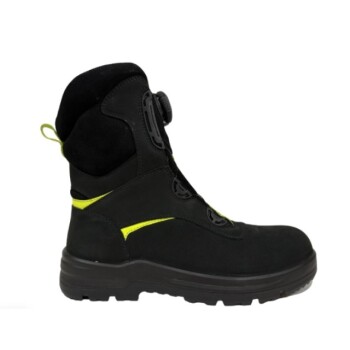
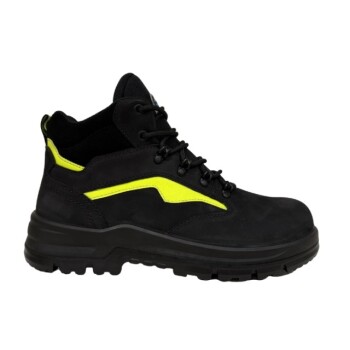
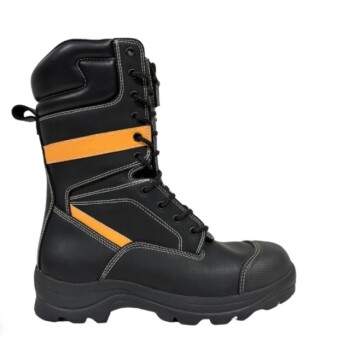
Yes, you absolutely can. Oil-resistant safety boots are frequently customized to meet the specific demands of a job site and the personal needs of the wearer. This customization extends beyond basic sizing to include different configurations, materials, and even aesthetic elements, but it's crucial to understand how these choices impact safety and performance.
The ability to customize oil-resistant footwear is about finding the ideal intersection of certified safety, job-specific function, and individual comfort. The most critical "customizations" are not cosmetic but are foundational choices about fit and sole material that directly affect your protection and endurance on the job.
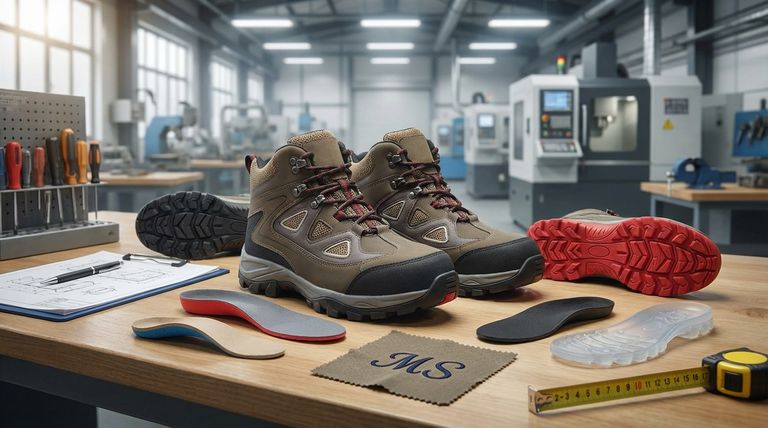
Defining "Customization" in Safety Footwear
When we talk about customizing safety boots, the term covers a range of options from foundational fit to specialized features. It's less about building a boot from scratch and more about selecting the right components for your needs.
Foundational Fit and Sizing
The most important customization is achieving a perfect fit. Poorly fitting boots can lead to fatigue, blisters, and even accidents.
Manufacturers often provide options for size, width, and arch support. Some also account for anatomical differences between men's and women's feet, so be sure to consult sizing charts, as a woman may need to select a size that is one to one-and-a-half sizes smaller than a men's boot.
Style and Configuration
The overall design of the boot can be tailored to your work environment and preferences.
Common configurations include traditional lace-up boots for a secure fit or pull-on styles (like Wellingtons) for convenience. You can also select different heights, such as standard ankle-height boots or taller models for more support and protection.
Material and Sole Selection
This is where customization has the biggest impact on safety and performance. The sole is your primary defense against slips and chemical hazards.
The three primary sole materials each offer distinct benefits:
- Rubber: Offers excellent resistance to oil, chemicals, and abrasions, making it a durable choice for heavy industrial use.
- Thermo-polyurethane (TPU): A tough, lightweight material that provides strong resistance to splitting and is also highly oil-resistant.
- Ethylene-vinyl acetate (EVA): Prized for its lightweight cushioning and comfort, often used in midsoles to reduce foot fatigue.
Feature-Specific Add-ons
Beyond the core structure, many brands allow for the addition of specific features.
This can include functional enhancements like a celastic toe for added structure or aesthetic touches like personalized embroidery. For these specific options, it is always best to check directly with the manufacturer or retailer.
Understanding the Trade-offs and Limitations
While customization offers significant benefits, it's crucial to recognize its limits, especially where safety is non-negotiable.
Safety Certifications Are Paramount
The core safety features of a boot, such as its oil-resistance rating or slip-resistance standard, are not negotiable. Any customization offered by a reputable manufacturer will not compromise these certified safety standards. Avoid any aftermarket modifications that could void your boot's certification.
The Reality of "Anti-Slip"
Even the most advanced oil- and slip-resistant soles have their limits. In conditions of extreme contamination or on exceptionally slick surfaces, the risk of slipping can still exist. These features significantly reduce risk but do not eliminate it entirely.
Durability and Contamination
Prolonged exposure to certain oils, fuels, or chemical solvents can still cause permanent damage to the boot's outsole over time. Customization does not change this fundamental material reality. Regular inspection and cleaning are essential to maintaining the boot's effectiveness.
Making the Right Choice for Your Needs
Selecting the right boot configuration comes down to prioritizing your primary requirements.
- If your primary focus is maximum safety in hazardous environments: Prioritize boots with a durable rubber or TPU outsole and ensure they carry the specific safety certifications required for your job site.
- If your primary focus is all-day comfort and reducing fatigue: Pay close attention to sizing, width, and arch support, and consider boots that incorporate a cushioned EVA midsole.
- If your primary focus is a specific industry (e.g., food service, construction): Look for manufacturer-designated styles that already incorporate features common to your field, such as specific tread patterns or material properties.
Ultimately, customizing your safety boots empowers you to get the precise tool you need to do your job safely and effectively.
Summary Table:
| Customization Area | Key Options & Considerations |
|---|---|
| Fit & Sizing | Size, width, arch support, men's/women's specific lasts |
| Style & Configuration | Lace-up vs. pull-on (Wellington), ankle-height vs. taller |
| Sole Material | Rubber (durability), TPU (lightweight), EVA (cushioning) |
| Additional Features | Celastic toe, personalized embroidery (check with manufacturer) |
Ready to customize your oil-resistant safety boots?
As a large-scale manufacturer, 3515 produces a comprehensive range of certified safety footwear for distributors, brand owners, and bulk clients. We offer extensive customization options—from precise fit and durable materials like rubber and TPU soles to specific features—ensuring your team has the perfect balance of safety, comfort, and job-specific performance.
Contact us today to discuss your custom safety boot requirements and get a quote.
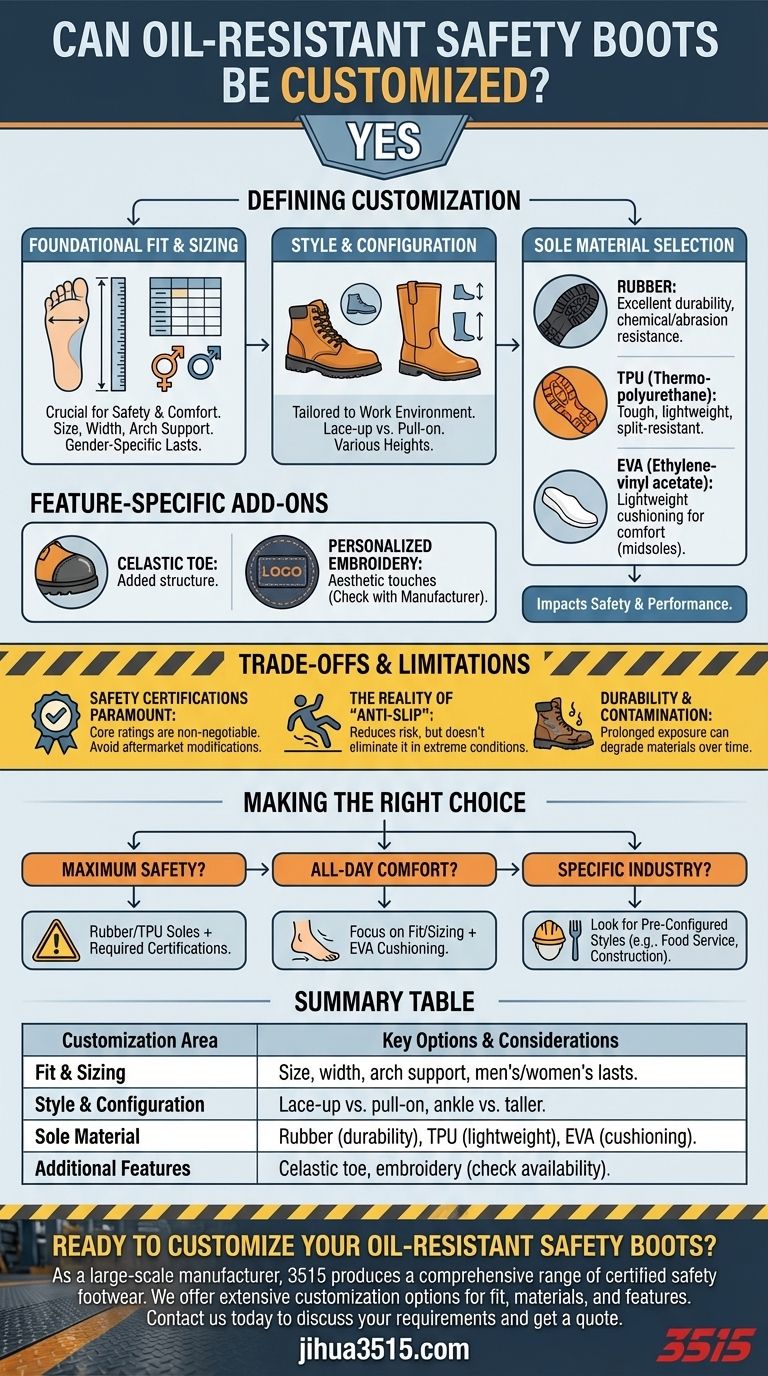
Visual Guide
Related Products
- Heavy-Duty Goodyear Welted Pull-On Safety Rigger Boot
- Premium Oil Wax Leather Safety Boots for Bulk Purchase
- Premium Wholesale Waterproof Safety Boots High Performance Protection for Industrial Markets
- Premium Waterproof Nubuck Safety Boots for Wholesale
- Premium Waterproof High-Cut Industrial Safety Boots for Wholesale and Bulk Orders
People Also Ask
- What are the key elements of quality boot construction? Ensure Longevity & Performance
- Are Goodyear welted boots worth it? The Ultimate Guide to Lifelong Footwear
- What is a Goodyear welt on a boot? The Secret to Durable, Repairable Footwear
- What makes Goodyear Welt boots suitable for harsh environments? Unmatched Durability & Repairability
- What additional high-quality materials are used in Goodyear Welt boots? A Guide to Advanced Components