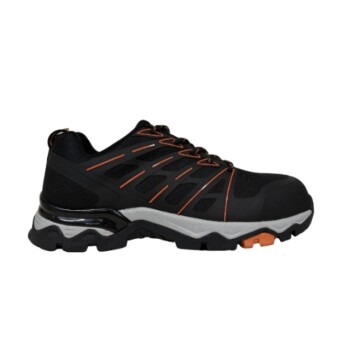
The use of high-barrier materials is essential because they provide the necessary physical isolation required to operate safely in hazardous environments. By utilizing materials engineered for low permeability and high resistance, these specialized boots create an impenetrable shield that stops liquids, chemicals, and contaminants from breaching the footwear's exterior.
The core function of these materials is to sever environmental transmission routes. By ensuring total physical isolation, high-barrier footwear guarantees that external hazards cannot pass through the protective shell to reach the wearer's skin.
The Mechanics of Protection
Establishing Physical Isolation
The primary goal of safety footwear in high-risk zones is to create a secure separation between the worker and the environment. High-barrier materials are the foundation of this strategy.
They function as a continuous wall rather than a simple covering. This isolation is critical for personnel who must walk through or stand in hazardous substances without risking exposure.
Combatting Low Permeability
Standard materials often have microscopic pores that allow fluids to seep through over time. High-barrier materials are defined by their low permeability.
This means the material structure is dense enough to reject the ingress of fluids. This prevents dangerous substances from soaking into the boot and eventually contacting the foot.
Resisting Chemical Degradation
In industrial environments, physical isolation must be maintained even when exposed to aggressive substances. High-barrier materials are selected for their high resistance to chemical breakdown.
If a material were to degrade or melt upon contact with a chemical, the barrier would fail. High-resistance construction ensures the boot remains intact even after direct contact with contaminants.
Blocking Transmission Routes
Stopping Contact Transfer
"Environmental transmission routes" refer to the ways hazards move from the surroundings to the worker. In footwear, the primary route is contact with contaminated surfaces.
High-barrier materials effectively block this route. They ensure that what is on the floor stays on the floor, rather than wicking up into the sock or skin of the operator.
Securing Field Operations
For personnel in field operations, the environment is often unpredictable. You may encounter water, mud, or unknown sludge.
A high-barrier construction ensures a baseline level of security. It allows the wearer to focus on the task at hand, confident that their feet are protected from whatever lies on the ground.
Understanding the Trade-offs
The Breathability Conflict
It is important to recognize that a material designed to keep liquids out will also keep moisture in. High-barrier boots often sacrifice breathability for safety.
This can lead to heat buildup and perspiration inside the boot. In hot environments, this "sealed" effect requires careful management to prevent foot health issues like maceration.
Flexibility vs. Protection
Materials with high resistance and low permeability are often denser and stiffer than standard textiles.
This creates a rigid structure that provides excellent protection but may reduce range of motion. Operators should be prepared for a potential increase in weight and a decrease in flexibility compared to standard footwear.
Making the Right Choice for Your Goal
Selecting the correct safety footwear involves assessing the specific nature of your environmental hazards against the needs of the wearer.
- If your primary focus is maximum contamination control: Prioritize boots with the highest barrier ratings to ensure zero permeability against liquids and chemicals.
- If your primary focus is extended wear comfort: Acknowledge that high-barrier boots may require moisture-wicking socks or frequent breaks to manage internal heat buildup.
High-barrier materials are the only reliable way to ensure the integrity of the protective seal between a worker and a hazardous world.
Summary Table:
| Feature | High-Barrier Material Benefit | Impact on Safety |
|---|---|---|
| Permeability | Ultra-low liquid ingress | Prevents chemical and fluid seepage to the skin |
| Chemical Resistance | High degradation resistance | Maintains boot integrity when exposed to corrosives |
| Physical Isolation | Continuous environmental seal | Blocks transmission routes from contaminated surfaces |
| Durability | High density construction | Ensures long-lasting protection in unpredictable field zones |
Partner with 3515 for High-Performance Hazardous Protection
As a large-scale manufacturer serving distributors and brand owners, 3515 offers comprehensive production capabilities for all footwear types, anchored by our flagship Safety Shoes series. Our specialized high-barrier construction ensures that your workforce or customers remain safe in the most demanding industrial environments.
Our extensive portfolio covers work and tactical boots, outdoor shoes, training shoes, and sneakers, as well as Dress & Formal shoes to meet diverse bulk requirements. By choosing 3515, you gain access to decades of manufacturing expertise, rigorous quality control, and scalable solutions tailored to your brand's specific needs.
Ready to upgrade your protective footwear line? Contact us today to discuss your bulk manufacturing requirements and see how our high-barrier technology can add value to your product range.
References
- Totong Totong, Hardianto Iridiastadi. Personal Protective Equipment for Health Workers from Virus Transmission: The Effect of Temperature of Working Environment on Physiological Responses. DOI: 10.46254/ap03.20220280
This article is also based on technical information from 3515 Knowledge Base .
Related Products
- Premium Suede Sport Safety Shoes for Wholesale & Bulk Orders
- Premium Lightweight Safety Shoes for Wholesale & Bulk Orders
- Wholesale Anti-Smash & Puncture-Proof Safety Shoes Custom Manufacturing for Brands
- Premium KPU Injection Athletic Style Safety Shoes
- Premium Safety Shoes with Rotating Buckle Safety Sneakers
People Also Ask
- What industries have specific OSHA footwear requirements? Ensure Compliance & Protect Your Workforce
- What are the primary functions of professional safety shoes? Maximize Safety in Water Supply Confined Spaces
- What role do specialized safety shoes play in preventing falls? Engineering Stability in Industrial Environments
- What are the main safety features of S1-S5 shoes? The 3 Essential Protections Explained
- How do specialized safety shoes protect against battery maintenance injuries? Prevent Impact and Chemical Burns