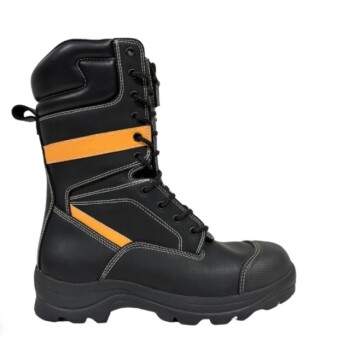
Specifically, wildland firefighters are required to use all-leather fire boots. Unlike the rubber boots often seen in structural firefighting, leather provides the unique combination of durability, ankle support, and maneuverability essential for navigating the unpredictable and rugged terrain of a wildland fire for extended periods.
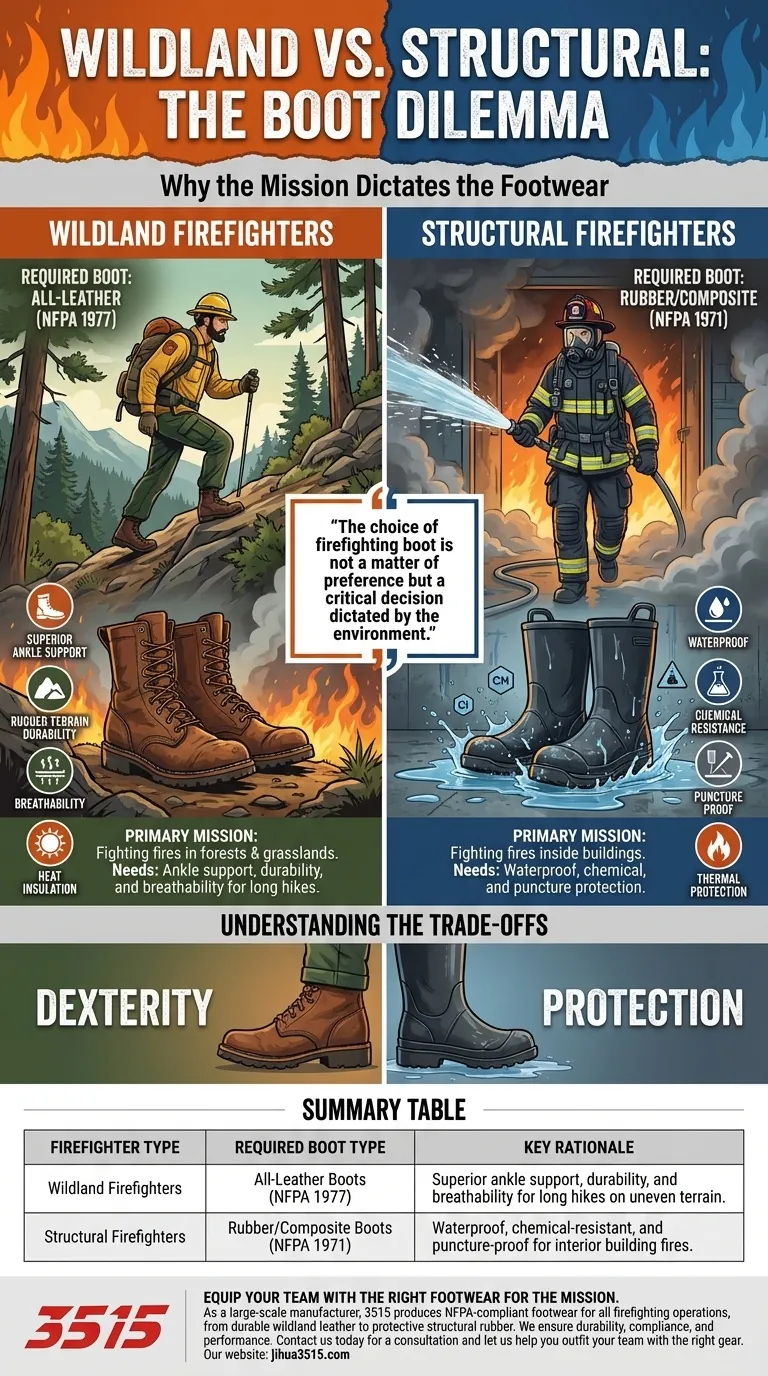
The choice of firefighting boot is not a matter of preference but a critical decision dictated by the environment. Wildland firefighters require supportive, durable leather for hiking rough terrain, while structural firefighters need the waterproof and chemical protection of rubber boots for building fires.
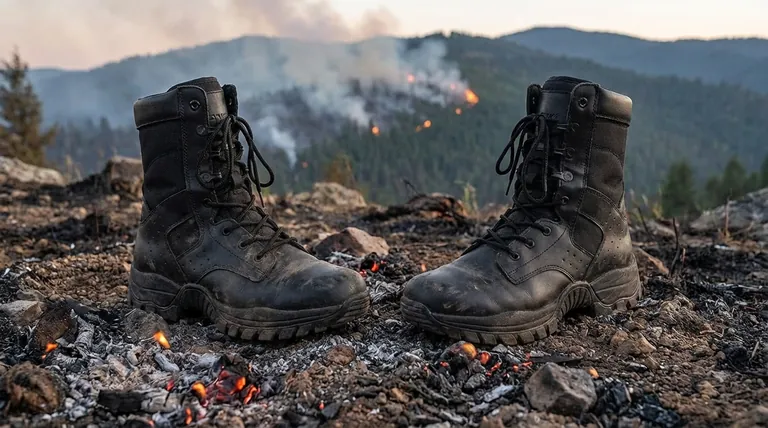
The Unique Demands of Wildland Firefighting
The environment of a wildland fire is fundamentally different from that of a structural fire inside a building. The gear, especially footwear, must be purpose-built for the specific challenges of fighting fires across forests, mountains, and grasslands.
The Challenge of Terrain
Wildland firefighters operate on uneven, steep, and unstable ground. They may hike for miles carrying heavy gear before even reaching the fire line.
This reality makes ankle support and stability paramount. A twisted ankle can be a mission-ending, life-threatening injury in a remote area.
The Need for Maneuverability
Unlike the relatively flat surfaces inside a structure, wildland terrain requires constant agility. Firefighters must be able to climb, scramble, and pivot quickly.
Leather boots, particularly the 8-inch high logger-style boots, offer a snug fit that moves with the foot, providing the dexterity needed to maintain footing on loose soil and rocks.
The Factor of Duration and Heat
Wildland firefighting involves long operational periods, often 12 hours or more, spent almost entirely on one's feet. The heat they face is often radiant and conducted up from the hot ground.
Leather is more breathable than rubber, which helps manage moisture and prevent blisters during these long shifts. Furthermore, the thick leather soles are specifically designed to insulate the foot from prolonged contact with hot earth and embers.
Understanding the Trade-offs: Leather vs. Rubber Boots
No single boot is perfect for every fire scenario. The choice between leather and rubber is a classic example of selecting the right tool for the job, with each material offering distinct advantages and disadvantages.
Why Leather Excels in the Wildland Arena
All-leather boots, compliant with the NFPA 1977 standard, are built for endurance and support. Their construction allows them to be broken in, molding to the firefighter's foot for a custom, supportive fit over time.
Their primary advantage is superior performance during long-distance hiking over treacherous ground, providing the support and breathability necessary for multi-hour or multi-day operations.
Why Rubber is the Standard for Structural Fires
Rubber or composite boots, governed by the NFPA 1971 standard, are designed for the hazards of a building fire. They offer superior protection against water, chemicals, and bloodborne pathogens.
Their construction also provides a higher degree of thermal protection for the brief, intense heat of a structural fire and better puncture resistance from hazards like nails and broken glass. However, they are heavy, clumsy for hiking, and not breathable, making them unsuitable for wildland use.
Making the Right Choice for the Mission
The mandate for a specific type of boot is directly tied to the predictable hazards of the firefighting discipline. Understanding the core mission clarifies the equipment requirement.
- If your primary mission is fighting fires in forests and grasslands: You need the ankle support, durability, and breathability of all-leather boots to handle miles of rugged terrain.
- If your primary mission is fighting fires inside buildings: You need the waterproof, chemical-resistant, and puncture-proof qualities of rubber boots to manage interior hazards.
Ultimately, requiring leather boots for wildland firefighters is a safety-critical decision based on the fundamental demands of their work environment.
Summary Table:
| Firefighter Type | Required Boot Type | Key Rationale |
|---|---|---|
| Wildland Firefighters | All-Leather Boots (NFPA 1977) | Superior ankle support, durability, and breathability for long hikes on uneven terrain. |
| Structural Firefighters | Rubber/Composite Boots (NFPA 1971) | Waterproof, chemical-resistant, and puncture-proof for interior building fires. |
Equip Your Team with the Right Footwear for the Mission
As a large-scale manufacturer, 3515 produces a comprehensive range of NFPA-compliant footwear for distributors, brand owners, and bulk clients. Whether your team needs durable leather boots for wildland operations or protective rubber boots for structural firefighting, our production capabilities encompass all types of safety footwear.
We ensure durability, compliance, and performance to keep firefighters safe and effective. Contact us today for a consultation and let us help you outfit your team with the right gear.
Visual Guide
Related Products
- Durable Leather Tactical Boots Wholesale & Custom Manufacturing for Brands
- Durable Leather Work Boots for Wholesale & Custom Manufacturing
- Durable Leather High-Ankle Tactical Boots for Wholesale & Custom Manufacturing
- Premium Grain Leather Safety Boots for Bulk Supply
- Durable Leather Work Boots Wholesale Manufacturer & Custom Factory
People Also Ask
- What specialized protections do tactical boots offer? Maximize Endurance with High-Performance Footwear
- What features should law enforcement officers look for in tactical boots? Essential Guide for Safety & Performance
- Importance of Professional Tactical Boots in Loess Gully Regions: Ensure Safety and Precision for Field Monitoring
- What is rucking, and why are tactical boots suitable for it? Discover the Ultimate Footwear for Heavy Loads
- What makes the traction of tactical boots superior? Unlock the Science of Unbeatable Grip