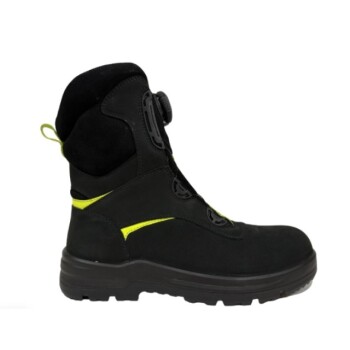
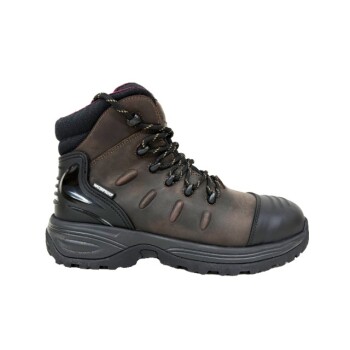
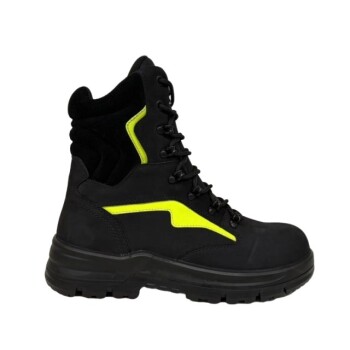
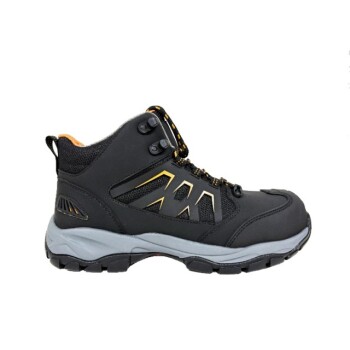
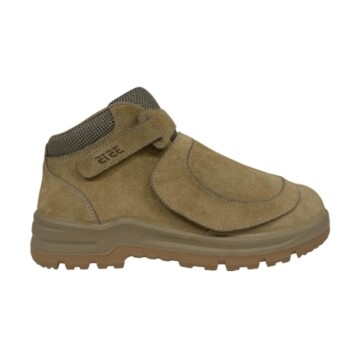
Beyond basic toe protection, specialist safety boots offer a range of targeted defenses designed for specific, high-risk work environments. These protections include safeguards against electrical shock, penetration from sharp objects, exposure to chemicals, and environmental hazards like extreme temperatures or water. Understanding these specialist features is crucial for ensuring your footwear provides the correct type of protection for your job.
The most effective safety boot is not the one with the most features, but the one with the right certified protections that directly counter the known hazards of your specific work environment.

Foundational Protections: The Non-Negotiables
Before exploring specialist features, it's important to recognize the core protections that form the foundation of most modern safety footwear. These are mandated by safety standards to guard against common workplace injuries.
Impact and Compression Resistance
This is the most well-known feature of a safety boot. A protective toe cap, made from either steel or a non-metallic composite material, is built into the front of the boot.
These caps are typically rated to withstand 200 joules of impact, protecting your feet from falling objects, debris, and compression from rolling machinery.
Midsole Penetration Resistance
For environments with sharp objects on the ground like construction sites or scrapyards, a penetration-resistant plate is embedded in the midsole.
This plate, often made of steel or flexible composite fabric, prevents nails, glass, and other sharp materials from puncturing the sole and injuring your foot.
Slip Resistance
Slips, trips, and falls are among the most common workplace accidents. Safety boot outsoles are rated for their grip on different surfaces.
Look for ratings like SRA (tested on ceramic tile with soap), SRB (tested on steel with glycerol), or SRC (tested for both conditions) to ensure adequate traction.
Electrical Hazard Protection: A Critical Distinction
Working near electricity demands highly specific footwear, and it's vital to understand the difference between the two main types of electrical protection. Choosing the wrong one can have catastrophic consequences.
Non-Conductive (EH) Boots
Electrical Hazard (EH) rated boots are designed to provide a secondary source of protection against accidental contact with live electrical circuits.
Their soles and heels are made from non-conductive materials that can withstand 18,000 volts at 60 Hz for one minute in dry conditions with no current flow greater than 1.0 milliampere. These are for electricians and power line workers.
Anti-Static (ESD) Boots
Anti-Static or Electro-Static Dissipative (ESD) boots serve the opposite purpose. They are designed to safely discharge static electricity from your body into the ground.
This prevents the buildup of static that could damage sensitive electronic components or ignite flammable materials or gases. These are not for protection from live circuits.
Environmental and Chemical Safeguards
Many jobs require protection from the environment itself, whether it's water, chemicals, or extreme temperatures.
Waterproofing
For those working on docks, offshore rigs, in mines, or simply in consistently wet conditions, waterproof boots are essential. They use waterproof membranes and sealed seams to keep feet dry, preventing discomfort and potential health issues.
Chemical and Fuel Resistance
In industries like oil and gas or chemical processing, boots must have outsoles made from materials that resist degradation from chemicals, oils, and fuels. This preserves the boot's structural integrity and protective qualities.
Thermal Insulation
For work in extreme climates, specialist boots offer insulation. Cold insulation protects against freezing temperatures in outdoor or cold-storage work, while heat-resistant soles protect against contact with hot surfaces, common in foundry or welding work.
Understanding the Trade-offs and Certification
Not all safety features are created equal, and their effectiveness is entirely dependent on official testing and certification.
The Importance of Certification
A boot's claimed protections are meaningless without certification. Look for markings indicating they meet standards like ASTM F2413 in the United States. These standards verify that the boot has passed rigorous tests for impact, compression, electrical resistance, and other properties. Uncertified boots are a serious safety risk.
Steel vs. Composite Toe Caps
Steel caps offer maximum resistance to puncture and crushing. However, they are heavier and conduct temperature, making them less comfortable in extreme cold or heat.
Composite caps are lighter, do not conduct electricity or temperature, and won't set off metal detectors. While they meet the same impact standards, they may not offer the same level of absolute puncture resistance as steel.
No Single Boot Does It All
It is critical to understand that protections can be mutually exclusive. For example, an EH-rated boot is non-conductive and cannot also be an Anti-Static (ESD) boot, which is designed to be conductive. You must choose the protection that matches your primary hazard.
Making the Right Choice for Your Environment
Selecting the proper safety boot requires a clear assessment of your workplace risks.
- If your primary risk is from live electrical circuits: You must select a boot explicitly rated for Electrical Hazard (EH) protection.
- If you work with flammable materials or sensitive electronics: Prioritize Anti-Static or Electro-Static Dissipative (ESD) boots to prevent static discharge.
- If your environment involves sharp objects underfoot: Ensure your boot has a certified penetration-resistant midsole plate.
- If you work in wet, chemical-heavy, or extreme temperature areas: Look for specific waterproof, chemical-resistant, or thermal insulation ratings that match your conditions.
Ultimately, the safest boot is the one whose certified protections directly counter the specific hazards you face every day.
Summary Table:
| Protection Type | Key Feature | Ideal For |
|---|---|---|
| Electrical Hazard (EH) | Non-conductive sole (18,000V protection) | Electricians, power line workers |
| Anti-Static (ESD) | Safely discharges static electricity | Electronics manufacturing, flammable environments |
| Chemical Resistance | Oil/fuel-resistant outsoles | Oil & gas, chemical processing |
| Thermal Insulation | Cold/heat-resistant materials | Foundries, cold storage, outdoor work |
| Waterproofing | Sealed membranes and seams | Docks, mines, wet conditions |
Need Specialist Safety Boots Tailored to Your Hazards?
As a large-scale manufacturer, 3515 produces a comprehensive range of certified safety footwear for distributors, brand owners, and bulk clients. Our production capabilities encompass all types of specialist boots with EH, ESD, chemical resistance, and thermal protection—ensuring your workforce gets the precise defense they need.
Contact us today for certified safety boots that match your specific workplace risks.
Visual Guide

Related Products
- Puncture-Resistant Velcro Safety Boots for Wholesale & Custom Manufacturing
- Wholesale Durable Safety Boots | Custom Steel Toe & Puncture-Resistant Manufacturing
- Premium Grain Leather Safety Boots for Bulk Supply
- Heavy-Duty Waterproof Nubuck Safety Boots Safety Shoes for Bulk Supply
- Premium High-Cut Waterproof Safety Boots Manufacturing & Wholesale Solutions
People Also Ask
- Why are industrial safety boots with steel toes necessary for machine operators? Essential Foot Protection for Safety
- What are the characteristics of steel toe safety boots? Maximum Protection, Key Trade-offs
- Is it true that steel toes can cause toes to get cut off? Debunking the Dangerous Myth
- What are the primary safety functions of safety boots with steel-toe designs? Essential Protection for Industry
- What do the symbols M, F, I, and C represent on safety toe boots? Decode ASTM F2413 for Maximum Protection