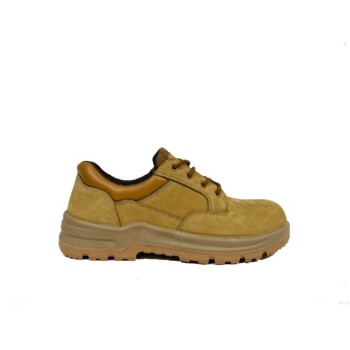
Industrial safety shoes serve two essential functions for overhead utility technicians: preventing falls through advanced traction and mitigating electrocution risks through electrical insulation. These specialized boots act as a critical interface between the worker and the precarious environment of utility poles and ladders.
Core Takeaway While standard safety footwear focuses on toe protection, the primary value of safety shoes in overhead utility work is stability and isolation. They provide the necessary grip to navigate vertical, often slippery surfaces, while serving as a backup defense against accidental contact with live electrical currents.
Maximizing Stability at Height
Falls from height remain the most significant physical risk for technicians bundling cables on utility poles. The design of industrial safety shoes addresses this through specialized outsole engineering.
The Role of Slip-Resistant Outsoles
Technicians must maintain balance on narrow ladder rungs or climb directly on pole surfaces. High-performance slip-resistant outsoles provide the friction required to lock the foot in place.
This traction is critical for stabilizing the technician's stance. A stable footing allows the worker to focus on the intricate task of fiber optic bundling rather than worrying about foot placement.
Counteracting Environmental Hazards
Utility poles are often smooth, wet, or covered in environmental debris. The shoe's tread design is engineered to grip these wet or smooth pole surfaces where standard footwear would slide. This drastically reduces the probability of slipping, which is the precursor to most falls from height.
Protection Against Electrical Hazards
When working near power lines to bundle fiber optics, the risk of electric shock is an ever-present danger. Safety footwear acts as a critical line of defense in this invisible battlefield.
Acting as a Secondary Insulation Barrier
Industrial safety shoes for this sector possess electrical insulation properties. They are designed to stop the flow of electricity from the ground up or through the body to the ground.
Mitigating Contact Risks
During bundling, a technician may accidentally brush against leaking or damaged power lines. While not a replacement for primary tools like insulated gloves or mats, these shoes serve as a secondary defense mechanism. They reduce the likelihood of severe injury or fatality in the event of incidental contact.
Understanding the Limitations
While safety shoes are vital, understanding their specific scope of protection is necessary for total safety.
Context-Specific Protection
It is important to note that the chemical resistance or anti-crush features found in other industrial footwear (such as those used in petroleum or airport settings) are secondary to the needs of an overhead technician. For a pole climber, heavy anti-crush caps might add unnecessary weight, whereas flexibility and grip are paramount.
The "Secondary" Nature of Insulation
The electrical protection provided by footwear is defined as a "secondary defense." Technicians should never rely solely on their shoes for protection against high-voltage lines. They function best as a fail-safe within a broader system of personal protective equipment (PPE).
Making the Right Choice for Your Goal
Selecting the correct footwear depends on prioritizing the specific hazards of the job site.
- If your primary focus is Fall Prevention: Prioritize shoes with aggressive, high-performance slip-resistant outsoles designed specifically for wet, smooth vertical surfaces.
- If your primary focus is Electrical Safety: Ensure the footwear is rated for electrical hazard (EH) protection to serve as a reliable backup against accidental contact with live lines.
Ultimately, the right safety shoe transforms a technician's feet from a point of vulnerability into a stable, insulated foundation for high-risk overhead work.
Summary Table:
| Feature | Primary Protective Function | Benefit for Overhead Technicians |
|---|---|---|
| High-Traction Outsoles | Fall Prevention | Ensures grip on wet poles and narrow ladder rungs. |
| Electrical Hazard (EH) Rating | Secondary Insulation | Protects against incidental contact with live currents. |
| Specialized Tread Design | Stability at Height | Maintains footing on smooth vertical surfaces during bundling. |
| Ergonomic Flexibility | Fatigue Reduction | Allows for easier climbing and extended time on poles. |
Secure Your Workforce with Professional-Grade Safety Footwear
As a large-scale manufacturer serving global distributors and brand owners, 3515 offers comprehensive production capabilities for all footwear types. Our flagship Safety Shoes series is specifically engineered to protect technicians in high-risk environments, combining advanced slip resistance with critical electrical hazard isolation.
Whether you need specialized work and tactical boots for utility projects or high-performance sneakers and dress shoes for diverse bulk requirements, we provide the manufacturing excellence you need to scale your brand.
Ready to elevate your product line? Contact us today to discuss your bulk manufacturing needs!
References
- Mohammad Lathoiful, Hidayat Hidayat. ANALISIS RISIKO KESEHATAN DAN KESELAMATAN KERJA (K3) PADA PROSES PEMASANGAN JARINGAN INTERNET FTTH (FIBER TO THE HOME) DENGAN METODE HIRARC (HAZARD IDENTIFICATION, RISK ASSESSMENT, AND RISK CONTROL) STUDI KASUS DI PT. JINDE GRUP INDONESIA. DOI: 10.55445/jt.v9i01.37
This article is also based on technical information from 3515 Knowledge Base .
Related Products
- Wholesale Mesh Steel Toe Safety Shoes with Dial Closure Factory Production
- Wholesale Anti-Smash & Puncture-Proof Safety Shoes Custom Manufacturing for Brands
- Premium Wheat Nubuck Safety Shoes for Bulk Distribution
- Durable Steel Toe Safety Boots Wholesale & Custom Manufacturing
- Premium Waterproof High-Cut Industrial Safety Boots for Wholesale and Bulk Orders
People Also Ask
- What type of safety shoe is recommended for workers exposed to heavy machinery? Steel Toe Boots for Ultimate Protection
- Why is it mandatory to wear safety shoes with steel toe protection during metal loading? Prevent Crushing Injuries
- What are the main materials used in steel toe safety shoes? A Guide to Protective Footwear Construction
- What are the recommended uses for steel toe safety shoes? Essential Protection for High-Risk Industries
- Is the myth about steel toe shoes cutting off toes true? Debunking the Safety Footwear Myth