
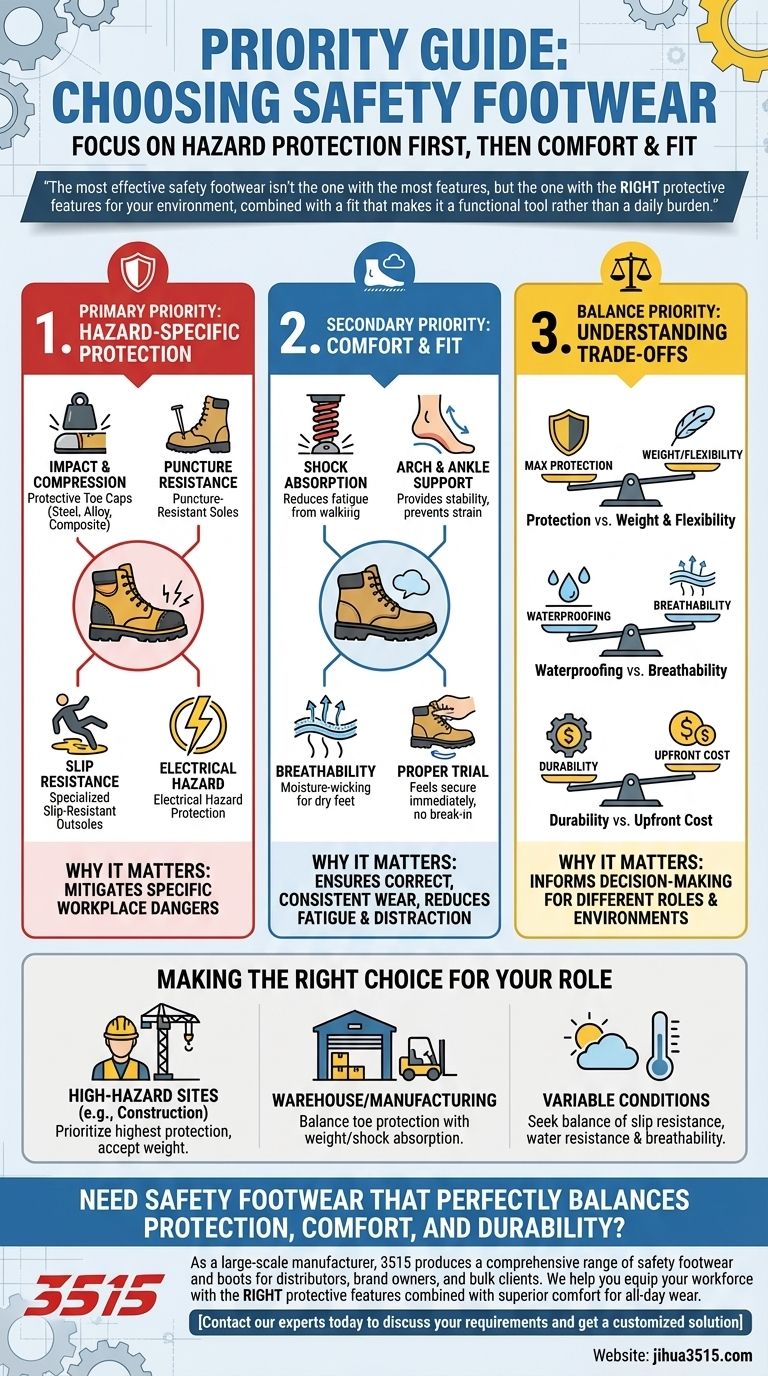
When choosing safety footwear, your first priority must be selecting protection features that directly match the specific hazards of your workplace. After satisfying this non-negotiable safety requirement, your focus should shift to comfort and fit, as these are the factors that ensure the footwear is worn correctly and consistently throughout the day.
The most effective safety footwear isn't the one with the most features, but the one with the right protective features for your environment, combined with a fit that makes it a functional tool rather than a daily burden.
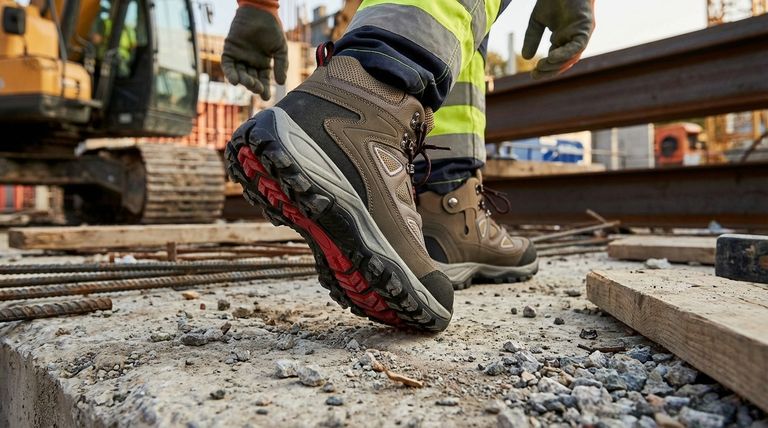
The Foundation: Hazard-Specific Protection
Before considering any other factor, you must perform a risk assessment of your work environment. The primary purpose of safety footwear is to mitigate specific, identified dangers.
Assess Your Environment First
The type of protection you need is dictated entirely by your job's risks. Ask yourself what you need protection from: falling objects, sharp materials underfoot, slippery surfaces, or electrical currents?
Decode Core Protection Features
Protective toe caps (steel, alloy, or composite) guard against impact and compression. Puncture-resistant soles protect you from nails and other sharp objects. Slip-resistant outsoles are critical for wet or oily surfaces, and specialized boots offer electrical hazard protection.
The Critical Enabler: All-Day Comfort and Fit
Once the required safety standards are met, comfort becomes the next most important factor. Uncomfortable footwear leads to fatigue, distraction, and the temptation to wear it improperly, all of which compromise safety.
Why Fit Is a Safety Feature
A poor fit can cause blisters, pain, and long-term foot problems. More importantly, it distracts you from the task at hand, which is a significant safety risk in any hazardous environment.
Key Elements of Comfort
Look for adequate shock absorption to reduce fatigue from walking on hard surfaces. Proper arch and ankle support provides stability and prevents strain. Breathability and moisture-wicking materials are also crucial for keeping feet dry and comfortable during long shifts.
The Importance of a Proper Trial
A safety shoe should feel secure and comfortable from the moment you try it on. Do not rely on a "break-in" period. Ensure there is enough room for your toes to move without your heel slipping.
Understanding the Trade-offs
Choosing the perfect safety footwear often involves balancing competing features. Understanding these compromises is key to making an informed decision.
Protection vs. Weight and Flexibility
Maximum protection features, like thick steel plates and heavy-duty materials, often increase the boot's weight and reduce its flexibility. This can lead to faster fatigue for workers who are constantly moving.
Waterproofing vs. Breathability
A completely waterproof boot is excellent for wet conditions but can trap sweat and heat, leading to discomfort in warmer environments. A balance is often necessary, using materials that offer water resistance while still allowing vapor to escape.
Durability vs. Upfront Cost
Higher-quality materials and superior construction lead to greater durability and a longer lifespan for the footwear. While this often means a higher initial price, it can result in a lower total cost of ownership over time.
Making the Right Choice for Your Role
Use your primary work function to guide your final decision.
- If your primary focus is working in high-hazard construction or industrial sites: Prioritize the highest level of impact and puncture resistance, even if it means accepting a heavier boot.
- If your primary focus is spending long hours on your feet in a warehouse or manufacturing setting: Balance the necessary toe protection with features that minimize weight and maximize shock absorption.
- If your primary focus is working in variable indoor/outdoor conditions: Seek a boot that balances slip resistance, water resistance, and breathability to handle changing environments.
Ultimately, the right footwear doesn't just protect your feet; it supports your entire workday.
Summary Table:
| Priority | Key Focus | Why It Matters |
|---|---|---|
| 1. Primary | Hazard-Specific Protection | Mitigates specific workplace dangers (impact, puncture, slips, electrical). |
| 2. Secondary | Comfort & Fit | Ensures correct, consistent wear, reduces fatigue, and prevents distraction. |
| 3. Balance | Trade-offs (e.g., Protection vs. Weight) | Informs decision-making for different roles and environments. |
Need safety footwear that perfectly balances protection, comfort, and durability?
As a large-scale manufacturer, 3515 produces a comprehensive range of safety footwear and boots for distributors, brand owners, and bulk clients. We help you equip your workforce with the right protective features for their specific hazards, combined with superior comfort for all-day wear.
Contact our experts today to discuss your requirements and get a customized solution.
Visual Guide
Related Products
- Safety Footwear Wholesale Manufacturer for Custom OEM/ODM Production
- Premium Suede Sport Safety Shoes for Wholesale & Bulk Orders
- Premium Safety Shoes with Rotating Buckle Safety Sneakers
- Premium Lightweight Safety Shoes for Wholesale & Bulk Orders
- Puncture-Resistant Velcro Safety Boots for Wholesale & Custom Manufacturing
People Also Ask
- What are the key OSHA regulations for safety footwear? Ensure Compliance & Protect Your Workforce
- Why is high-load mechanical testing equipment necessary for safety footwear? Ensure Life-Saving Compression Resistance
- What does a red rectangle with a white C letter on safety footwear mean? Essential Guide to Conductive Footwear
- What is the difference between oil resistance and slip resistance in footwear? Protect Your Boots and Your Safety
- What are the basic requirements of the ASTM F2413-05 standard? Mandatory Impact & Compression Protection


















