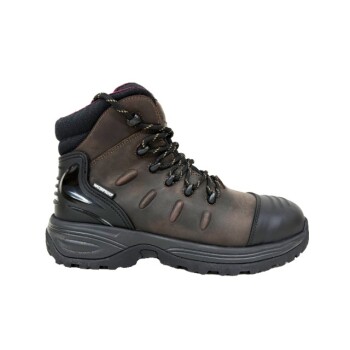
The core safety features of industrial-grade safety shoes for bridge construction and heavy machinery environments center on three specific mechanical defenses. To meet the demands of these high-risk zones, footwear must feature steel toe caps to deflect falling loads, puncture-resistant midsoles to block sharp debris from below, and slip-resistant outsoles to maintain traction on wet, uneven, or oily surfaces.
In high-density construction zones, footwear is not merely clothing but a critical component of site safety management. The definitive goal of these features is to create a robust barrier that mitigates the risks of crushing, penetration, and falls, ensuring both personnel health and operational continuity.
Mitigating Impact and Crushing Hazards
The Necessity of Steel Toe Caps
In bridge construction and heavy lifting environments, the risk of falling objects is omnipresent. Steel toe caps are the primary defense mechanism against this threat, specifically engineered to absorb impact energy.
Protection Against Compression
Beyond sudden impacts, these reinforced toes protect against compression injuries. This is vital during the maintenance of heavy machinery or conveyors, where equipment parts or heavy materials could crush the foot during repairs.
Defending Against Environmental Penetration
Puncture-Resistant Midsoles
Bridge construction sites are frequently littered with sharp debris, such as scrap metal, nails, or shattered concrete. Puncture-resistant midsoles are integrated into the shoe's foundation to prevent these sharp items from penetrating the sole and injuring the foot.
Stability on Hazardous Surfaces
Slip-resistant outsoles are essential for maintaining stability on the complex terrains found in construction. Whether the surface is wet, uneven, or a metal floor coated in oil (common in machinery maintenance), these soles provide the necessary traction to prevent dangerous falls.
Addressing Electrical Risks
Electrical Insulation Barriers
Working with heavy machinery often exposes personnel to high-voltage equipment. Industrial safety shoes for these environments frequently include electrical insulation to protect workers from electric shocks caused by power leaks or arc contact.
Understanding the Trade-offs
Weight vs. Protection
While steel toe caps provide superior protection against heavy compression, they add significant weight to the footwear. This can lead to increased fatigue over long shifts compared to lighter composite alternatives, though steel remains the standard for maximum crush resistance.
Rigidity vs. Agility
Puncture-resistant midsoles create a safer barrier against debris but inherently reduce the flexibility of the sole. In environments requiring high agility or frequent crouching, this stiffness can impact natural foot movement, requiring workers to adapt their gait slightly.
Making the Right Choice for Your Goal
Selecting the correct footwear requires analyzing the specific primary risks of your worksite.
- If your primary focus is heavy structural construction: Prioritize S3 or S5 rated shoes (as noted in safety standards) that combine maximum puncture resistance with waterproofing for outdoor elements.
- If your primary focus is machinery maintenance: Ensure the footwear includes electrical insulation and specialized anti-slip outsoles designed for oily metal surfaces.
The right safety shoe transforms a chaotic, high-risk environment into a manageable workspace by neutralizing the most immediate physical threats to the worker.
Summary Table:
| Feature | Primary Protection | Use Case Environment |
|---|---|---|
| Steel Toe Caps | Impact & Compression Deflection | Heavy Machinery Repair & Lifting |
| Puncture-Resistant Midsole | Blocking Nails & Sharp Debris | Bridge Construction Sites |
| Slip-Resistant Outsole | Traction on Oily/Wet Surfaces | Metal Flooring & Maintenance |
| Electrical Insulation | Shock Prevention | High-Voltage Equipment Zones |
Partner with 3515 for High-Performance Safety Footwear
As a large-scale manufacturer serving distributors and brand owners, 3515 offers comprehensive production capabilities for all footwear types, anchored by our flagship Safety Shoes series. Whether you require rugged work and tactical boots for bridge construction or specialized training shoes and sneakers for industrial personnel, our extensive portfolio meets diverse bulk requirements with uncompromising quality.
Enhance your product line and protect your workforce today—Contact us now to discuss your custom manufacturing needs!
References
- Reyckhard Cristian Pellokila Reyckhard Cristian Pellokila, Erni Yulianti. Risk Management Analysis to Construction Project of Liliba Bridge Duplication in Kupang City. DOI: 10.35629/8193-10087584
This article is also based on technical information from 3515 Knowledge Base .
Related Products
- Premium Waterproof High-Cut Industrial Safety Boots for Wholesale and Bulk Orders
- Premium Wheat Nubuck Safety Shoes for Bulk Distribution
- Premium Wholesale Tactical Style Safety Shoes Boots with Quick Lacing
- Premium KPU Athletic Safety Shoes for Wholesale
- Wholesale Mesh Steel Toe Safety Shoes with Dial Closure Factory Production
People Also Ask
- Why are oil-resistant and anti-slip properties critical for industrial safety boots? Expert Outsole Engineering Guide
- What are the primary protective functions of industrial safety boots in oil palm plantations? Master Rough Terrain Safety
- Why are industrial safety boots with high-grip outsoles required for oil leaks and B3 waste? Ensure Worker Stability
- Why is professional industrial-grade safety footwear a suitable carrier for diabetic rehabilitation insoles?
- What are the protective functions of industrial safety boots in sugar factory clarification stations? Thermal & Slip Experts