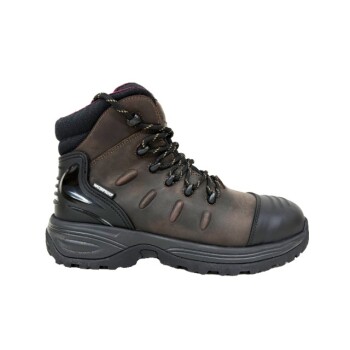
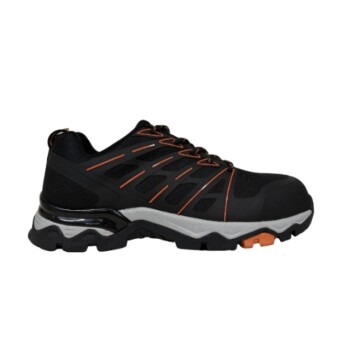
At its core, compliance with safety standards is the only objective assurance that an oilfield safety shoe will perform its critical function when needed. It transforms a manufacturer's promise of protection into a verifiable, third-party-validated fact, giving employers and workers confidence that their footwear can withstand specific, known hazards in a high-risk environment.
Safety standards are not just a bureaucratic checklist; they are a system of trust. They provide a common language and a rigorous testing framework to ensure a shoe's protective features against impacts, punctures, and chemical spills are real, reliable, and consistent.
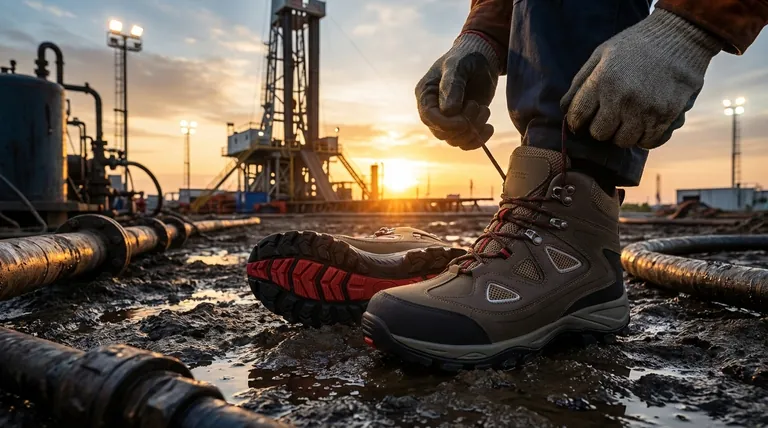
Beyond the Label: What Safety Standards Actually Verify
A "safety shoe" designation is meaningless without compliance. The standards define the precise tests a shoe must pass to prove its worth against the daily threats of an oilfield.
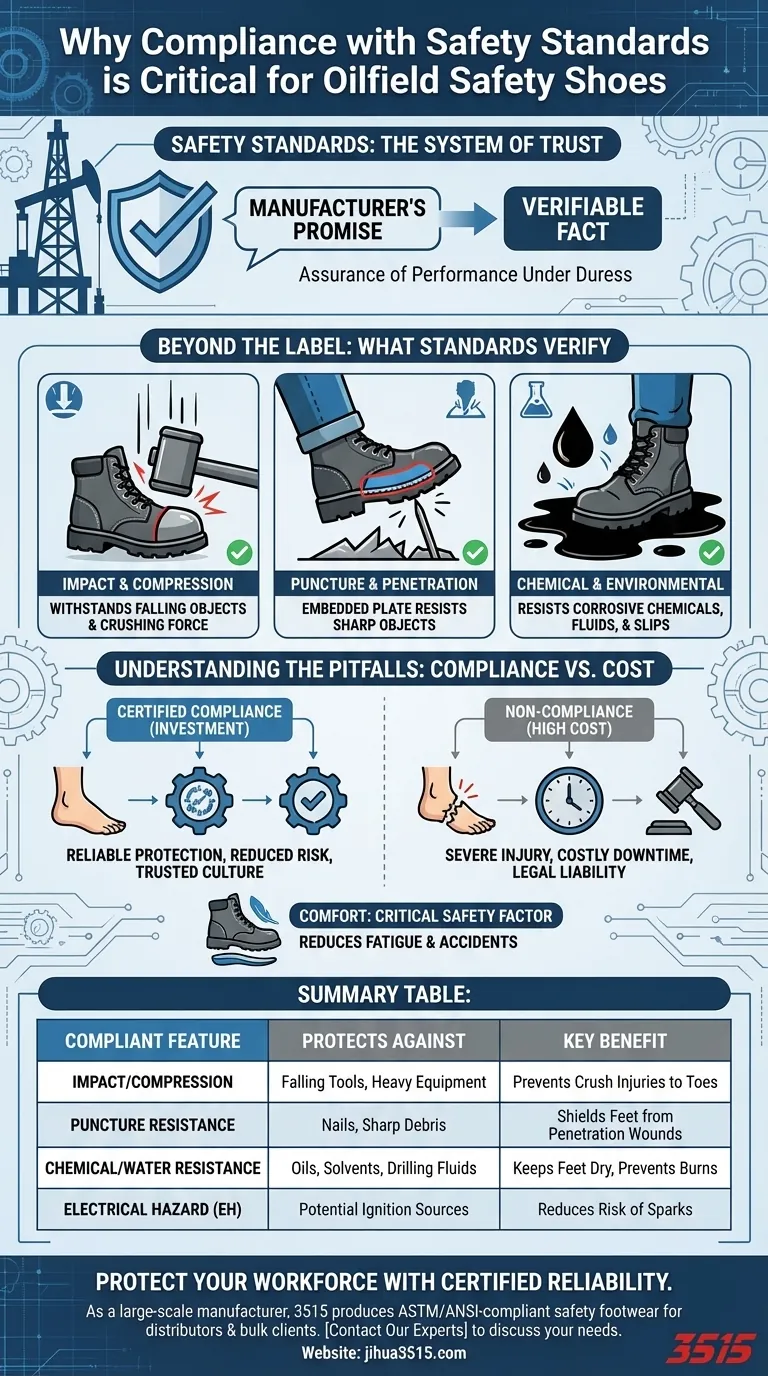
Impact and Compression Resistance
This is the most fundamental feature, typically associated with a steel or composite toe cap.
Standards specify the exact amount of force from a falling object (impact) and the exact crushing pressure (compression) the toe box must withstand without failing. This protects against dropped tools, pipes, and other heavy equipment.
Puncture and Penetration Protection
Oilfield sites are often littered with sharp objects like nails, scrap metal, and debris.
Puncture-resistant plates, often made of steel or advanced composites like Kevlar, are embedded in the midsole. Standards verify that these plates can resist penetration from a sharp object under a specific amount of force.
Chemical and Environmental Resistance
Exposure to drilling fluids, oils, solvents, and other corrosive chemicals is a constant risk.
Compliant footwear uses materials like treated leather or specialized synthetics that are tested for their ability to resist degradation and prevent these substances from reaching the skin. This also includes verifying waterproof qualities to keep feet dry and prevent slips.
Understanding the Pitfalls: Compliance vs. Cost
Choosing safety footwear involves weighing initial cost against long-term risk. Failing to prioritize verified compliance introduces unacceptable dangers.
The High Cost of Non-Compliance
A non-compliant boot that fails can lead to severe, life-altering injuries.
The consequences extend beyond the individual worker to include costly downtime, potential legal liability for the employer, and a loss of trust in the organization's safety culture. The price of compliant footwear is a negligible investment compared to these outcomes.
The Myth of "Good Enough"
Cheaper, non-certified footwear may look the part, but it offers no guarantee of protection.
Without the backing of a standard, all protective claims are merely marketing. Compliance is the only way to know the materials and construction have been rigorously tested to perform under duress.
Comfort is a Critical Safety Factor
While not always a primary standard, features enhancing comfort are vital for safety.
Reputable, standards-compliant shoes often incorporate better ergonomic design, cushioned insoles, and breathable materials. This reduces worker fatigue during long shifts, which is a major contributor to accidents and mistakes.
Making the Right Choice for Your Goal
Select footwear based on the specific hazards of your role, and always look for the official compliance markings (e.g., ASTM F2413 in the United States).
- If your primary focus is general field operations: Ensure your footwear meets the baseline standards for impact, compression, and puncture resistance.
- If your primary focus is working with fluids and chemicals: Prioritize boots with certified waterproofing and specific chemical-resistant outsole and upper materials.
- If your primary focus is on sites with explosion risk: You must select footwear specifically rated for electrical hazard (EH) or static-dissipative (SD) properties to prevent sparks.
Ultimately, choosing standards-compliant footwear is a non-negotiable investment in personal and team safety.
Summary Table:
| Standard Feature | Protects Against | Key Benefit |
|---|---|---|
| Impact/Compression Resistance | Falling tools, heavy equipment | Prevents crush injuries to toes |
| Puncture Resistance | Nails, sharp debris | Shields feet from penetration wounds |
| Chemical/Water Resistance | Oils, solvents, drilling fluids | Keeps feet dry and prevents chemical burns |
| Electrical Hazard (EH) Rating | Potential ignition sources | Reduces risk of sparks in explosive environments |
Protect your workforce with certified reliability.
As a large-scale manufacturer, 3515 produces a comprehensive range of ASTM/ANSI-compliant safety footwear for distributors, brand owners, and bulk clients. Our production capabilities ensure every pair meets the rigorous standards for impact, compression, puncture, and chemical resistance required in the oilfield.
Invest in safety you can verify. Contact our experts today to discuss your compliant footwear needs.
Visual Guide
Related Products
- Premium Oil Wax Leather Safety Boots for Bulk Purchase
- Premium Lightweight Safety Shoes for Wholesale & Bulk Orders
- Premium Suede Sport Safety Shoes for Wholesale & Bulk Orders
- Premium Wheat Nubuck Safety Shoes for Bulk Distribution
- Premium Safety Shoes with Rotating Buckle Safety Sneakers
People Also Ask
- What materials are commonly used for outsoles in safety boots? A Guide to Durability, Grip, and Comfort
- How do safety boots reduce cutting hazards? Essential Protection for Your Workforce
- What are the common types of safety boots and their primary uses? A Guide to Industrial Footwear
- Which organizations develop safety standards for work boots? Ensure Compliance & Worker Safety
- What primary protective functions do professional safety boots provide in urban solid waste recovery and waste picking processes? Discover Dual-Layer Protection.