The primary benefits of aluminum toe safety boots are their significantly lighter weight compared to traditional steel toes and their superior performance in cold environments. This combination provides certified impact protection that meets the same safety standards as steel, but without the added fatigue or the thermal discomfort caused by a highly conductive metal.
Choosing a safety boot is about more than the toe cap material. While aluminum offers an excellent balance of lightweight protection and thermal comfort, the right choice depends on a complete assessment of your workplace hazards, from impact and compression to electrical risks and slip resistance.
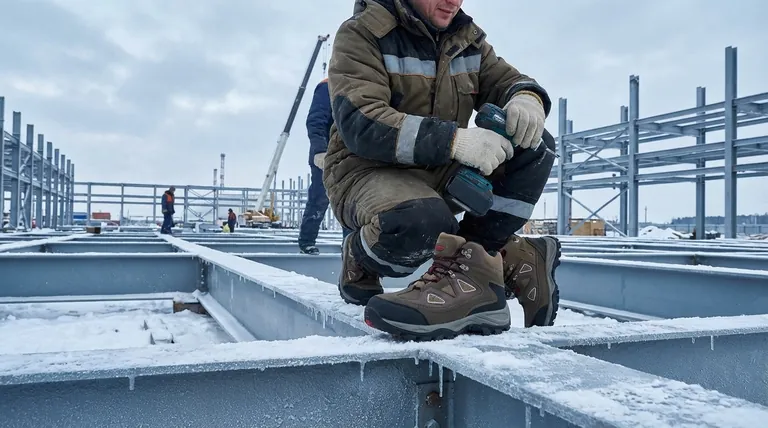
The Core Advantages of Aluminum Toe Caps
The decision to use aluminum in a safety toe is a deliberate engineering choice focused on improving user comfort without compromising on safety standards.
A Lighter Alternative to Steel
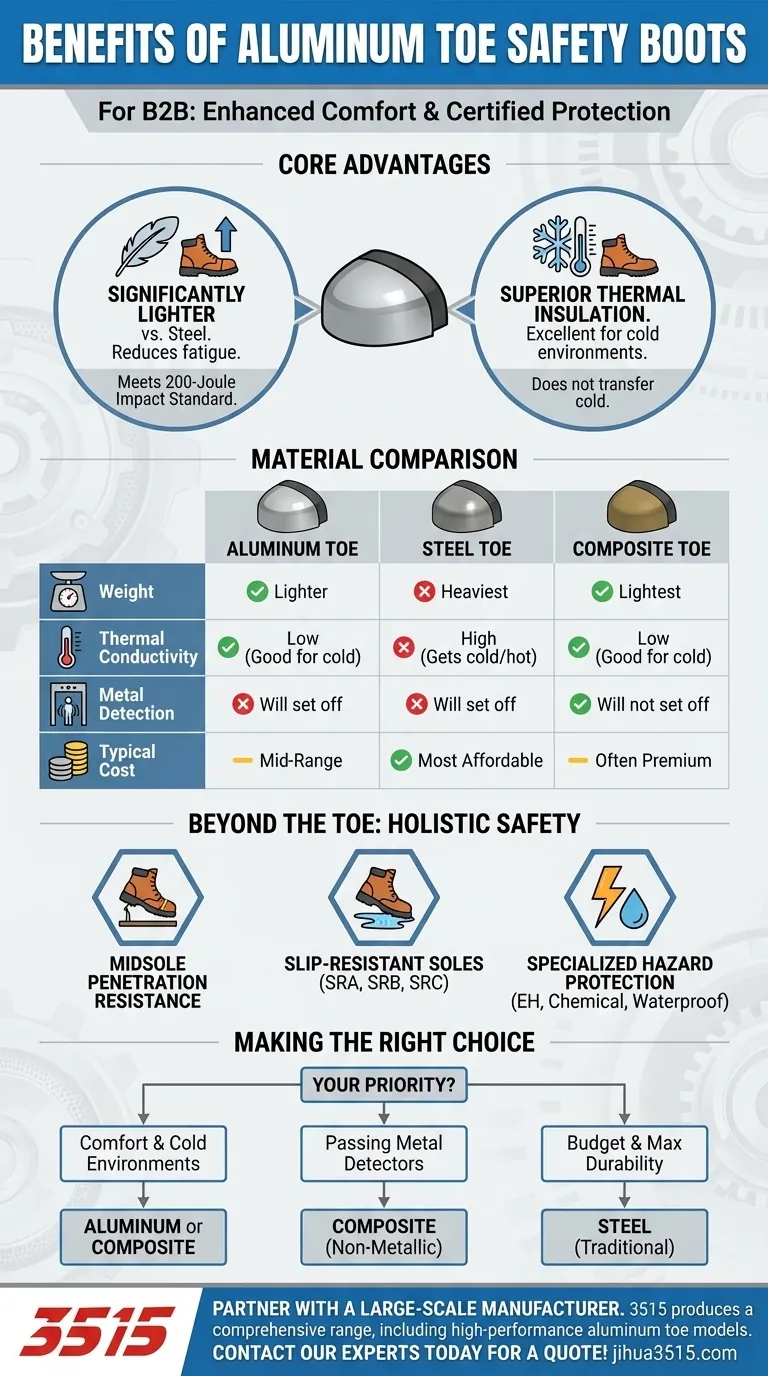
Aluminum provides the same level of impact and compression resistance as steel, typically meeting the 200-joule protection standard, but at a significantly reduced weight. This reduction can decrease foot fatigue over a long and active workday.
Superior Thermal Insulation
Unlike steel, which is a strong thermal conductor, aluminum does not readily transfer cold. This makes aluminum toe boots a far more comfortable and safer option for individuals working in refrigerated areas or extreme winter conditions.
How Aluminum Compares to Other Materials
Understanding where aluminum fits requires comparing it to the other two primary materials used for safety toe caps: traditional steel and modern composites.
Aluminum vs. Steel
Steel is the classic, often most affordable option for safety toes. However, it is the heaviest and readily conducts both heat and cold. Aluminum matches steel's protection level while being much lighter and far more suitable for temperature-variable environments.
Aluminum vs. Composite
Composite toes, made from materials like Kevlar, carbon fiber, or specialized plastics, are the lightest of all options. Their key advantage is being non-metallic, making them ideal for high-security environments with metal detectors. Aluminum toes, while often having a thinner and less bulky profile than composite caps, are still metallic.
Understanding the Trade-offs
No single material is perfect for every application. Aluminum's advantages come with specific considerations that may influence your decision.
Toe Box Profile
To achieve the required strength, aluminum toe caps can sometimes be thicker or bulkier than the most streamlined steel toe designs. This can affect the overall fit and aesthetic of the boot.
Metal Detection
Like steel, an aluminum toe will activate a metal detector. For any profession requiring frequent passage through security checkpoints, a non-metallic composite boot is the only practical solution.
Cost Considerations
Aluminum toe boots typically sit at a mid-range price point. They are generally more expensive than basic steel toe models but can be more affordable than boots with high-end, advanced composite toes.
Beyond the Toe Cap: A Holistic View of Safety
The toe cap protects against impact and compression, but it is just one component of a complete safety footwear system. A truly effective boot addresses all potential workplace hazards.
Midsole Penetration Resistance
True puncture protection for the sole of your foot comes from a penetration-resistant plate built into the midsole. This is a separate feature from the toe cap and is critical in environments with nails, screws, or other sharp debris.
Slip-Resistant Soles
A boot's outsole is its foundation for stability. Look for specific ratings like SRA, SRB, or the highest standard, SRC, which certify the sole's grip performance on various lubricated surfaces.
Specialized Hazard Protection
Many roles demand protection beyond impact and puncture. Assess whether you need boots with an Electrical Hazard (EH) rating, chemical or oil resistance, or full waterproofing to ensure comprehensive safety.
Making the Right Choice for Your Goal
Selecting the correct boot requires matching its features to your specific tasks and environment.
- If your primary focus is all-day comfort and reducing fatigue: Choose aluminum or composite for their lightweight properties.
- If your primary focus is working in cold environments: Aluminum or composite are vastly superior to steel due to their poor thermal conductivity.
- If your primary focus is passing through metal detectors: You must select a boot with a composite toe and other non-metallic hardware.
- If your primary focus is maximum durability on a tight budget: Traditional steel toe boots often provide the most cost-effective and rugged solution.
Ultimately, selecting the right safety footwear begins with a thorough understanding of your specific workplace hazards.
Summary Table:
| Feature | Aluminum Toe Boots | Steel Toe Boots | Composite Toe Boots |
|---|---|---|---|
| Weight | Lighter | Heaviest | Lightest |
| Thermal Conductivity | Low (Good for cold) | High (Gets cold/hot) | Low (Good for cold) |
| Metal Detection | Will set off | Will set off | Will not set off |
| Typical Cost | Mid-Range | Most Affordable | Often Premium |
Ready to equip your team with superior safety footwear?
As a large-scale manufacturer, 3515 produces a comprehensive range of footwear for distributors, brand owners, and bulk clients. Our production capabilities encompass all types of safety shoes and boots, including high-performance aluminum toe models that combine certified protection with enhanced comfort.
We can help you provide the right safety solution for your workforce's specific needs. Contact our experts today to discuss your requirements and get a quote!
Visual Guide
Related Products
- Puncture-Resistant Velcro Safety Boots for Wholesale & Custom Manufacturing
- Wholesale Durable Breathable Safety Boots Custom OEM Manufacturer
- Premium Sport Style Safety Boots for Bulk Orders
- Customizable Anti-Smash Safety Boots for Wholesale & Private Label Manufacturing
- Heavy Duty Nubuck Safety Boots Safety Shoes for Global Distribution
People Also Ask
- Why are industrial safety boots with steel toes necessary for machine operators? Essential Foot Protection for Safety
- What are the characteristics of steel toe safety boots? Maximum Protection, Key Trade-offs
- Is it true that steel toes can cause toes to get cut off? Debunking the Dangerous Myth
- What are the primary safety functions of safety boots with steel-toe designs? Essential Protection for Industry
- What are the different types of safety toe boots available? Choose the Right Protection for Your Job