The Functional Reach Test (FRT) benchmarks serve as a critical diagnostic tool for quantifying the stability limits imposed by heavy protective equipment. By strictly measuring the maximum forward distance a user can reach without moving their feet, the test provides concrete data on how gear impacts the wearer's range of motion. This process identifies specific balance risks caused by the weight and bulk of safety boots and back-mounted systems.
The FRT converts subjective feelings of instability into objective data, revealing how heavy equipment shifts the wearer's center of pressure and increases the probability of falls.
The Physics of Equipment-Induced Instability
Shifting the Center of Pressure
The core significance of the FRT lies in its ability to detect changes in the center of pressure.
Under normal conditions, a human body naturally adjusts to maintain balance. However, the introduction of heavy gear forces the body to compensate mechanically, often reducing stability margins.
The Impact of Back-Mounted Systems
Back-mounted equipment is particularly disruptive to natural equilibrium.
As noted in the primary reference, these systems add significant weight behind the user. This shifts the center of pressure backward, requiring greater effort to lean forward without falling, which the FRT benchmarks directly measure.
Quantifying Risk with Fixed Benchmarks
Establishing a Baseline vs. Loaded State
FRT benchmarks allow safety professionals to compare a worker's agility in two distinct states: unencumbered and fully equipped.
By utilizing fixed measurement benchmarks, evaluators can calculate the exact percentage of reach lost when gear is added. A significant reduction in reach distance correlates directly with a higher risk of falls.
Evaluating Heavy Safety Boots
Boots are often viewed solely as protective, but they are also a significant weight factor.
The FRT assesses whether the boots provide a stable anchor or if their weight contributes to fatigue and restricted movement. The test reveals if the boots hinder the micro-adjustments necessary to maintain balance during a forward reach.
Understanding the Trade-offs
Protection vs. Postural Stability
There is an inherent conflict between maximum protection and maximum stability.
Heavier gear generally offers superior shielding against impact or environmental hazards. However, the FRT often demonstrates that this added mass compromises the wearer's ability to recover from a loss of balance.
Static Metrics for Dynamic Risks
It is important to recognize that the FRT is a controlled, static evaluation.
While it is an excellent indicator of forward stability and center of pressure shifts, it does not fully replicate dynamic, unpredictable movements. It effectively identifies the threshold of imbalance, but must be understood as a baseline for safety, not a simulation of all field conditions.
Making the Right Choice for Your Goal
Benchmarks from the Functional Reach Test provide the evidence needed to balance safety requirements with functional performance.
- If your primary focus is procurement and safety compliance: Look for gear combinations that minimize the reduction in FRT scores compared to the worker's baseline, ensuring the center of pressure remains manageable.
- If your primary focus is equipment design: Use FRT data to redistribute weight in back-mounted systems closer to the body's natural center of gravity to improve reach benchmarks.
Ultimately, FRT benchmarks are essential for ensuring that the gear designed to protect workers does not become the primary cause of an accident.
Summary Table:
| Metric Type | Stability Impact | FRT Measurement Significance |
|---|---|---|
| Center of Pressure | Shifted by back-mounted gear | Quantifies effort needed to maintain equilibrium |
| Safety Boot Weight | Impacts anchoring & fatigue | Detects restriction in micro-balance adjustments |
| Postural Stability | Reduced by equipment bulk | Identifies the threshold of imbalance and fall risk |
| Reach Baseline | Comparing loaded vs. unloaded | Calculates exact percentage of mobility loss |
Optimize Safety and Stability with 3515 Footwear Solutions
Don't let protective gear become a liability. As a premier large-scale manufacturer serving global distributors and brand owners, 3515 leverages advanced production capabilities to create high-performance footwear that balances maximum protection with superior postural stability.
Our extensive portfolio includes:
- Flagship Safety Shoes & Boots: Engineered to minimize weight while maintaining rigid safety standards.
- Tactical & Work Boots: Designed to support a natural center of gravity for better FRT performance.
- Comprehensive Footwear Range: From training sneakers to formal dress shoes for bulk procurement.
Contact us today to learn how our specialized manufacturing can enhance your product line's safety benchmarks and stability performance.
References
- Suyoung Son, Yutaka Tochihara. Exploring the appropriate test methods to examine the effects of firefighter personal protective equipment on mobility. DOI: 10.1186/s40691-022-00295-8
This article is also based on technical information from 3515 Knowledge Base .
Related Products
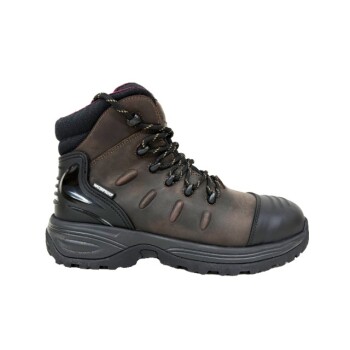
- Heavy-Duty Waterproof Nubuck Safety Boots Safety Shoes for Bulk Supply
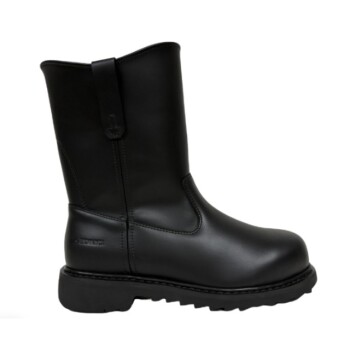
- Heavy-Duty Goodyear Welted Pull-On Safety Rigger Boot
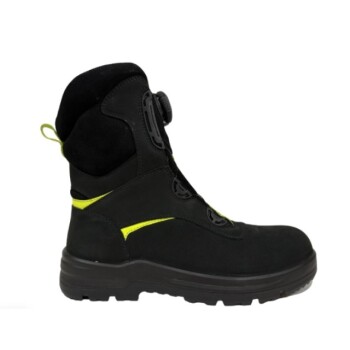
- Premium High-Cut Waterproof Safety Boots Manufacturing & Wholesale Solutions
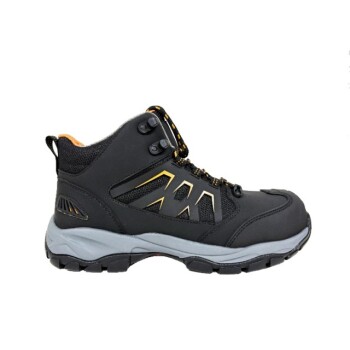
- Premium Waterproof High-Cut Industrial Safety Boots for Wholesale and Bulk Orders
- Premium Grain Leather Safety Boots for Bulk Supply
People Also Ask
- What primary protective functions do professional safety boots provide in urban solid waste recovery and waste picking processes? Discover Dual-Layer Protection.
- How do safety boots reduce cutting hazards? Essential Protection for Your Workforce
- Which organizations develop safety standards for work boots? Ensure Compliance & Worker Safety
- What are the common types of safety boots and their primary uses? A Guide to Industrial Footwear
- Why is ankle and arch support important in safety footwear? Prevent Injury & Fatigue