
For leather work boots, the best approach is to choose a mild, dedicated leather cleaner and avoid harsh household chemicals like bleach or ammonia. For conditioning, select products based on natural ingredients like beeswax or mink oil, and explicitly avoid those containing mineral oil or petroleum, which can cause long-term damage.
The core principle of leather boot care is preservation, not just cleaning. The goal is to remove harmful debris without stripping the leather's essential natural oils, and then to replenish those oils with a conditioner that mimics them, ensuring the leather remains flexible and durable.
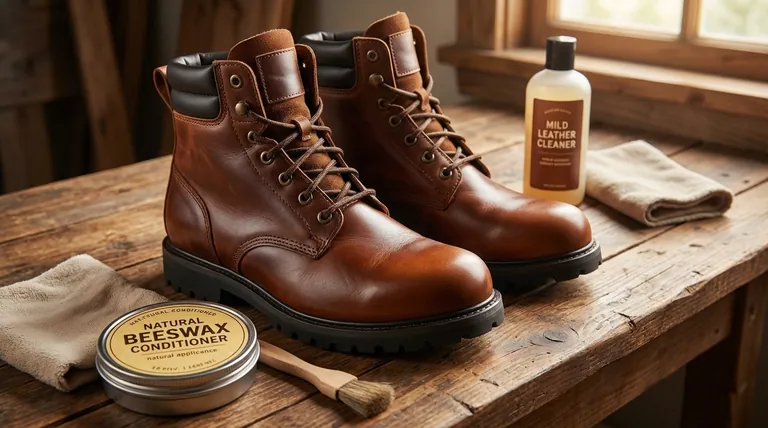
Why Cleaning and Conditioning Are Not Optional
Leather is a natural material that requires maintenance to withstand the demands of a work environment. Without proper care, it will dry out, crack, and lose its protective qualities.
The Role of a Cleaner
A cleaner's job is to remove surface-level contaminants like dirt, mud, and grime. This is critical because these particles are abrasive and can slowly wear away the leather's finish and fibers as the boot flexes.
The Purpose of a Conditioner
A conditioner's function is to restore moisture and oils to the leather after cleaning. This process keeps the material supple, prevents cracks from forming due to dryness, and maintains its natural strength.
Selecting the Right Cleaner
Using the wrong cleaner can cause more damage than the dirt you are trying to remove. The key is to be gentle.
Prioritize Mild Formulas
Always opt for a pH-balanced cleaner specifically designed for leather or a very mild soap solution. Harsh chemicals strip the tanning agents and natural fats from the leather, leading to irreversible brittleness.
The Spot Test is Non-Negotiable
Before applying any new cleaner to your boots, always test it on a small, inconspicuous area first, such as the inner side of the boot's tongue. This ensures the product won't cause discoloration or damage.
Basic Cleaning Steps
First, use a soft brush to remove all loose dirt and debris. Then, apply your chosen cleaner with a damp cloth in a gentle, circular motion. Finally, wipe away any residue with a clean, damp cloth and let the boots air dry completely.
Choosing a Protective Conditioner
Conditioning is the most important step for extending the life of your boots. It’s what keeps the leather from failing under stress.
What to Look For: Natural Oils and Waxes
The most effective conditioners use natural ingredients that the leather can easily absorb. Mink oil and beeswax are excellent choices because they closely replicate the natural fats found in the leather itself, nourishing it and providing a degree of water resistance.
What to Avoid: Petroleum and Mineral Oil
Steer clear of conditioners that list petroleum or mineral oil as a primary ingredient. While they may provide a temporary shine, they do not nourish the leather. Over time, they can even pull the natural oils out of the material, accelerating the drying and cracking process.
Understanding the Common Pitfalls
Proper care is as much about avoiding mistakes as it is about following the right steps.
The Danger of Direct Heat
Never attempt to speed up the drying process with a direct heat source like a hairdryer, radiator, or open fire. Intense heat will cause the leather to shrink rapidly and crack, causing permanent damage. Always allow boots to air dry at room temperature.
The Mistake of Over-Conditioning
More is not always better. Applying too much conditioner can oversaturate the leather, making it feel greasy and causing it to attract more dirt. Apply a thin, even layer, allow it to absorb for a few minutes, and then buff off any excess with a clean, dry cloth.
Forgetting the Prep Work
Applying a cleaner or conditioner to a dirty boot simply traps abrasive grit against the leather. Always take the time to brush off loose dirt and dust before applying any product.
Making the Right Choice for Your Boots
Your maintenance routine should match the conditions your boots face.
- If your primary focus is daily durability against grime: Establish a routine of brushing off debris after each wear and performing a full clean and condition cycle whenever the leather appears dry or soiled.
- If your primary focus is water resistance: Choose a conditioner with a high concentration of beeswax, as it creates a robust barrier against moisture while still allowing the leather to breathe.
- If your primary focus is long-term preservation: The key is consistency. Gentle cleaning when needed and conditioning after every deep clean is the most effective strategy for preventing cracking and material failure.
Proper care is a small investment of time that ensures your boots protect you for years to come.
Summary Table:
| Aspect | What to Look For | What to Avoid |
|---|---|---|
| Cleaner | Mild, pH-balanced, leather-specific formulas | Harsh chemicals (bleach, ammonia) |
| Conditioner | Natural ingredients (beeswax, mink oil) | Petroleum or mineral oil bases |
| Drying | Air dry at room temperature | Direct heat sources (radiators, hairdryers) |
| Application | Thin, even layers; buff off excess | Over-conditioning; applying to dirty boots |
Need Durable, High-Quality Leather Work Boots?
As a large-scale manufacturer, 3515 produces a comprehensive range of footwear for distributors, brand owners, and bulk clients. Our production capabilities encompass all types of safety and work boots built with premium leathers that respond best to proper care.
Partner with us to provide your customers with boots worth maintaining.
Contact our team today to discuss your manufacturing needs and how we can help you build a superior product line.
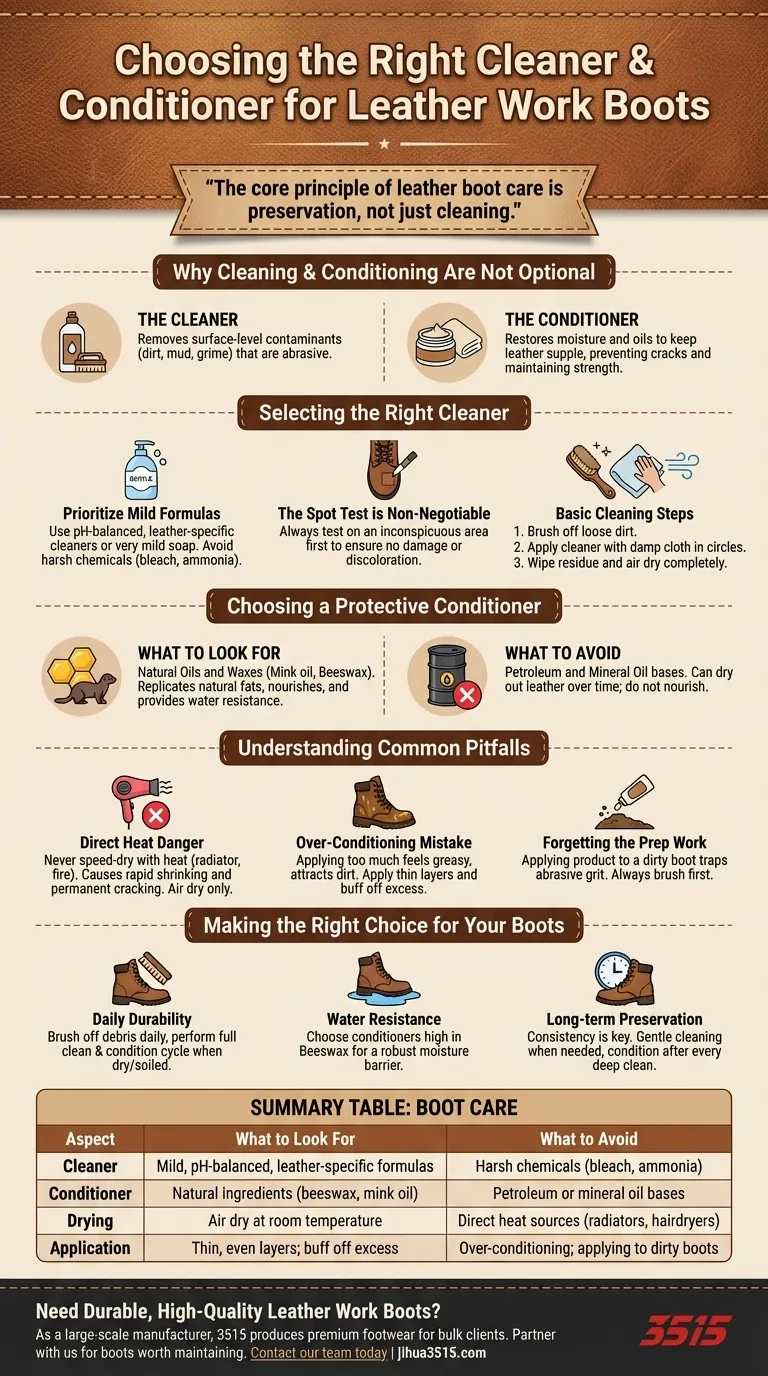
Visual Guide
Related Products
- Durable Leather Work Boots for Wholesale & Custom Manufacturing
- Durable Leather Work Boots for Wholesale & Custom OEM Manufacturing
- Durable Leather Work Boots Wholesale Manufacturer & Custom Factory
- Wholesale Leather Work Boots with Customizable Wedge Sole for Brands
- Durable Goodyear Welt Leather Work Boots for Wholesale & Private Label
People Also Ask
- What is the difference between full-grain and top-grain leather? Premium Material Guide for Boot Manufacturers
- What are the common workplace hazards that can be mitigated with the right work boots? Protect Your Workforce
- What are the common foot issues workers face due to uncomfortable work boots? Prevent Pain & Deformities
- What are the advantages of leather versus synthetic work boots? A Guide to Choosing the Right Material
- What are the key components of modern work boots? Engineered for Ultimate Durability and Comfort













