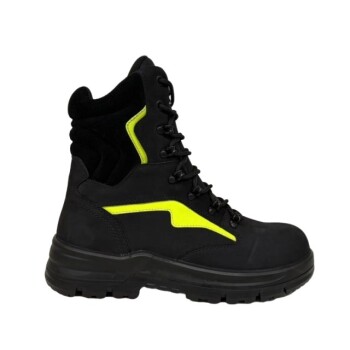
Protective footwear serves as the foundational layer of safety in natural stone production, addressing risks far beyond simple impact protection. In these environments, specialized safety shoes provide essential chemical resistance against processing agents, electrical insulation near high-power machinery, and critical traction for navigating debris-laden floors. This multi-faceted protection ensures workers remain safe from the specific, high-consequence hazards inherent to stone processing.
In the context of a comprehensive safety protocol, protective footwear acts not just as personal armor, but as a critical operational control that mitigates chemical, electrical, and environmental risks to prevent injury-related production downtime.
The Pillars of Protection in Stone Processing
Impact and Compression Defense
Natural stone production involves moving heavy, dense materials that pose significant crushing hazards.
Steel-toed safety shoes provide the primary barrier against falling objects. This feature is non-negotiable for preventing severe foot injuries caused by the unintentional shifting or dropping of stone slabs.
Chemical Resistance
The processing of natural stone often requires specific chemical agents and treatments.
Standard work boots may degrade or allow penetration when exposed to these substances. Specialized footwear provides a resistant barrier, preventing chemical burns and skin irritation derived from processing fluids.
Electrical Insulation
Stone production lines are energy-intensive environments populated with high-powered machinery.
Protective footwear in these zones must offer electrical insulation. This feature isolates the worker from the ground, significantly reducing the risk of shock in the event of equipment malfunction or exposed wiring.
Environmental Stability and Grip
The cutting and polishing of stone generate debris, dust, and often wet slurry, creating hazardous walking surfaces.
Safety footwear is engineered with high-traction outsoles designed to navigate debris-strewn work zones. This grip is essential for preventing slips and falls, which are among the most common causes of workplace accidents.
The Operational Impact
Reducing Production Downtime
Workplace accidents inevitably lead to stoppages, investigations, and workforce shortages.
By implementing a systematic PPE configuration that includes proper footwear, companies significantly reduce the frequency of these incidents. This proactive approach minimizes interruptions, ensuring a continuous manufacturing flow.
A Systemic Approach to Safety
Footwear should never be viewed in isolation.
It functions best when integrated with other PPE, such as gloves and protective goggles. This comprehensive configuration ensures that the safety protocol covers the worker from head to toe, leaving no vulnerability exposed.
Understanding the Trade-offs
The Risk of Complacency
High-quality PPE can sometimes instill a false sense of security in the workforce.
Workers must understand that protective footwear is the last line of defense, not a substitute for safe handling procedures. Relying on boots to mitigate risks that should be controlled by machine guarding or automated handling is a critical error.
Specificity vs. Comfort
There is often a trade-off between maximum protection and long-term wearability.
A boot designed for maximum chemical resistance and impact protection may be heavier and less breathable. If the footwear is uncomfortable, compliance may drop, or worker fatigue may increase, indirectly raising the risk of errors elsewhere in the production line.
Making the Right Choice for Your Protocol
To ensure your safety protocol is effective, you must match the footwear specifications to your facility's unique operational reality.
- If your primary focus is hazard mitigation: Audit your specific chemical agents and voltage levels to ensure footwear certifications match the highest potential exposure in your facility.
- If your primary focus is operational continuity: Prioritize an integrated PPE system where footwear prevents the specific common accidents (like slips) that historically cause your production delays.
By treating protective footwear as a strategic asset rather than a simple uniform requirement, you secure both the physical health of your workforce and the operational health of your production line.
Summary Table:
| Protection Type | Key Hazard Mitigated | Benefit |
|---|---|---|
| Impact & Compression | Falling/Heavy Stone Objects | Prevents severe foot injuries |
| Chemical Resistance | Processing Agents & Fluids | Avoids chemical burns & irritation |
| Electrical Insulation | High-Power Machinery & Wiring | Reduces electric shock risk |
| Environmental Stability | Debris, Dust, Wet Slurry | Prevents slips and falls |
| Operational Impact | Accidents & Production Stoppages | Ensures continuous manufacturing flow |
Elevate safety and efficiency in your operations with 3515's expertly crafted protective footwear. As a large-scale manufacturer serving distributors and brand owners, 3515 offers comprehensive production capabilities for all footwear types, anchored by our flagship Safety Shoes series. Our extensive portfolio covers work and tactical boots, outdoor shoes, training shoes, and sneakers, as well as Dress & Formal shoes to meet diverse bulk requirements. Ensure your workforce is protected and production remains uninterrupted. Contact 3515 today for bulk orders and custom solutions!
References
- Ferida Yuamita, Anang Fatkhurohman. ANALISIS RESIKO KECELAKAAN KERJA PADA STASIUN PEMOTONGAN BATU ALAM DENGAN MENGGUNAKAN METODE FAILURE MODE AND EFFECT ANALYSIS (FMEA) DI PBA SURYA ALAM. DOI: 10.53625/jcijurnalcakrawalailmiah.v2i12.6398
This article is also based on technical information from 3515 Knowledge Base .
Related Products
- Premium Suede Sport Safety Shoes for Wholesale & Bulk Orders
- Premium Lightweight Safety Shoes for Wholesale & Bulk Orders
- Premium Waterproof Nubuck Safety Boots for Wholesale
- Wholesale Customizable Safety Boots Durable & Protective Footwear Manufacturing
- Wholesale Anti-Smash & Puncture-Proof Safety Shoes Custom Manufacturing for Brands
People Also Ask
- What industries have specific OSHA footwear requirements? Ensure Compliance & Protect Your Workforce
- What are the primary functions of professional safety shoes? Maximize Safety in Water Supply Confined Spaces
- What role do specialized safety shoes play in preventing falls? Engineering Stability in Industrial Environments
- How does professional industrial cleaning equipment maintain the performance stability of safety shoes? Pro Maintenance
- How do gait analysis algorithms ensure accuracy in footwear? Master Step Length Precision for Boots & Sneakers