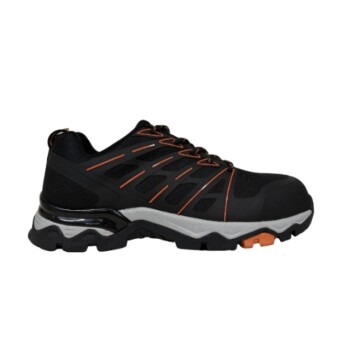
In complex medical environments, safety shoes are not merely uniform components; they are critical Personal Protective Equipment (PPE) designed to mitigate physical trauma and environmental hazards. They primarily function to shield healthcare workers from impact injuries caused by falling equipment and ensure operational stability on slippery, disinfected surfaces.
Safety shoes transform the hospital floor from a zone of vulnerability into a stable foundation for care. By neutralizing risks like sharp punctures, crush injuries, and slips, they allow staff to focus entirely on patient management rather than personal safety.
Mitigating Physical Trauma and Injury
The physical demands of hospital wards expose staff to kinetic risks that standard footwear cannot withstand.
Protection from Falling Objects
Hospital environments are dynamic, with frequent movement of heavy mobile equipment and surgical tools. Reinforced toe caps serve as a hard shield, protecting the toes from crush injuries if a bed wheel rolls over a foot or a heavy instrument is dropped.
Prevention of Puncture Wounds
Medical settings, particularly isolation wards and operating theaters, often contain sharp hazards. Safety shoes utilize puncture-resistant outsoles to create an impenetrable barrier. This prevents sharps, such as dropped scalpels or broken glass, from piercing the sole and injuring the foot.
Ensuring Stability in High-Pressure Zones
Mobility is essential for healthcare workers, yet hospital floors present constant traction challenges.
Navigating Wet Environments
In isolation wards, rigorous hygiene protocols mean floors are frequently wet from disinfection agents. Safety shoes feature slip-resistant outsoles specifically engineered to grip these slick surfaces.
Stability During Patient Transport
Staff often perform physically demanding tasks, such as lifting patients or pushing heavy gurneys. The traction provided by safety shoes ensures secure footing, allowing staff to exert force without the risk of slipping, which protects both the worker and the patient.
Protection Against Liquid Hazards
Beyond kinetic impact, the hospital environment poses risks regarding fluid containment.
Preventing Skin Contamination
In isolation wards, potential leakage of bio-fluids or harsh cleaning chemicals is a reality. Professional safety shoes act as a seal, preventing liquids from seeping through to the skin. This prevents chemical burns or potential biological contamination of the foot.
Understanding the Trade-offs
While safety shoes offer immense protection, there are factors to consider regarding comfort and agility.
Weight vs. Fatigue
Reinforced materials, such as steel or composite toe caps, add weight to the shoe. While supportive inner structures aim to alleviate this, heavier footwear can contribute to leg fatigue during 12-hour shifts compared to standard athletic shoes.
Flexibility Limitations
To provide puncture resistance and toe protection, the soles and uppers of safety shoes are naturally stiffer. This can reduce the natural flexion of the foot, potentially affecting agility when rapid movement is required in emergency scenarios.
Making the Right Choice for Your Environment
Selecting the correct footwear depends on the specific risks present in your department.
- If your primary focus is Trauma or Surgery: Prioritize reinforced toe caps and puncture resistance to protect against falling instruments and sharps.
- If your primary focus is Isolation Ward Maintenance: Prioritize high-grade slip resistance and liquid waterproofing to handle frequent disinfection cycles and fluid risks.
- If your primary focus is General Patient Transport: Prioritize supportive structures and traction to ensure stability while moving heavy loads without succumbing to fatigue.
Equipping staff with the correct safety footwear is an investment in operational continuity and injury prevention.
Summary Table:
| Hazard Category | Safety Shoe Feature | Key Benefit in Hospital Settings |
|---|---|---|
| Physical Impact | Reinforced Toe Caps | Protects against falling equipment and heavy bed wheels. |
| Sharp Objects | Puncture-Resistant Soles | Prevents injury from dropped scalpels, glass, or needles. |
| Slippery Floors | Slip-Resistant Outsoles | Provides stability on surfaces wet with disinfectants. |
| Fluid Exposure | Liquid-Proof Uppers | Blocks bio-fluids and harsh chemicals from skin contact. |
| High-Exertion | Supportive Structures | Ensures secure footing during patient lifting and transport. |
Secure Your Workforce with Premium Safety Footwear
Protecting medical staff in high-pressure environments requires more than just standard shoes—it requires engineered safety solutions. As a large-scale manufacturer serving distributors and brand owners, 3515 offers comprehensive production capabilities for all footwear types, anchored by our flagship Safety Shoes series.
Our extensive portfolio covers work and tactical boots, outdoor shoes, training shoes, and sneakers, as well as Dress & Formal shoes to meet diverse bulk requirements. We provide the durability and protection necessary to maintain operational continuity in hospitals and beyond.
Ready to elevate your product range with high-performance safety footwear?
Contact us today to discuss your bulk manufacturing needs!
References
- Raffaella Gualandi, Anna De Benedictis. Nurse–Patient Communication and Relationship When Wearing Personal Protective Equipment: Nurses’ Experience in a COVID-19 Ward. DOI: 10.3390/healthcare11131960
This article is also based on technical information from 3515 Knowledge Base .
Related Products
- Premium Suede Sport Safety Shoes for Wholesale & Bulk Orders
- Premium Lightweight Safety Shoes for Wholesale & Bulk Orders
- Wholesale Anti-Smash & Puncture-Proof Safety Shoes Custom Manufacturing for Brands
- Premium KPU Injection Athletic Style Safety Shoes
- Premium Safety Shoes with Rotating Buckle Safety Sneakers
People Also Ask
- What industries have specific OSHA footwear requirements? Ensure Compliance & Protect Your Workforce
- What are the primary functions of professional safety shoes? Maximize Safety in Water Supply Confined Spaces
- What role do specialized safety shoes play in preventing falls? Engineering Stability in Industrial Environments
- What are the main components of safety shoes? A Guide to Protective Footwear Design
- Why wear protective masks, gloves, and safety shoes in 5S Shine? Elevate Safety and Discipline