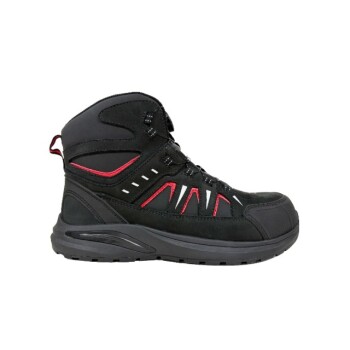
High-precision foot scanning is the bridge between generic sizing and ergonomic safety. It captures precise anatomical data—including length, width, and specific arch angles—using non-contact sensors. This data allows manufacturers to quantify foot deformities and create specialized shoe lasts that ensure industrial safety footwear provides a protective, accurate fit for diverse worker populations.
High-precision scanning replaces manual measurement with digital accuracy to ensure safety footwear accommodates the actual anatomical structures of the workforce. This data-driven approach is essential for preventing long-term foot health issues and ensuring the effectiveness of protective gear.
The Mechanics of Non-Contact Anatomical Mapping
Capturing Fundamental Dimensions
High-precision scanners utilize non-contact measurement to instantly capture primary foot dimensions such as foot length and foot width. This eliminates the human error inherent in manual tape or Brannock device measurements.
These primary metrics form the baseline for selecting the correct size and width category in industrial settings. Accurate baseline data is the first step in ensuring a worker's foot is properly positioned within the protective steel or composite toe box.
Quantifying Arch Health and Structure
Beyond simple dimensions, these devices measure the Clarke angle (longitudinal arch) and the Heel angle (transverse arch). These angles are critical indicators of a worker's foot health and structural integrity.
By quantifying these angles, safety professionals can identify flat feet or high arches that require specific internal support. This level of detail ensures the footwear supports the foot's natural mechanics during long shifts on hard industrial surfaces.
Bridging Data and Industrial Design
Optimizing Shoe Last Development
The data collected serves as the foundation for designing shoe lasts, which are the physical molds used to shape footwear. When lasts are informed by high-precision scans, the resulting shoes more accurately reflect the volume and contours of real feet.
In the context of industrial safety, a well-designed last ensures that the foot does not slide forward into the toe cap. This precise fit prevents "toe bang" and other common injuries associated with ill-fitting safety boots.
Addressing Anatomical Deformities
Industrial workers are prone to various foot deformities due to the repetitive stress of their environments. Scanners provide the essential data support needed to quantify these deformities objectively.
Once a deformity is quantified, manufacturers can adjust footwear internal volumes or provide corrective inserts. This proactive approach transforms safety footwear from a simple protective shell into a tool for long-term musculoskeletal health.
Understanding the Trade-offs
Static vs. Dynamic Data
Most high-precision scanners capture the foot in a static, weighted position. While this provides an excellent anatomical snapshot, it does not always account for how the foot expands or shifts during heavy lifting or walking.
Designers must use their expertise to interpret static scan data and apply "ease" to the footwear design. Relying solely on a static scan without considering dynamic movement can still lead to a fit that feels restrictive during active tasks.
Equipment Sensitivity and Environment
High-precision optical or laser scanners can be sensitive to ambient lighting and dust found in industrial environments. Maintaining the calibration of these devices requires a controlled setting and regular maintenance.
Furthermore, while the hardware provides the data, the quality of the footwear still depends on the interpretation of that data. High-precision measurements are only as effective as the engineering team's ability to translate those numbers into a comfortable, durable product.
How to Apply This to Your Project
When integrating foot scanning into your safety footwear procurement or design process, consider your specific organizational goals.
- If your primary focus is reducing worker fatigue: Use arch angle data (Clarke and Heel angles) to select footwear with internal support structures tailored to your workforce’s average arch profile.
- If your primary focus is minimizing workplace injuries: Prioritize scanners that provide highly accurate foot length and width data to ensure toe caps are correctly positioned relative to the wearer's joints.
- If your primary focus is custom footwear development: Utilize the full suite of anatomical parameters to create a library of 3D lasts that reflect the specific demographic nuances of your employees.
Precision measurement is the only objective way to ensure that the footwear meant to protect your workers is not simultaneously causing them harm.
Summary Table:
| Scanning Metric | Functional Purpose in Footwear Design | Impact on Worker Safety |
|---|---|---|
| Foot Length/Width | Accurate baseline sizing and toe box positioning | Prevents toe injuries and sliding within the boot |
| Clarke Angle | Longitudinal arch assessment and support design | Reduces fatigue and prevents long-term arch collapse |
| Heel Angle | Transverse arch measurement for structural balance | Enhances stability on uneven or hard industrial surfaces |
| 3D Volume Mapping | Optimized shoe last and mold development | Ensures a customized, ergonomic fit for diverse foot shapes |
Elevate Your Fleet's Safety with Precision Engineering
At 3515, we understand that true safety starts with a perfect fit. As a premier large-scale manufacturer serving global distributors and brand owners, we leverage advanced anatomical data to drive our production excellence.
Our comprehensive capabilities include:
- Flagship Safety Shoes: Engineered with precision lasts to ensure maximum protection and ergonomic comfort.
- Diverse Portfolio: Expert manufacturing of tactical boots, outdoor shoes, training sneakers, and formal dress shoes.
- Bulk Customization: Tailored solutions designed to meet the specific requirements of your workforce or brand identity.
Partner with a manufacturer that prioritizes the intersection of data and durability. Contact 3515 today to discuss your bulk footwear needs and see how our production scale can value-add to your business.
References
- Ewa Puszczałowska-Lizis, Jarosław Omorczyk. Evaluation of safety boots and their relationships with the foot structure of female and male industrial workers. DOI: 10.1186/s12891-025-08983-4
This article is also based on technical information from 3515 Knowledge Base .
Related Products
- Premium Wholesale Waterproof Safety Boots High Performance Protection for Industrial Markets
- Premium Waterproof High-Cut Industrial Safety Boots for Wholesale and Bulk Orders
- Puncture-Resistant Velcro Safety Boots for Wholesale & Custom Manufacturing
- Wholesale Mesh Steel Toe Safety Shoes with Dial Closure Factory Production
- Premium Wholesale Tactical Style Safety Shoes Boots with Quick Lacing
People Also Ask
- What weather and chemical protections do premium boots offer? Your Complete Guide to Safety & Performance
- Why are waterproof safety boots recommended for certain work environments? Essential Protection for Wet & Hazardous Jobs
- What are the primary protective functions of industrial safety boots in oil palm plantations? Master Rough Terrain Safety
- Why are oil-resistant and anti-slip properties critical for industrial safety boots? Expert Outsole Engineering Guide
- What are the best types of shoes for different gardening conditions? Find Your Perfect Match.