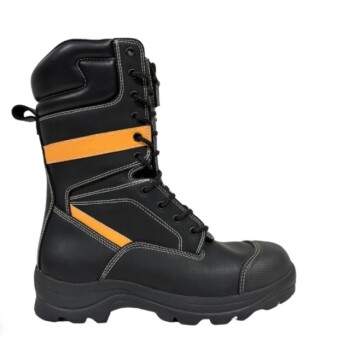
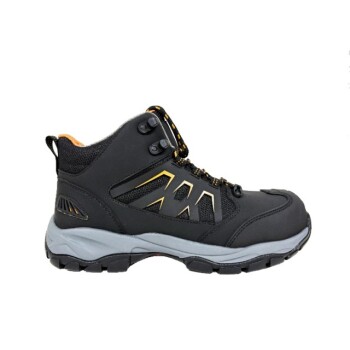
At its core, the ASTM F2413-18 standard is the definitive U.S. benchmark for safety toe footwear, establishing the minimum performance requirements for protection against a variety of specific workplace hazards. It primarily covers resistance to impact and compression for the toe area, but also specifies testing criteria for other critical functions like metatarsal protection, electrical hazard insulation, and puncture resistance.
The most important thing to understand is that ASTM F2413-18 is not a single, all-encompassing certification. It is a framework of multiple, distinct safety ratings, and the label inside the footwear tells you exactly which protections that specific pair provides.

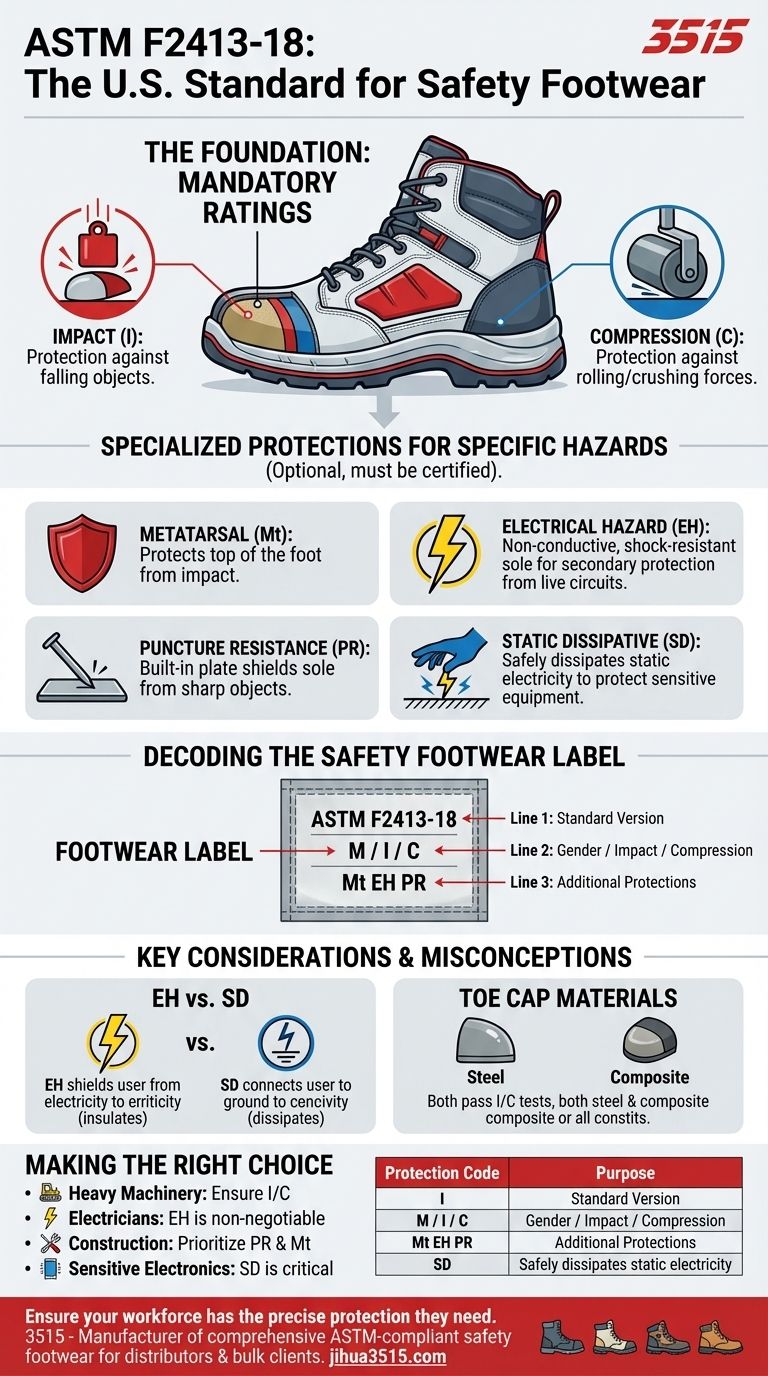
The Foundation: Impact and Compression Resistance
These two ratings form the mandatory basis for any footwear certified under the ASTM F2413-18 standard. They address the most common threats to the toe area.
Impact (I) Resistance
This rating signifies protection for the toes against falling objects. The test involves dropping a specified weight from a set height onto the toe cap and measuring the clearance that remains inside.
Compression (C) Resistance
This rating measures the footwear's ability to protect the toes from rolling objects or compression forces. The test involves applying a heavy, slow-moving load to the toe cap to ensure it doesn't crush under pressure.
Specialized Protections for Specific Hazards
Beyond the basic toe cap requirements, the standard outlines several additional protections for footwear designed to handle specific environmental risks. A shoe or boot will only carry these ratings if it has been specifically tested and certified for them.
Metatarsal (Mt) Protection
This provides protection for the top of the foot (the metatarsal bones) from impacts. This is crucial in environments where objects could drop on the entire foot, not just the toes.
Electrical Hazard (EH) Protection
Footwear with an EH rating is manufactured with non-conductive, shock-resistant soles and heels. It is designed to provide a secondary source of protection against accidental contact with live electrical circuits.
Puncture Resistance (PR)
This rating indicates that a puncture-resistant plate has been built into the sole of the footwear. This plate is designed to protect the bottom of the foot from being pierced by sharp objects like nails or scrap metal.
Static Dissipative (SD) Properties
Unlike EH footwear, which insulates the wearer, SD footwear is designed to reduce the buildup of static electricity. It safely channels static charge from the body to the ground, protecting sensitive electronic equipment from damage.
Decoding the Safety Footwear Label
Understanding the label is the key to applying this standard correctly. Every piece of ASTM F2413-18 compliant footwear must have a label that clearly identifies the protections it offers.
The Standard Line-by-Line
A typical label will be formatted in a specific sequence. For example:
Line 1: ASTM F2413-18
This confirms the boot meets the performance requirements of the 2018 version of the standard.
Line 2: M / I / C
This line identifies the gender it is made for (Male or Female) and confirms it meets the standard Impact (I) and Compression (C) resistance ratings.
Line 3: Mt EH PR
This line lists all additional protections the footwear provides. In this example, the boot offers Metatarsal, Electrical Hazard, and Puncture Resistance protections. If a boot does not have these, this line will be blank.
Key Considerations and Common Misconceptions
Choosing the right footwear requires looking beyond the general certification and focusing on the specific ratings your job requires.
Not All Safety Shoes Are Equal
A boot being "ASTM F2413-18 certified" only means it meets the basic Impact and Compression standards. It does not mean it has EH, PR, or any other protection unless explicitly stated on the label.
The Difference Between EH and SD
These protections solve opposite problems and should never be confused. EH footwear insulates you from electricity to protect you. SD footwear grounds you to dissipate static electricity to protect sensitive equipment.
Toe Cap Materials
While the standard is performance-based, you will typically find toe caps made of steel or non-metallic composite materials. Both must pass the same I/C tests, but composites are often lighter and do not conduct temperature as easily.
Making the Right Choice for Your Environment
Your specific workplace hazards should be the only factor driving your decision. Always start with a risk assessment and then check the footwear label for the corresponding ratings.
- If you work around heavy machinery or rolling objects: Ensure the footwear has the base Impact (I) and Compression (C) ratings.
- If you are an electrician or work near live circuits: The Electrical Hazard (EH) rating is a non-negotiable requirement.
- If you work in construction or demolition: Prioritize Puncture Resistance (PR) and consider Metatarsal (Mt) protection.
- If you work with sensitive electronics: Static Dissipative (SD) footwear is the critical requirement to prevent component damage.
Ultimately, understanding the ASTM F2413-18 standard empowers you to select footwear that provides precise protection for the real risks you face.
Summary Table:
| Protection Type | Code | Purpose |
|---|---|---|
| Impact Resistance | I | Protects toes from falling objects |
| Compression Resistance | C | Protects toes from rolling/crushing forces |
| Metatarsal Protection | Mt | Protects the top of the foot from impact |
| Electrical Hazard | EH | Provides secondary protection from live circuits |
| Puncture Resistance | PR | Shields the sole from sharp objects |
| Static Dissipative | SD | Safely dissipates static electricity |
Ensure your workforce has the precise protection they need. As a large-scale manufacturer, 3515 produces a comprehensive range of ASTM-compliant safety footwear for distributors, brand owners, and bulk clients. Our production capabilities encompass all types of safety shoes and boots, certified for Impact (I), Compression (C), EH, PR, and more. Let us help you equip your team with the right safety solutions. Contact our experts today for a consultation.
Visual Guide
Related Products
- Wholesale Safety Footwear Manufacturer for Bulk & Custom OEM Orders
- Wholesale Durable Safety Boots Manufacturer Customizable Steel Toe Work Boots
- Heavy-Duty Waterproof Nubuck Safety Boots Safety Shoes for Bulk Supply
- Safety Footwear Wholesale Manufacturer for Custom OEM/ODM Production
- Premium Lightweight Safety Shoes for Wholesale & Bulk Orders
People Also Ask
- What type of safety shoe is recommended for workers exposed to heavy machinery? Steel Toe Boots for Ultimate Protection
- Why are industrial safety boots with steel toes necessary for machine operators? Essential Foot Protection for Safety
- Why are steel toes popular in safety footwear? The Ultimate Guide to Heavy-Duty Protection
- What are the recommended uses for steel toe safety shoes? Essential Protection for High-Risk Industries
- Is the myth about steel toe shoes cutting off toes true? Debunking the Safety Footwear Myth