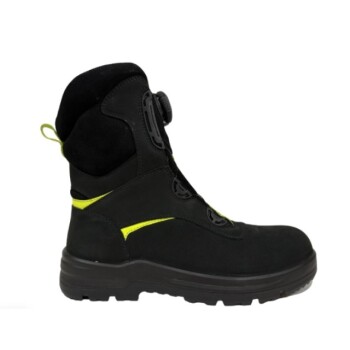
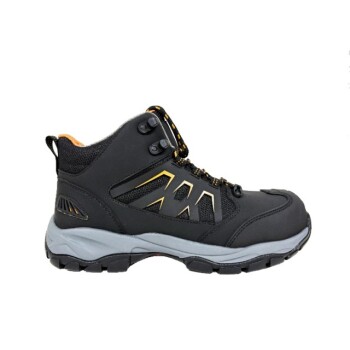
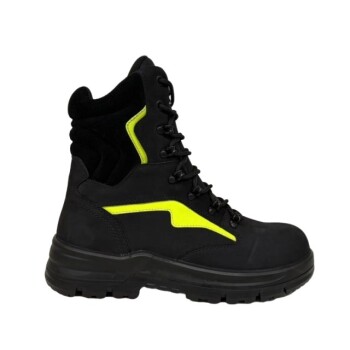
Smart Safety Boots leverage integrated sensors and AI to function as active safety guardians rather than passive protective gear. These systems primarily focus on environmental monitoring to identify slip risks and obstacles, while simultaneously executing fall detection and utilizing geofencing to warn wearers of restricted or dangerous zones via haptic feedback.
Smart Safety Boots transform footwear into intelligent IoT terminals that bridge the gap between hazard prevention and rapid emergency response. By synthesizing environmental data with real-time biometric monitoring, they provide a holistic safety net that protects workers from both external accidents and internal health crises.
Environmental Awareness and Accident Prevention
The most immediate function of Smart Safety Boots is to digitize the wearer's physical environment. By continuously scanning surroundings, these devices shift safety from reactive to proactive.
Detecting Slip and Trip Hazards
Integrated sensors automatically assess ground conditions to identify potential risks. AI algorithms analyze this data to warn the user of obstacles or surfaces lacking slip resistance, allowing for immediate course correction before an accident occurs.
Geofencing for Zone Safety
Using location-based technology, these boots implement geofencing alerts. This function ensures workers are notified immediately via haptic feedback (vibrations) if they enter unauthorized or hazardous areas, acting as a virtual barrier against danger.
Physiological Monitoring and Worker Health
Beyond external hazards, advanced safety footwear now serves as a high-precision data collection terminal for the Internet of Things (IoT).
Capturing Critical Biometrics
Sensors embedded in the footwear perform real-time monitoring of key physiological markers. This includes capturing heart rate, blood oxygen saturation, and respiratory rates, creating a continuous health profile for the worker.
Movement Trajectory Analysis
By tracking movement patterns, these sensors provide data on movement trajectories. This information is vital for identifying fatigue or irregular gait, serving as the hardware foundation for personalized health interventions and remote monitoring.
Emergency Response Mechanisms
When prevention fails, the AI algorithms within Smart Safety Boots transition to critical response modes to mitigate the severity of an incident.
Automated Fall Detection
The algorithms are tuned to recognize the specific motion signatures of a fall. Upon detection, the system triggers an alert to supervisors or emergency services, reducing the "down time" between an accident and medical assistance.
Two-Way Alarm Communication
Safety is not a one-way stream of data. These boots facilitate two-way alarm communication, ensuring that if a risk is detected or a fall occurs, the worker remains connected to the safety network rather than being isolated.
Understanding the Trade-offs
While the integration of AI and sensors offers robust protection, it introduces specific complexities that must be managed.
Power Dependency and Maintenance
Unlike traditional boots, smart footwear requires regular charging and maintenance. If the battery fails during a shift, the "smart" protective features vanish, reverting the boot to standard passive protection.
Data Privacy and Surveillance
Continuous monitoring of location and biometrics can lead to worker concerns regarding privacy and surveillance. It is vital to establish clear protocols that separate safety monitoring from performance tracking to maintain workforce trust.
Sensitivity and False Alarms
High-precision sensors may occasionally generate false positives. If a stumble is misinterpreted as a fall, or a safe zone is misread as a hazard, frequent false alarms can lead to "alert fatigue," causing workers to ignore genuine warnings.
Making the Right Choice for Your Goal
Selecting the right smart footwear technology depends heavily on the specific risks present in your industrial environment.
- If your primary focus is preventing physical accidents: Prioritize boots with robust environmental sensors, haptic feedback, and slip-detection algorithms to mitigate trips and falls.
- If your primary focus is long-term worker health: Look for high-precision IoT sensors that capture biometrics like heart rate and blood oxygen to monitor fatigue and physiological stress.
- If your primary focus is lone-worker safety: Ensure the footwear features reliable fall detection, two-way communication, and geofencing to maintain a lifeline for isolated employees.
True safety innovation occurs when technology not only protects the worker from the environment but also connects them to a responsive support network.
Summary Table:
| Feature Category | Key Functions | Primary Benefit |
|---|---|---|
| Environmental Monitoring | Slip detection & Geofencing | Prevents trips and unauthorized zone entry |
| Physiological Tracking | Heart rate & Blood oxygen monitoring | Detects worker fatigue and health crises |
| Emergency Response | Automated fall detection & 2-way alarms | Reduces response time after an accident |
| Data Integration | IoT movement trajectory analysis | Provides hardware foundation for remote monitoring |
Elevate Your Safety Standards with 3515 Smart Footwear Solutions
As a large-scale manufacturer serving global distributors and brand owners, 3515 offers cutting-edge production capabilities for the next generation of footwear. Our flagship Safety Shoes series integrates advanced technology to move beyond passive protection into active worker safeguarding.
Whether you are looking to source high-tech safety boots, tactical gear, or professional dress shoes, 3515 provides the scale and expertise to meet your bulk requirements. Partner with us to bring intelligent, reliable, and durable footwear to your market.
Ready to upgrade your inventory with professional-grade safety solutions?
Contact Us Today to Discuss Your Bulk Requirements
References
- Immad A. Shah, SukhDev Mishra. Artificial intelligence in advancing occupational health and safety: an encapsulation of developments. DOI: 10.1093/joccuh/uiad017
This article is also based on technical information from 3515 Knowledge Base .
Related Products
- Puncture-Resistant Velcro Safety Boots for Wholesale & Custom Manufacturing
- Premium Wholesale Tactical Style Safety Shoes Boots with Quick Lacing
- Premium High-Cut Waterproof Safety Boots Manufacturing & Wholesale Solutions
- Wholesale Durable Safety Boots | Custom Steel Toe & Puncture-Resistant Manufacturing
- Wholesale Customizable Safety Boots Durable & Protective Footwear Manufacturing
People Also Ask
- Why are industrial safety boots with steel toes necessary for machine operators? Essential Foot Protection for Safety
- What are the characteristics of steel toe safety boots? Maximum Protection, Key Trade-offs
- Is it true that steel toes can cause toes to get cut off? Debunking the Dangerous Myth
- What are the primary safety functions of safety boots with steel-toe designs? Essential Protection for Industry
- What are the different types of safety toe boots available? Choose the Right Protection for Your Job