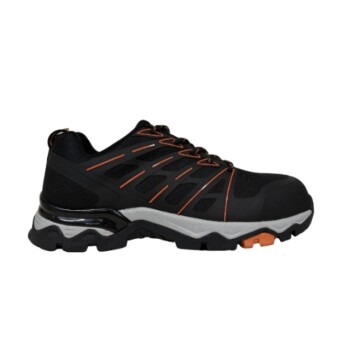
Safety shoes function as both a critical physical barrier against workplace hazards and a mandatory data point within modern safety monitoring systems. In the context of a construction safety framework, they serve as a distinct detection category used to verify compliance, reduce liability, and protect personnel from impact, puncture, and slip-related injuries.
The Core Insight While the physical design of safety shoes mitigates immediate trauma from falling objects and sharp debris, their role in a monitoring framework is systemic. They act as a verifying compliance metric—often tracked via automated visual systems—to ensure that safety standards (such as KOSHA) are continuously met in high-risk zones.
The Physical Defense Mechanism
Mitigation of Impact and Puncture Risks
The primary function of safety shoes is to serve as the last line of defense against direct physical trauma.
They are engineered with reinforced protective toe caps to shield the foot from crushing injuries caused by falling heavy objects. Additionally, puncture-resistant soles create a barrier against sharp materials, such as nails or scrap metal, which are ubiquitous on construction sites.
Stability and Fall Prevention
Beyond impact protection, professional-grade safety shoes are essential for navigating the complex topography of a job site.
High-traction, slip-resistant outsoles provide necessary stability on wet, uneven, or slippery surfaces. This significantly reduces the frequency of slips and falls, which remain a leading cause of industrial accidents in multi-story environments.
Fatigue Management
Modern safety footwear often includes features designed to alleviate physical strain.
Comfortable inner linings help reduce fatigue caused by prolonged standing. By minimizing physical exhaustion, these features indirectly contribute to maintaining worker alertness and reducing injury rates over long shifts.
Integration into Safety Monitoring Frameworks
A Mandatory Detection Category
In a structured safety monitoring framework, safety shoes are not just recommended equipment; they are a mandatory detection category.
Systems aligned with occupational health and safety standards (like KOSHA) specifically track footwear to confirm that personnel entering dangerous zones are compliant. If the system fails to detect safety shoes, it identifies a gap in the protective protocol, allowing for immediate correction.
Overcoming Manual Inspection Limitations
Manual safety checks often lack the frequency and spatial coverage required to guarantee 100% compliance across a large site.
Automated monitoring systems utilize high-resolution visual data and deep learning models to continuously verify that workers are wearing compliant footwear. This ensures that protection standards are maintained at all times, rather than just during sporadic spot checks.
Operational Impact on Risk Management
Reducing Liability and Lost Time
Integrating safety shoes into the monitoring framework directly impacts the project's bottom line and legal standing.
By preventing serious injuries—such as crushed toes or deep punctures—construction enterprises significantly reduce lost work hours and project delays. Furthermore, documented compliance through monitoring systems helps mitigate legal liabilities associated with industrial injuries.
Understanding the Limitations
Detection Challenges
While automated systems are powerful, they face challenges in visual recognition.
Environmental factors like mud, heavy dust, or pant legs covering the boot can obscure the footwear from cameras. This can lead to false negatives in the monitoring system, requiring manual intervention or improved camera angles to ensure accurate compliance tracking.
The Limits of PPE
It is critical to remember that PPE is a mitigation measure, not a prevention of the hazard itself.
Safety shoes reduce the severity of an injury when an accident occurs, but they do not stop the object from falling. A robust safety framework must prioritize eliminating hazards at the source before relying solely on the protective capacity of footwear.
Making the Right Choice for Your Goal
If your primary focus is Regulatory Compliance:
- Ensure your monitoring system is calibrated to detect specific visual markers of safety footwear to satisfy standards like KOSHA.
If your primary focus is Workforce Efficiency:
- Prioritize footwear with anti-fatigue linings and high-traction soles to keep workers mobile and alert, reducing downtime caused by minor strains or slips.
If your primary focus is Risk Management:
- Implement automated detection systems to replace sporadic manual checks, creating a continuous digital audit trail of safety compliance.
Integrating high-performance safety shoes into your monitoring framework is the most effective way to bridge the gap between physical protection and systemic safety compliance.
Summary Table:
| Function Category | Key Feature | Safety Monitoring Role |
|---|---|---|
| Physical Protection | Reinforced toe caps & puncture-resistant soles | Prevents crushing and sharp object injuries |
| Stability & Comfort | Slip-resistant outsoles & anti-fatigue linings | Reduces falls and maintains worker alertness |
| Regulatory Compliance | Visible detection markers | Serves as a mandatory metric for automated KOSHA audits |
| Risk Management | Continuous visual tracking | Reduces liability and minimizes lost work hours |
Elevate Your Site Safety with 3515 Footwear Solutions
As a premier large-scale manufacturer serving global distributors and brand owners, 3515 delivers the high-performance footwear required to satisfy both rigorous physical safety standards and modern monitoring frameworks. Our flagship Safety Shoes series provides the durability and visibility needed for automated compliance tracking, while our broader portfolio—including tactical boots, outdoor shoes, and formal dress shoes—meets the diverse bulk requirements of any enterprise.
Partner with 3515 to secure your workforce and streamline your supply chain.
References
- Yeo-Reum Lee, Han-Guk Ryu. Deep learning-based framework for monitoring wearing personal protective equipment on construction sites. DOI: 10.1093/jcde/qwad019
This article is also based on technical information from 3515 Knowledge Base .
Related Products
- Premium Suede Sport Safety Shoes for Wholesale & Bulk Orders
- Premium Lightweight Safety Shoes for Wholesale & Bulk Orders
- Wholesale Anti-Smash & Puncture-Proof Safety Shoes Custom Manufacturing for Brands
- Premium KPU Injection Athletic Style Safety Shoes
- Premium Safety Shoes with Rotating Buckle Safety Sneakers
People Also Ask
- What are the primary functions of professional safety shoes? Maximize Safety in Water Supply Confined Spaces
- What industries have specific OSHA footwear requirements? Ensure Compliance & Protect Your Workforce
- What role do specialized safety shoes play in preventing falls? Engineering Stability in Industrial Environments
- What happens during the cutting stage of safety shoes manufacturing? Precision, Process & Quality
- How does professional industrial cleaning equipment maintain the performance stability of safety shoes? Pro Maintenance