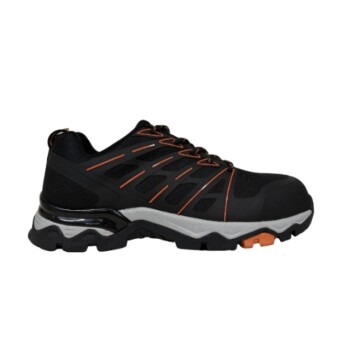
Operational safety in telecommunication maintenance requires rigorous adherence to personal protective equipment (PPE) standards, particularly regarding footwear. Including safety shoes in automated detection categories is technically necessary to verify that workers are protected against falling objects and possess adequate grip for vertical climbing, ensuring continuous compliance where manual oversight is often limited.
Core Takeaway
While the physical design of safety shoes mitigates the risks of gravity and vertical ascent, the automated detection of this gear is what enforces reliability. By validating the presence of safety shoes digitally, you close the critical gap between safety protocols and actual on-site behavior.
The Physical Necessity of Safety Shoes
The inclusion of safety shoes in detection algorithms is driven by two primary physical hazards inherent to tower maintenance.
Mitigation of Falling Object Impact
Telecommunication towers are vertical worksites where equipment is frequently manipulated at height. Bolts, tools, and heavy components are constant hazards.
Safety shoes are engineered with reinforced toe caps to deflect and absorb the kinetic energy of these falling objects. Without this protection, a minor slip of a tool at height can result in a debilitating injury for ground support staff.
Essential Vertical Grip
The structural integrity of a climb depends on friction. Tower rungs and metal surfaces can be slippery due to weather or condensation.
Safety shoes provide the specialized tread and sole stiffness required to maintain secure contact with the tower structure. This grip is the fundamental technical requirement for preventing falls during ascent and descent.
The Role of Automated Verification
The technical necessity extends beyond the shoe itself to the verification of the shoe. Automated detection addresses specific deficiencies in traditional safety management.
Eliminating the "Supervision Gap"
Manual supervision is often intermittent, especially in remote tower locations. It is physically impossible for safety officers to verify every worker's gear in real-time across distributed sites.
Automated visual detection provides continuous, unbiased monitoring. It functions as an always-on supervisor, ensuring that the safety protocol is not just a rule on paper, but a verified reality on the ground.
Enhancing OHS Standards
Occupational Health and Safety (OHS) standards rely on evidence of compliance.
By integrating safety shoes into automated detection categories, organizations generate a digital audit trail. This technology significantly enhances safety standards by flagging non-compliance before a worker ever begins a hazardous climb.
Understanding the Limitations
While automated detection is a powerful tool, it is important to recognize technical distinctions in what the system can and cannot do.
Presence vs. Condition
Current automated detection primarily verifies the presence of the safety shoe.
It may not assess the condition of the footwear. A system might flag a worker as "compliant" because they are wearing safety shoes, even if the tread is worn down or the structural integrity of the shoe is compromised.
Visual Occlusion
The reliability of the detection depends on the camera's line of sight.
In complex environments or crowded worksites, the feet may be obscured by equipment or terrain. This can lead to false negatives, where a compliant worker is flagged as missing gear simply because the camera cannot verify it.
Making the Right Choice for Your Protocol
Integrating safety shoes into your automated detection system requires aligning technical capabilities with your safety goals.
- If your primary focus is Injury Prevention: Ensure your detection parameters prioritize the identification of reinforced footwear to mitigate the risk of falling objects and climbing slips.
- If your primary focus is Regulatory Compliance: Leverage automated detection to close supervision gaps and create an irrefutable digital record of adherence to OHS standards.
Ultimately, the technical necessity lies in transforming safety from a passive assumption into an actively verified metric.
Summary Table:
| Hazard Category | Technical Risk | Safety Shoe Solution | Detection Value |
|---|---|---|---|
| Falling Objects | Impact from tools/bolts | Reinforced toe caps | Verifies impact protection presence |
| Vertical Ascent | Slips on tower rungs | Specialized high-grip soles | Confirms climbing gear adherence |
| Remote Sites | Lack of manual oversight | Constant visual monitoring | Eliminates the supervision gap |
| Regulatory OHS | Non-compliance liability | Digital audit trails | Provides evidence of safety protocol |
Elevate Your Fleet’s Safety with 3515 Footwear Solutions
As a premier large-scale manufacturer serving global distributors and brand owners, 3515 delivers the high-performance footwear essential for high-risk telecommunication environments. Our flagship Safety Shoes series is engineered for maximum grip and impact resistance, ensuring your workers meet the strictest OHS standards for automated detection systems.
From tactical boots and training shoes to specialized work footwear and dress shoes, we provide the bulk production capabilities and quality assurance your brand requires. Partner with 3515 to secure your supply chain and protect your workforce.
Contact Us Today to Discuss Your Bulk Requirements
References
- Sarah Putri Tauladani, Rachmad Saptono. Implementation YOLOv5 Method for Detecting Safety Equipment Completeness Images on Site Tower (Case Study: PT. Nexwave Surabaya). DOI: 10.33795/jartel.v14i2.5264
This article is also based on technical information from 3515 Knowledge Base .
Related Products
- Premium Suede Sport Safety Shoes for Wholesale & Bulk Orders
- Premium Lightweight Safety Shoes for Wholesale & Bulk Orders
- Wholesale Anti-Smash & Puncture-Proof Safety Shoes Custom Manufacturing for Brands
- Premium KPU Injection Athletic Style Safety Shoes
- Premium Safety Shoes with Rotating Buckle Safety Sneakers
People Also Ask
- What industries have specific OSHA footwear requirements? Ensure Compliance & Protect Your Workforce
- What are the primary functions of professional safety shoes? Maximize Safety in Water Supply Confined Spaces
- What role do specialized safety shoes play in preventing falls? Engineering Stability in Industrial Environments
- How do complex outsole tread designs in safety shoes work with coated floors? Master Slip Resistance Engineering
- What are the main components of safety shoes? A Guide to Protective Footwear Design