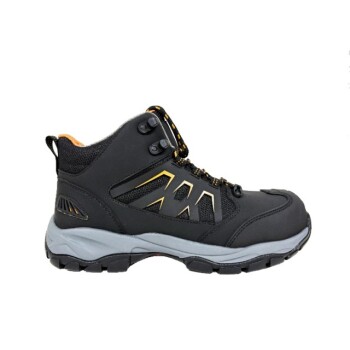
Pressure sensors serve as the fundamental validation mechanism within the detection nodes of smart safety footwear. Embedded inside the shoe, these sensors measure the physical pressure exerted by the wearer's foot to generate raw data. A central processing unit (CPU) then applies specific algorithms to this data to definitively confirm whether the protective gear is being worn, instantly uploading any non-compliance alerts to a central management platform.
The core value of these sensors lies in automating safety compliance. By converting physical pressure into digital verification, they transform a passive piece of equipment into an active monitoring device that ensures workers are protected in real-time.
The Mechanics of Compliance Detection
The detection node operates as a closed-loop system designed to remove human error from safety checks.
Sensing Physical Pressure
The sensors are installed directly inside the safety shoe. Their primary job is to detect the physical presence of the foot through pressure distribution.
They differentiate between a shoe sitting idle in a locker and one actively bearing the weight and movement of a worker.
Algorithmic Verification
Raw pressure data is not enough; it requires interpretation. A central processing unit receives the sensor readings and analyzes them using specialized algorithms.
These algorithms act as the decision-maker. They determine if the pressure pattern matches that of a human foot, ruling out false positives such as an object simply resting inside the shoe.
Real-Time Violation Reporting
Once the CPU determines that a worker is present but the safety footwear is not properly worn, the system triggers an alert.
This data is uploaded immediately to a management platform. This allows site supervisors to address safety violations the moment they occur, rather than discovering them after an accident.
Distinguishing Monitoring from Protection
It is vital to distinguish between the electronic detection node and the physical structure of the shoe.
Active Monitoring vs. Structural Integrity
The pressure sensors described above are responsible for compliance monitoring (ensuring the shoe is worn).
This is distinct from the physical protective capabilities of the shoe, such as toe caps and soles.
The Role of Laboratory Testing
While sensors check for the presence of a foot, the shoe's physical ability to resist crushing or puncturing is verified through separate laboratory-grade testing.
As noted in high-precision testing protocols, hydraulic equipment simulates extreme industrial stress to ensure the shoe's structure can protect bone and muscle. The sensors ensure the worker utilizes this protection; the lab tests ensure the protection holds up under stress.
Understanding the Trade-offs
Implementing smart detection nodes introduces new variables into safety management that must be managed carefully.
Reliance on Algorithms
The accuracy of the system depends entirely on the calibration of the analysis algorithms.
If the algorithm is too sensitive, it may flag false positives. If it is too lenient, it may fail to detect when a worker has slipped their shoe off while on site.
Connectivity Dependencies
Because the system relies on uploading violations to a management platform, it requires a stable connection.
In deep underground construction or areas with high signal interference, the real-time reporting capability may be delayed, potentially leaving a gap in supervision.
Making the Right Choice for Your Goal
When evaluating safety footwear technology, you must balance the need for administrative oversight with physical robustness.
- If your primary focus is active workforce management: Prioritize systems with advanced pressure sensing algorithms and reliable connectivity to ensure real-time compliance reporting.
- If your primary focus is physical injury prevention: Focus on the laboratory certification grades of the toe caps and soles to ensure they meet the specific compression and puncture resistance limits of your environment.
Success in modern construction safety requires satisfying both the digital need for compliance and the physical need for durability.
Summary Table:
| Component | Primary Function | Key Benefit |
|---|---|---|
| Pressure Sensors | Detect physical presence & weight distribution | Converts physical wear into digital data |
| CPU & Algorithms | Analyze raw pressure patterns | Filters false positives to confirm actual usage |
| Management Platform | Centralized data & violation logging | Enables real-time supervision and oversight |
| Connectivity Module | Uploads alerts via wireless signals | Ensures instant reporting of safety breaches |
Elevate Your Safety Standards with 3515 Footwear
As a large-scale manufacturer serving distributors and brand owners, 3515 offers comprehensive production capabilities for all footwear types. Our flagship Safety Shoes series provides the structural integrity required for high-risk environments, while our expertise in specialized production ensures we meet diverse bulk requirements.
From tactical boots and training shoes to professional dress and formal footwear, we deliver the durability and reliability your clients demand. Partner with 3515 today to access world-class manufacturing and innovative protective solutions.
Contact our team for bulk inquiries
References
- Arun Kumar G S, Shaik Vaseem Akram. A Comprehensive Approach to Real-time Site Monitoring and Risk Assessment in Construction Settings using Internet of Things and Artificial Intelligence. DOI: 10.14445/23488379/ijeee-v10i8p111
This article is also based on technical information from 3515 Knowledge Base .
Related Products
- Puncture-Resistant Velcro Safety Boots for Wholesale & Custom Manufacturing
- Premium Safety Shoes with Rotating Buckle Safety Sneakers
- Wholesale Anti-Smash & Puncture-Proof Safety Shoes Custom Manufacturing for Brands
- Premium Suede Sport Safety Shoes for Wholesale & Bulk Orders
- Wholesale Mesh Steel Toe Safety Shoes with Dial Closure Factory Production
People Also Ask
- Why are industrial safety boots with steel toes necessary for machine operators? Essential Foot Protection for Safety
- What are the characteristics of steel toe safety boots? Maximum Protection, Key Trade-offs
- Is it true that steel toes can cause toes to get cut off? Debunking the Dangerous Myth
- What are the primary safety functions of safety boots with steel-toe designs? Essential Protection for Industry
- What are the different types of safety toe boots available? Choose the Right Protection for Your Job