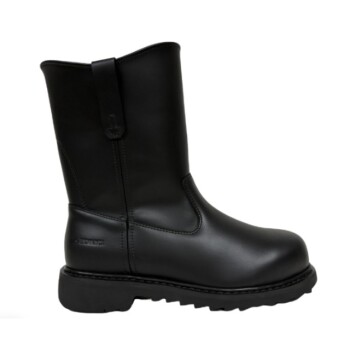
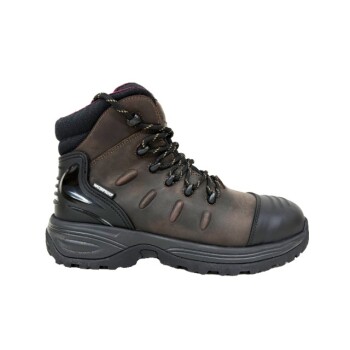
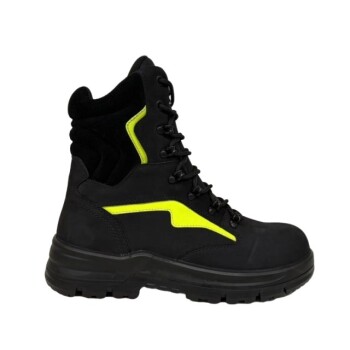
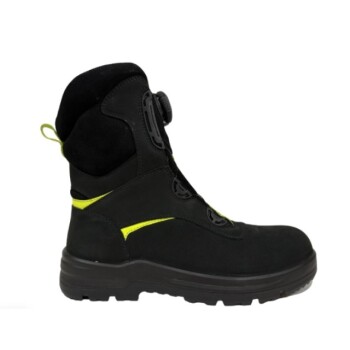
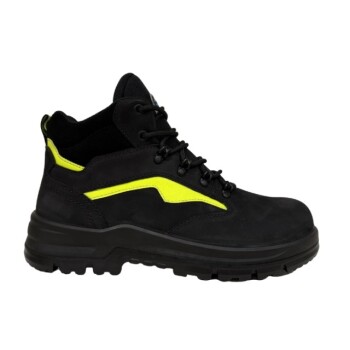
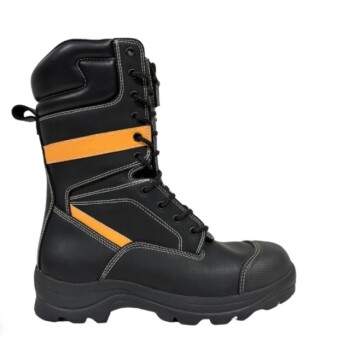
The primary quality standards that apply to oil-resistant safety boots in the United States are ASTM F2413, with the relevant European standard being EN ISO 20345. These are comprehensive performance standards for protective footwear that cover everything from impact resistance to sole integrity. Oil resistance is a specific quality of the outsole material that is tested under these broader frameworks.
While multiple standards exist, the core principle is simple: A boot's "oil-resistant" label signifies that its outsole will not degrade when exposed to oil. However, this feature is just one component of a larger safety system defined by standards like ASTM F2413, which ensures the entire boot protects you from workplace hazards.
Deconstructing the Safety Standards
To make an informed choice, you must understand what these codes and regulations actually mean for the boot on your foot. They are not just for oil resistance but for the total protective capacity of the footwear.
The Core US Standard: ASTM F2413
ASTM F2413 is the current American standard for performance requirements for protective (safety) toe cap footwear. It replaced the older ANSI Z41 standard.
This standard establishes minimum requirements for the design, performance, testing, and classification of safety footwear. It covers critical safety features beyond the sole.
Key areas tested under ASTM F2413 include:
- Impact (I) Resistance: The toe cap's ability to withstand a heavy falling object.
- Compression (C) Resistance: The toe cap's ability to resist crushing from a rolling object.
- Metatarsal (Mt) Protection: Protection for the top of the foot.
- Electrical Hazard (EH) Resistance: Insulating properties of the sole.
The Core European Standard: EN ISO 20345
EN ISO 20345 is the equivalent standard used across Europe. While the testing methods may differ slightly, its purpose is the same: to certify that safety footwear meets rigorous performance benchmarks.
Like ASTM F2413, this standard specifies requirements for a protective toe cap and tests for numerous hazards. A marking of SRA, SRB, or SRC indicates specific slip-resistance properties.
The Regulatory Requirement: OSHA
In the United States, the Occupational Safety and Health Administration (OSHA) mandates the use of protective footwear in workplaces where dangers exist.
The relevant regulation, CFR 1910.136, requires that employers ensure employees use protective footwear that complies with standards like ASTM F2413. This makes adherence to the standard a legal necessity.
Key Components of an Oil-Resistant Boot
The standards certify the boot as a whole, but its performance comes from its individual components. Understanding these parts helps you select the right boot for your specific environment.
The Outsole: Your First Line of Defense
The outsole is the part of the boot that directly contacts the ground and is the focus of oil resistance. It is made from elastomers that resist degradation from petroleum-based liquids.
Common oil-resistant materials include:
- Rubber: Offers excellent resistance to oil and chemicals, providing high durability and grip.
- Thermo-polyurethane (TPU): A modern material known for being lightweight, durable, and highly resistant to oil, abrasion, and chemicals.
- Ethylene-vinyl acetate (EVA): Often used in the midsole for cushioning, but can be part of an outsole blend to provide lightweight comfort.
Slip Resistance: The Critical Partner
A boot whose sole doesn't break down from oil is only half the solution. It must also provide grip on oily surfaces.
Slip resistance is often measured by its coefficient of friction. High-quality tactical and work boots are tested to ensure they provide adequate traction, a feature just as important as the material's chemical resistance.
Protective Toe Caps
While not directly related to oil resistance, the protective toe is a core safety feature covered by ASTM and EN ISO standards.
Options include steel, composite, and aluminum toes. Each is tested for impact and compression resistance to ensure your feet are protected from crushing and falling objects.
Understanding the Trade-offs
Choosing the right boot requires balancing competing factors. No single boot is perfect for every job.
Durability vs. Comfort
Heavier, denser materials like solid rubber often provide the highest level of durability and chemical resistance. However, they can be less flexible and add weight.
Lighter materials like TPU and EVA blends offer superior comfort and reduce fatigue but may not withstand the most extreme industrial abuse as well as a heavy-duty rubber sole.
"Oil-Resistant" vs. "Oil-Proof"
The term "oil-resistant" means the outsole material will not swell, weaken, or be damaged by exposure to oil.
This does not mean the entire boot is "oil-proof." Oil can still penetrate leather uppers or seams if the boot is submerged or heavily saturated, unless the entire boot is designed as waterproof chemical footwear.
Minimum Standards vs. Real-World Performance
Compliance with ASTM or EN ISO standards ensures a boot meets a minimum safety threshold.
However, the frequency and intensity of oil exposure in your specific workplace matter. A boot used on a shop floor with occasional spills has different needs than one used in an oil refinery with constant exposure.
Making the Right Choice for Your Environment
Your final decision should be guided by your specific work conditions and safety requirements.
- If your primary focus is heavy industrial use with constant oil exposure: Choose a boot with a durable rubber or TPU sole that is explicitly marked as compliant with ASTM F2413 and has a high slip-resistance rating.
- If your primary focus is automotive or mechanical work with frequent spills: A TPU-soled boot offers an excellent balance of oil resistance, lightweight comfort, and durability for long shifts.
- If your primary focus is general work with a low risk of oil contact: A boot with an oil-resistant sole is still a wise choice for safety, and an EVA or rubber blend can provide all-day comfort and compliance.
Ultimately, choosing the right boot means looking beyond a single feature to understand the certified standards and material science that deliver true safety and performance.
Summary Table:
| Standard | Region | Key Focus |
|---|---|---|
| ASTM F2413 | United States | Impact/Compression resistance, Electrical Hazard, Metatarsal protection |
| EN ISO 20345 | Europe | Protective toe cap, Slip resistance (SRA/SRB/SRC) |
| OSHA 1910.136 | United States | Mandates use of ASTM-compliant protective footwear |
| Oil Resistance | Material Property | Outsole resistance to degradation from petroleum-based liquids |
Need reliable, compliant oil-resistant safety boots for your workforce?
As a large-scale manufacturer, 3515 produces a comprehensive range of ASTM and EN ISO-compliant footwear for distributors, brand owners, and bulk clients. Our production capabilities encompass all types of safety shoes and boots, including durable oil-resistant options with rubber or TPU outsoles designed for superior traction and longevity.
We ensure your footwear meets the highest quality standards for safety and performance. Contact us today to discuss your specific needs and get a quote!
Visual Guide

Related Products
- Heavy-Duty Goodyear Welted Pull-On Safety Rigger Boot
- Premium Oil Wax Leather Safety Boots for Bulk Purchase
- Premium Wholesale Waterproof Safety Boots High Performance Protection for Industrial Markets
- Premium Waterproof Nubuck Safety Boots for Wholesale
- Premium Waterproof High-Cut Industrial Safety Boots for Wholesale and Bulk Orders
People Also Ask
- What are the key elements of quality boot construction? Ensure Longevity & Performance
- Are Goodyear welted boots worth it? The Ultimate Guide to Lifelong Footwear
- What is a Goodyear welt on a boot? The Secret to Durable, Repairable Footwear
- What makes Goodyear Welt boots suitable for harsh environments? Unmatched Durability & Repairability
- What additional high-quality materials are used in Goodyear Welt boots? A Guide to Advanced Components