The definitive standard for wildland fire boots is set by the National Fire Protection Association (NFPA). This organization establishes specific, non-negotiable requirements for footwear designed to perform in the harsh and demanding conditions of a wildland fire. These standards ensure every component provides the necessary protection, stability, and durability.
The core takeaway is that the NFPA 1977 standard serves as the official benchmark for wildland firefighting footwear. It is not a guideline but a set of mandatory specifications covering height, materials, and construction to guarantee a universal baseline of safety and performance.
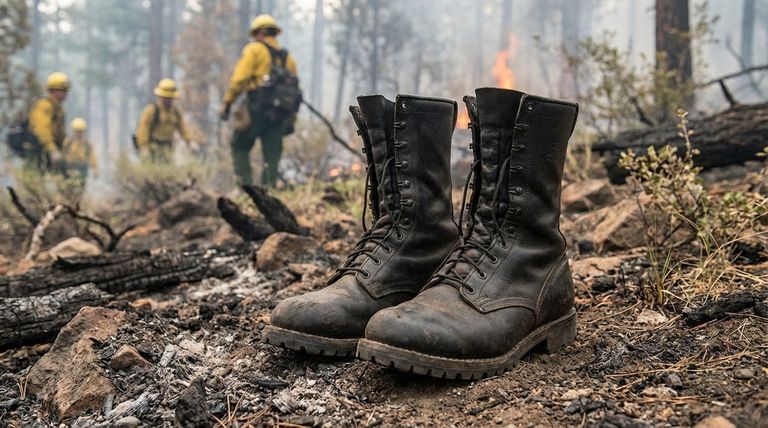
Deconstructing the NFPA Standard
The NFPA's requirements are designed to address the unique combination of hazards faced by wildland firefighters, from extreme heat to treacherous, uneven terrain. Each element of the standard has a distinct safety purpose.
The 8-Inch Height Requirement
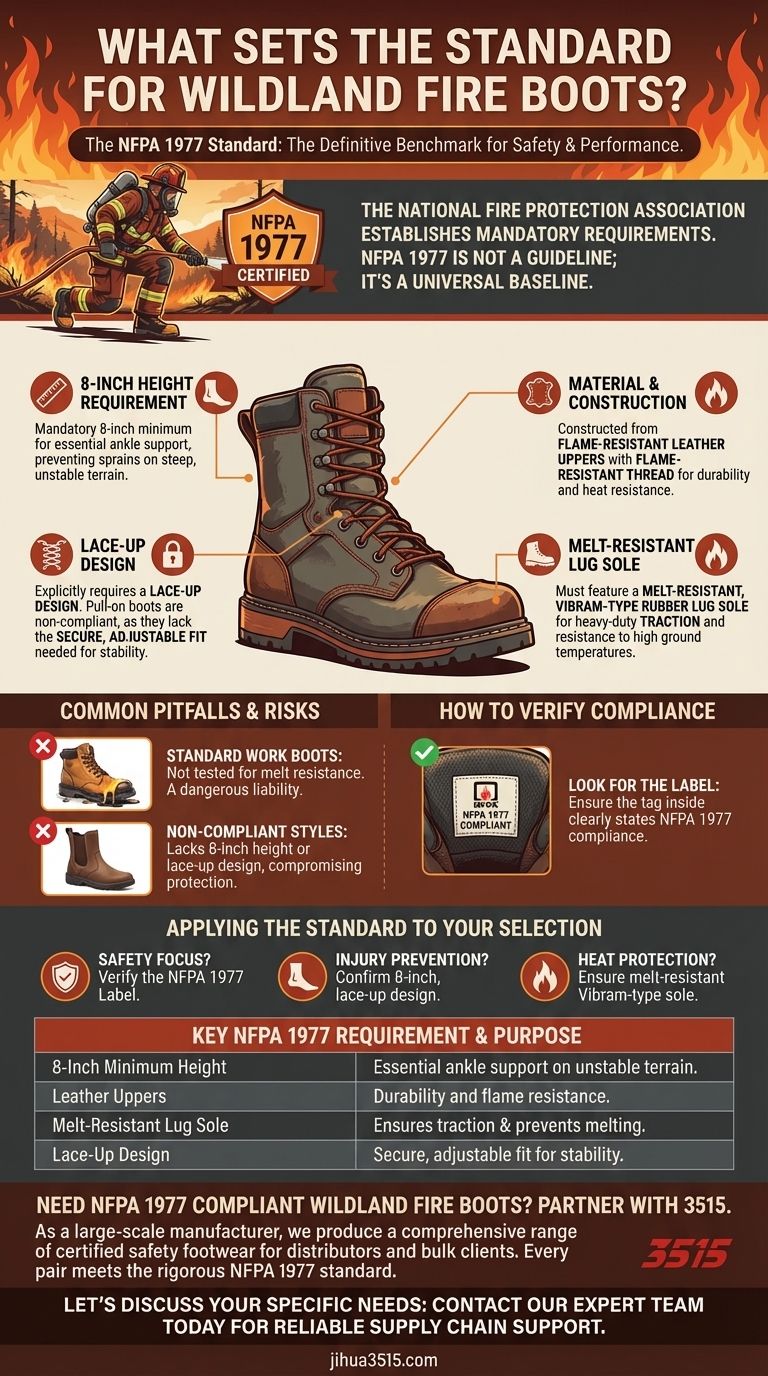
A critical specification is that boots must measure a minimum of 8 inches from the bottom of the heel to the top of the boot.
This height is mandated to provide substantial ankle support, which is essential for preventing sprains and injuries while navigating steep, unstable, and unpredictable ground.
Material and Construction
The exterior of the boot must be made of leather uppers. This material is chosen for its natural durability and resistance to flame.
Furthermore, all exterior threads used in the boot's construction must be flame-resistant to prevent the boot from coming apart when exposed to heat or embers.
The Sole: Heat Resistance and Traction
NFPA standards require a melt-resistant, Vibram-type rubber lug sole.
This component serves two functions: the heavy-duty tread provides critical traction on rough terrain, while the specialized rubber compound is tested to resist melting or degrading when exposed to high ground temperatures.
The Lace-Up Design
The standard explicitly requires a lace-up design.
Pull-on or "Wellington" style boots are not compliant because they cannot provide the secure, adjustable fit necessary to stabilize the foot and ankle during strenuous activity on uneven surfaces.
Common Pitfalls to Avoid
Failing to adhere to the NFPA standard introduces significant risk. Understanding what makes a boot non-compliant is as important as knowing the requirements.
Standard Work Boots Are Unsuitable
A typical work boot, even if it is leather and has a lug sole, will almost certainly fail to meet NFPA standards. Their soles are generally not tested for melt resistance and can become a dangerous liability in a fire environment.
The Risk of Non-Compliant Styles
While features from athletic or hiking footwear are often incorporated for comfort, the core structural requirements—like the 8-inch lace-up design—are non-negotiable. Compromising on these for style or convenience undermines the boot's protective function.
How to Verify Compliance
The most reliable way to ensure a boot is suitable is to check for the official label. NFPA-approved boots must have a tag or stamp inside that clearly indicates compliance with the NFPA 1977 standard for wildland firefighting protective clothing and equipment.
How to Apply This to Your Selection
When selecting your footwear, use the NFPA standard as a checklist to ensure you are getting the protection you need.
- If your primary focus is safety and regulatory compliance: Always verify the boot has a clear, visible label stating it meets the NFPA 1977 standard.
- If your primary focus is preventing injury on terrain: Confirm the boot is a lace-up design that meets the 8-inch height requirement for maximum ankle support.
- If your primary focus is heat protection and performance: Ensure the boot features a melt-resistant, Vibram-type lug sole designed for both traction and durability.
Ultimately, adhering to the NFPA standard is the most critical step in selecting footwear that will protect you when it matters most.
Summary Table:
| Key NFPA 1977 Requirement | Purpose |
|---|---|
| 8-Inch Minimum Height | Provides essential ankle support on unstable terrain. |
| Leather Uppers | Offers durability and flame resistance. |
| Melt-Resistant Lug Sole | Ensures traction and prevents melting from high ground heat. |
| Lace-Up Design | Allows for a secure, adjustable fit for stability. |
Need NFPA 1977 Compliant Wildland Fire Boots? Partner with 3515.
As a large-scale manufacturer, we produce a comprehensive range of certified safety footwear for distributors, brand owners, and bulk clients. Our production capabilities ensure every pair meets the rigorous NFPA 1977 standard for protection, durability, and performance.
Let's discuss your specific needs: Contact our expert team today to learn how we can support your supply chain with reliable, high-quality wildland fire boots.
Visual Guide
Related Products
- High Performance Fire-Retardant Waterproof Safety Boots
- Premium Flame-Retardant Waterproof Safety Boots and Shoes
- Wholesale Lightweight Tactical Boots Custom Manufacturer for Desert & Combat Use
- Durable Military Combat Boots with Water Drainage for Wholesale & OEM
- Durable Leather Tactical Boots Wholesale & Custom Manufacturing for Brands
People Also Ask
- Why are waterproof safety boots recommended for certain work environments? Essential Protection for Wet & Hazardous Jobs
- What roles do 3D vision systems and industrial robots play in the manufacturing of fire safety boots? Smart Automation
- What should you look for to ensure boots are fully waterproof? The Essential 2-Part System
- What is a drawback of waterproof boots? The Hidden Cost of Trapped Sweat and Heat
- How can you ensure your feet stay dry during winter walks? A Two-Part Defense System for Total Comfort