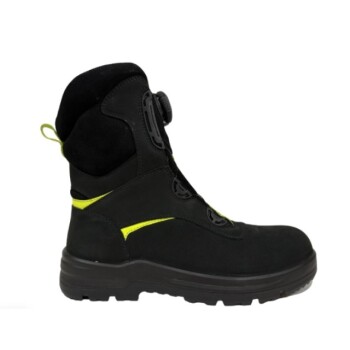
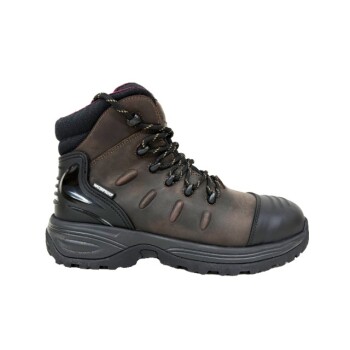
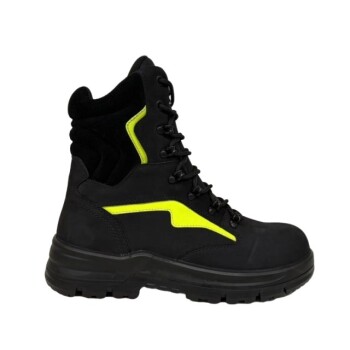
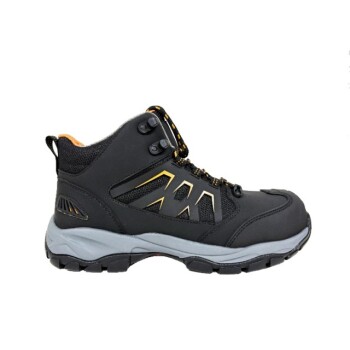
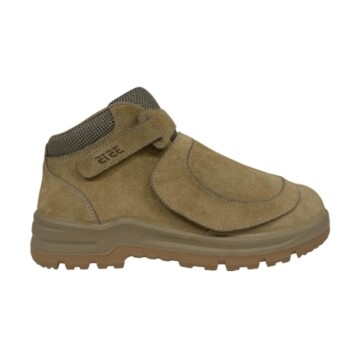
For the construction industry, the most recommended safety boots are those equipped with a protective steel or composite toe, a puncture-resistant sole, and substantial ankle support. These core features work together to shield you from the most common and severe hazards found on a typical job site, from falling objects to sharp debris and uneven terrain.
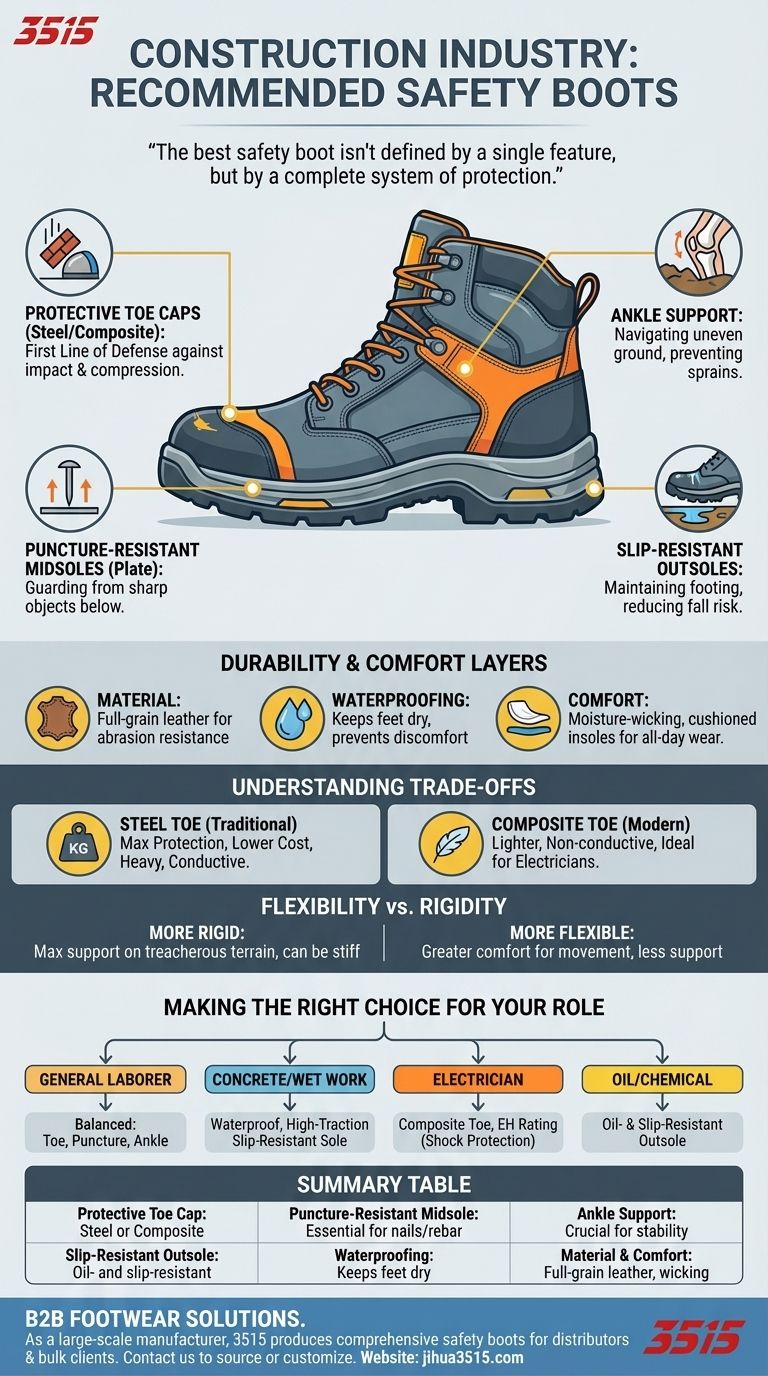
The best safety boot isn't defined by a single feature, but by a complete system of protection. The key is to match the specific combination of materials and safety ratings to the unique risks of your daily tasks on the construction site.
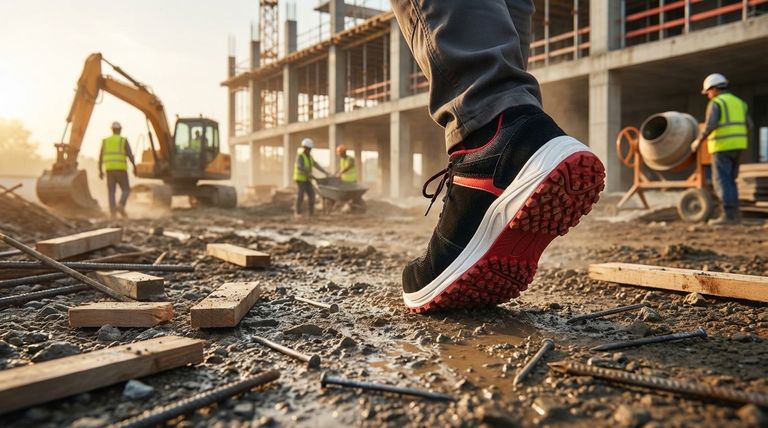
The Non-Negotiable Core Features
Every construction boot must provide a baseline of protection against fundamental site hazards. These features are the foundation of your safety and should be considered non-negotiable.
Protective Toe Caps: The First Line of Defense
Your toes are highly vulnerable to impact and compression injuries from falling materials, tools, or heavy machinery. A protective toe cap, made from steel or a composite material, is the most critical safety feature to prevent these serious injuries.
Puncture-Resistant Midsoles: Guarding from Below
Construction sites are littered with sharp objects like upturned nails, screws, and rebar scraps. A puncture-resistant plate is integrated into the midsole to stop these hazards from penetrating the boot and causing severe foot injury.
Ankle Support: Navigating Uneven Ground
Slips, trips, and falls are a leading cause of injury in construction, often due to unstable or cluttered ground. A boot with robust ankle support helps prevent sprains and fractures by providing stability as you move across challenging surfaces.
Slip-Resistant Outsoles: Maintaining Your Footing
Job sites can be slick with water, mud, or oil, creating significant slip hazards. A high-traction, slip-resistant outsole is essential for maintaining a secure footing and preventing falls.
Essential Features for Durability and All-Day Wear
Beyond core safety, a boot must be able to withstand the rigors of a construction environment while keeping you comfortable and focused throughout a long workday.
Material and Construction: Built to Last
Look for boots made from high-quality, durable materials like full-grain leather. These materials resist abrasion and wear, ensuring your boots last longer and continue to provide adequate protection.
Waterproofing: Keeping Your Feet Dry
Working in wet or muddy conditions is common in construction. Waterproof or water-resistant boots are crucial for keeping your feet dry, which prevents discomfort, blisters, and potential health issues.
Comfort and Fit: The Foundation of Productivity
You spend hours on your feet, so comfort is not a luxury—it's a necessity. Features like moisture-wicking linings and cushioned insoles prevent soreness, while a proper fit ensures maximum support. Many brands now offer designs specifically shaped for a man's or woman's foot.
Understanding the Trade-offs
Choosing the perfect boot often involves balancing competing features. Understanding these trade-offs allows you to select the right tool for your specific job.
Steel vs. Composite Toes
Steel toes are the traditional standard, offering maximum protection at a lower cost. However, they are heavier and can conduct heat and cold. Composite toes are made from materials like carbon fiber or Kevlar, making them lighter and non-conductive, which is a critical feature for electricians.
Flexibility vs. Rigidity
A highly rigid boot provides maximum ankle support on treacherous terrain but can feel stiff and fatiguing during long days of walking. A more flexible boot offers greater comfort for movement but may provide less support on highly uneven ground.
The Cost of Quality
While it can be tempting to choose a less expensive option, investing in a well-constructed boot from a reputable brand pays dividends. Higher-quality materials and superior construction mean better protection, greater comfort, and a much longer service life.
Making the Right Choice for Your Role
Your specific job dictates your priorities. Use your primary tasks as a guide to selecting the ideal features for your work boots.
- If you are a general construction laborer: Focus on a balanced boot with a protective toe, puncture resistance, and good ankle support as your core features.
- If you work with concrete or in frequent wet conditions: Prioritize a fully waterproof boot with a high-traction, slip-resistant sole to stay dry and stable.
- If you are an electrician or work near live wires: Insist on a boot with a composite toe and an explicit Electrical Hazard (EH) rating to protect against shock.
- If you work in environments with oil or chemicals: Ensure your boot’s outsole is specifically rated as oil- and slip-resistant to handle slick surfaces.
Ultimately, your safety boots are a critical piece of personal protective equipment, so invest in the pair that best protects you from the realities of your job.
Summary Table:
| Feature | Importance | Key Considerations |
|---|---|---|
| Protective Toe Cap | Prevents impact/compression injuries | Steel (durable, cost-effective) or Composite (lightweight, non-conductive) |
| Puncture-Resistant Midsole | Protects against sharp objects | Essential for sites with nails, screws, or rebar |
| Ankle Support | Prevents sprains and fractures | Crucial for stability on uneven terrain |
| Slip-Resistant Outsole | Reduces fall risk on slick surfaces | Look for oil- and slip-resistant ratings |
| Waterproofing | Keeps feet dry in wet conditions | Prevents discomfort and blisters |
| Material & Comfort | Ensures durability and all-day wear | Full-grain leather and moisture-wicking linings are key |
Ready to equip your team with the right safety footwear?
As a large-scale manufacturer, 3515 produces a comprehensive range of safety boots and work footwear for distributors, brand owners, and bulk clients. Our production capabilities encompass all types of protective shoes and boots, engineered to meet the highest safety standards for the construction industry.
We can help you source or customize the perfect safety footwear to protect your workforce and meet your specific job site requirements. Contact our team today to discuss your needs and receive a competitive quote.
Visual Guide
Related Products
- Puncture-Resistant Velcro Safety Boots for Wholesale & Custom Manufacturing
- Wholesale Durable Safety Boots | Custom Steel Toe & Puncture-Resistant Manufacturing
- Premium Grain Leather Safety Boots for Bulk Supply
- Heavy-Duty Waterproof Nubuck Safety Boots Safety Shoes for Bulk Supply
- Premium High-Cut Waterproof Safety Boots Manufacturing & Wholesale Solutions
People Also Ask
- Why are industrial safety boots with steel toes necessary for machine operators? Essential Foot Protection for Safety
- What are the characteristics of steel toe safety boots? Maximum Protection, Key Trade-offs
- Is it true that steel toes can cause toes to get cut off? Debunking the Dangerous Myth
- What are the primary safety functions of safety boots with steel-toe designs? Essential Protection for Industry
- What are the different types of safety toe boots available? Choose the Right Protection for Your Job