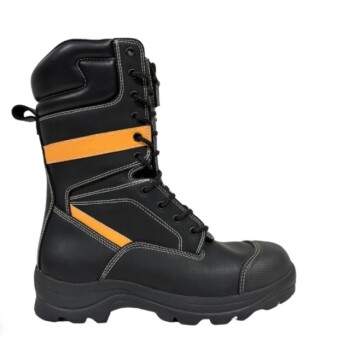
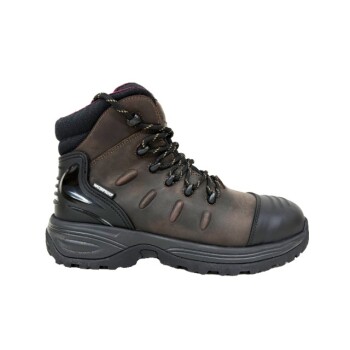
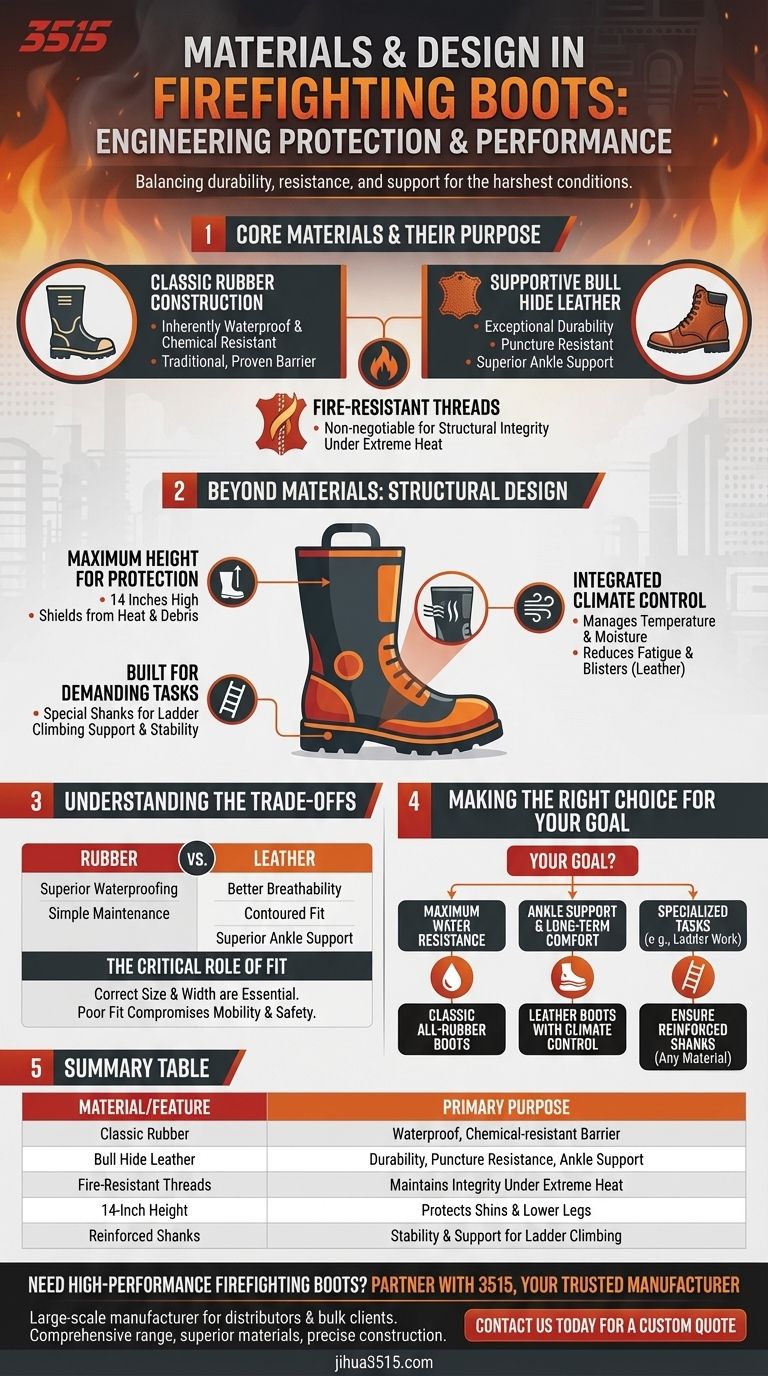
At their core, modern firefighting boots are constructed from two primary, proven materials: classic, heavy-duty rubber and durable, supportive leather. These core materials are stitched together with specialized fire-resistant threads to ensure the boot maintains its structural integrity under extreme conditions.
The choice of material in a firefighting boot is a deliberate decision balancing extreme durability and fire resistance with the critical need for support, comfort, and functional design during demanding operations.
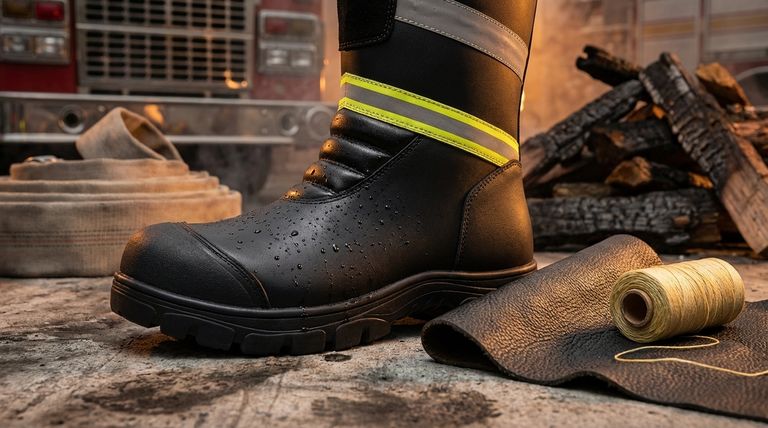
Core Materials and Their Purpose
The materials used in firefighting boots are selected for their specific performance characteristics under the harshest conditions. Each component serves a distinct and vital purpose.
Classic Rubber Construction
Rubber is a traditional and highly effective material for firefighting boots. Its primary benefit is its inherent resistance to water and chemicals, providing a reliable barrier for the wearer.
Supportive Bull Hide Leather
Many structural firefighting boots use full hide bull leather. This material is chosen for its exceptional durability, resistance to punctures, and ability to provide superior ankle support over long periods.
Fire-Resistant Threads
A critical but often overlooked component is the thread. Using fire-resistant threads is non-negotiable, as standard stitching would quickly fail when exposed to high heat, causing the boot to fall apart.
Beyond Materials: The Importance of Structural Design
While the outer material is crucial, the overall design and construction are what make a boot suitable for firefighting. These features transform a simple piece of footwear into an essential tool for safety and performance.
Maximum Height for Protection
Structural firefighting boots are typically 14 inches high. This extended height is designed to protect the shin and lower leg from heat, debris, and other hazards encountered on the fireground.
Built for Demanding Tasks
These boots are engineered for specific firefighting tasks. A key feature is the inclusion of special shanks in the sole, which provide the necessary support and stability for safely climbing ladders.
Integrated Climate Control
To manage temperature and moisture during intense, prolonged use, many leather boots incorporate climate control systems. These systems help keep the foot dry and comfortable, reducing fatigue and the risk of blisters.
Understanding the Trade-offs
Choosing between boot types involves weighing the distinct advantages of each material and design. There is no single "best" material; the right choice depends on specific needs and priorities.
Rubber vs. Leather
Rubber boots generally offer superior and more straightforward waterproofing. However, leather boots often provide better breathability, a more contoured fit, and superior ankle support, which can be crucial during long incidents on uneven terrain.
The Critical Role of Fit
Even the best materials are ineffective if the boot does not fit correctly. The availability of various sizes and widths is essential. A poor fit can compromise mobility, cause painful blisters, and become a dangerous distraction during a critical operation.
Making the Right Choice for Your Goal
Your selection should be guided by the specific demands of your role and environment.
- If your primary focus is traditional, maximum water resistance: Classic all-rubber boots are a proven and highly reliable choice.
- If your primary focus is ankle support and long-term comfort: Leather boots with integrated climate control systems offer superior ergonomics for extended wear.
- If your primary focus is specialized tasks like ladder work: Ensure any model you choose has the necessary structural features, like reinforced shanks, regardless of the primary material.
Ultimately, the goal is to select a boot whose materials and design provide unwavering protection and confidence in any situation.
Summary Table:
| Material/Feature | Primary Purpose |
|---|---|
| Classic Rubber | Waterproof, chemical-resistant barrier |
| Bull Hide Leather | Durability, puncture resistance, ankle support |
| Fire-Resistant Threads | Maintains structural integrity under extreme heat |
| 14-Inch Height | Protects shins and lower legs from hazards |
| Reinforced Shanks | Stability and support for ladder climbing |
Need High-Performance Firefighting Boots? Partner with 3515, Your Trusted Manufacturer.
As a large-scale manufacturer, 3515 produces a comprehensive range of safety footwear for distributors, brand owners, and bulk clients. Our production capabilities encompass all types of firefighting boots, ensuring superior materials, precise construction, and reliable performance for demanding environments.
Contact us today to discuss your specific requirements and get a custom quote!
Visual Guide
Related Products
- High Performance Fire-Retardant Waterproof Safety Boots
- Premium Flame-Retardant Waterproof Safety Boots and Shoes
- Wholesale Lightweight Tactical Boots Custom Manufacturer for Desert & Combat Use
- Durable Military Combat Boots with Water Drainage for Wholesale & OEM
- High-Traction Suede Tactical Boots Wholesale & Custom Manufacturing
People Also Ask
- Why are waterproof safety boots recommended for certain work environments? Essential Protection for Wet & Hazardous Jobs
- What roles do 3D vision systems and industrial robots play in the manufacturing of fire safety boots? Smart Automation
- What is the difference between waterproof and water-resistant boots? Choose the Right Footwear for Any Condition
- What is the difference between waterproof, water-resistant, and water-repellent boots? Choose the Right Protection for Your Feet
- What should you look for to ensure boots are fully waterproof? The Essential 2-Part System