
At its core, an engineer boot is a laceless work boot defined by its rugged construction and adjustable straps. Originally designed for workers in hazardous environments like railroads, its key features include a tall, unstructured "stovepipe" shaft, a plain toe, and distinctive buckle straps at both the instep and the top of the boot. These elements combine to create a boot prized for its durability, protection, and iconic style.
The design of the engineer boot is a direct reflection of its purpose. Every key feature—from the absence of laces to the heavy-duty leather—was engineered to provide maximum protection and a secure fit for individuals working around dangerous machinery and hot engines.
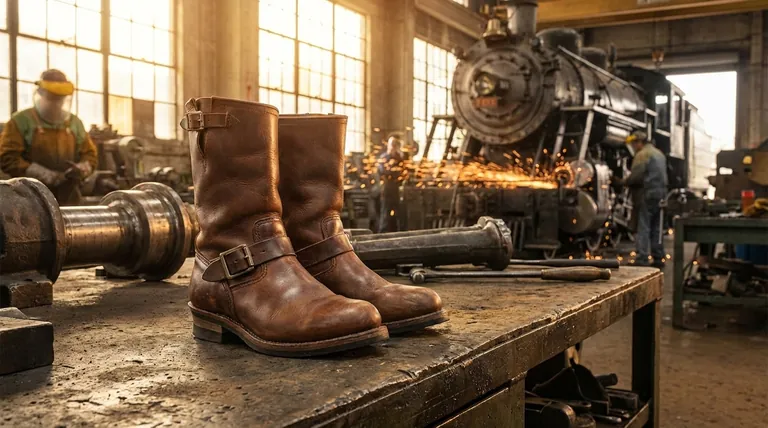
Deconstructing the Engineer Boot: Form Follows Function
To truly understand engineer boots, you must look at how each component serves a specific, practical purpose. The design isn't accidental; it's a masterclass in functional workwear that has remained relevant for nearly a century.
The Laceless "Stovepipe" Shaft
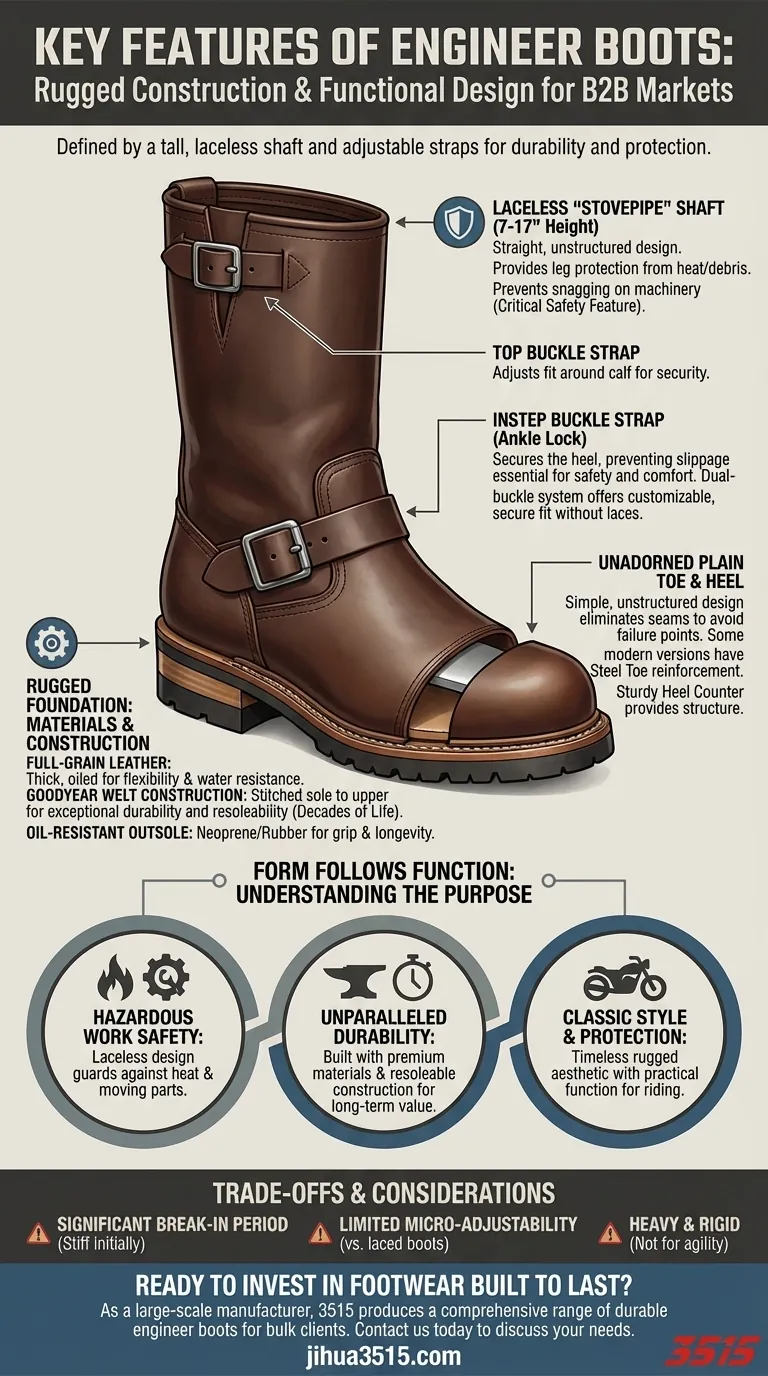
The most recognizable feature is the tall, laceless shaft, often called a "stovepipe" due to its straight, unstructured shape. Shaft height typically ranges from 7 to 17 inches.
This design provides crucial protection for the lower leg against heat, debris, and abrasion. Most importantly, the lack of laces prevents the boot from snagging on moving parts, a critical safety feature for railroad engineers and motorcyclists.
The Dual-Buckle System
In place of laces, engineer boots use a system of two adjustable leather straps with metal buckles. One is positioned over the instep to secure the ankle, while the other is located at the top of the shaft to adjust the fit around the calf.
This system allows for a customizable yet highly secure fit. The instep strap is vital for locking the heel in place to prevent slippage, which is essential for both comfort and safety.
The Rugged Foundation: Materials and Construction
Engineer boots are built to endure. They are almost always crafted from thick, full-grain leather, which is often oiled for added flexibility and water resistance.
The highest quality versions use a Goodyear welt or stitch-down construction. This method of stitching the sole to the upper makes the boot exceptionally durable and, critically, resoleable. This extends the life of the boot from years to decades. The outsoles are typically made of oil-resistant neoprene or thick rubber for grip and longevity.
The Unadorned Toe and Heel
The boot typically features a plain, rounded toe. This simple, unstructured design enhances durability by eliminating seams that could fail under stress. Some modern variations include a reinforced steel toe for added protection in work environments.
The heel counter is a separate, sturdy piece of leather that provides structure and support to the back of the boot.
Understanding the Trade-offs
While iconic and durable, the unique design of engineer boots comes with specific considerations that may not be suitable for everyone.
The Break-in Period
The thick leather and robust construction mean these boots require a significant break-in period. They can be stiff and uncomfortable out of the box and must be worn consistently to allow the leather to soften and mold to your foot.
Fit and Adjustability
While the buckles offer some customization, they do not provide the same micro-adjustments as a fully laced boot. Achieving the perfect initial fit is crucial, as you cannot tighten or loosen specific areas along the foot's length.
Weight and Flexibility
These are heavy, substantial boots. They are designed for protection and support, not for long-distance walking, running, or hiking. Their inherent rigidity can make them feel cumbersome for activities requiring agility.
Making the Right Choice for Your Goal
Selecting an engineer boot depends entirely on what you value most.
- If your primary focus is motorcycle safety: The laceless design, tall protective shaft, and heavy-duty leather make it an excellent choice for guarding against engine heat and road abrasion.
- If your primary focus is long-term durability: Seek out boots with a Goodyear welt construction and full-grain leather, as this ensures they can be resoled and maintained for decades.
- If your primary focus is classic style: The boot's rugged aesthetic is timeless, but be prepared for the break-in period and the boot's substantial weight.
Ultimately, choosing an engineer boot is an investment in a piece of functional history built for unparalleled durability.
Summary Table:
| Feature | Purpose | Benefit |
|---|---|---|
| Laceless Stovepipe Shaft | Protection from heat/debris; prevents snagging | Essential safety for hazardous work & motorcycling |
| Dual-Buckle System | Adjustable fit at instep and calf | Secure, customizable fit without laces |
| Full-Grain Leather & Goodyear Welt | Maximum durability and weather resistance | Long-lasting, resoleable boot built for decades |
| Plain Toe & Rugged Sole | Enhanced durability and oil-resistant grip | Simple, robust design for demanding environments |
Ready to invest in footwear built to last? As a large-scale manufacturer, 3515 produces a comprehensive range of durable engineer boots and other footwear for distributors, brand owners, and bulk clients. Our production capabilities encompass all types of shoes and boots, ensuring you receive high-quality, reliable products. Contact us today to discuss your needs and discover how we can bring durable, iconic style to your customers.
Visual Guide
Related Products
- Premium Waterproof High-Cut Industrial Safety Boots for Wholesale and Bulk Orders
- Durable Leather Work Boots Wholesale Manufacturer & Custom Factory
- Durable Leather Work Boots for Wholesale & Custom OEM Manufacturing
- Durable Leather Work Boots for Wholesale & Custom Manufacturing
- Wholesale Customizable Safety Boots Durable & Protective Footwear Manufacturing
People Also Ask
- Why are oil-resistant and anti-slip properties critical for industrial safety boots? Expert Outsole Engineering Guide
- What are the primary protective functions of industrial safety boots in oil palm plantations? Master Rough Terrain Safety
- How do industrial safety boots assist maintenance personnel working on high-level palm oil factory structures?
- What functions do industrial safety boots serve? Essential Protection for Footwear Sole & Stockfit Processing
- What are the protective functions of industrial safety boots in sugar factory clarification stations? Thermal & Slip Experts
















