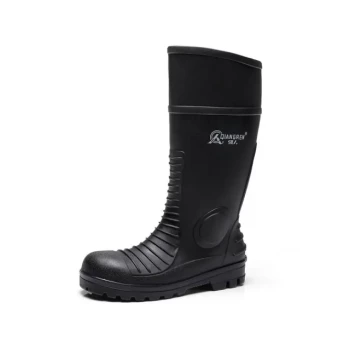
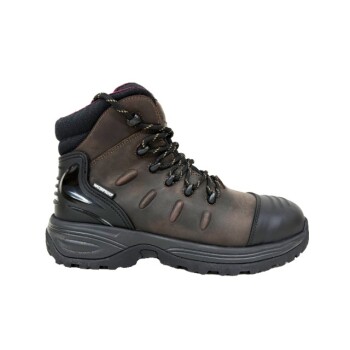
Heavy-duty work boots are indispensable personal protective equipment (PPE) for any industry where foot injuries are a significant risk. They are most commonly required in fields such as construction, agriculture, heavy manufacturing, and energy, where workers face hazards from falling objects, sharp materials, and unstable terrain.
The specific industry is less important than the specific hazards present in the work environment. A heavy-duty boot is not defined by a job title but by its ability to mitigate the precise risks an individual faces, from impact and puncture to electrical shock and slips.
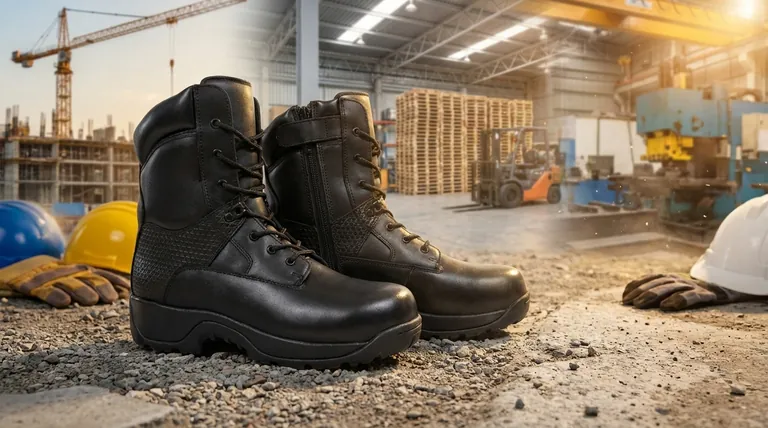
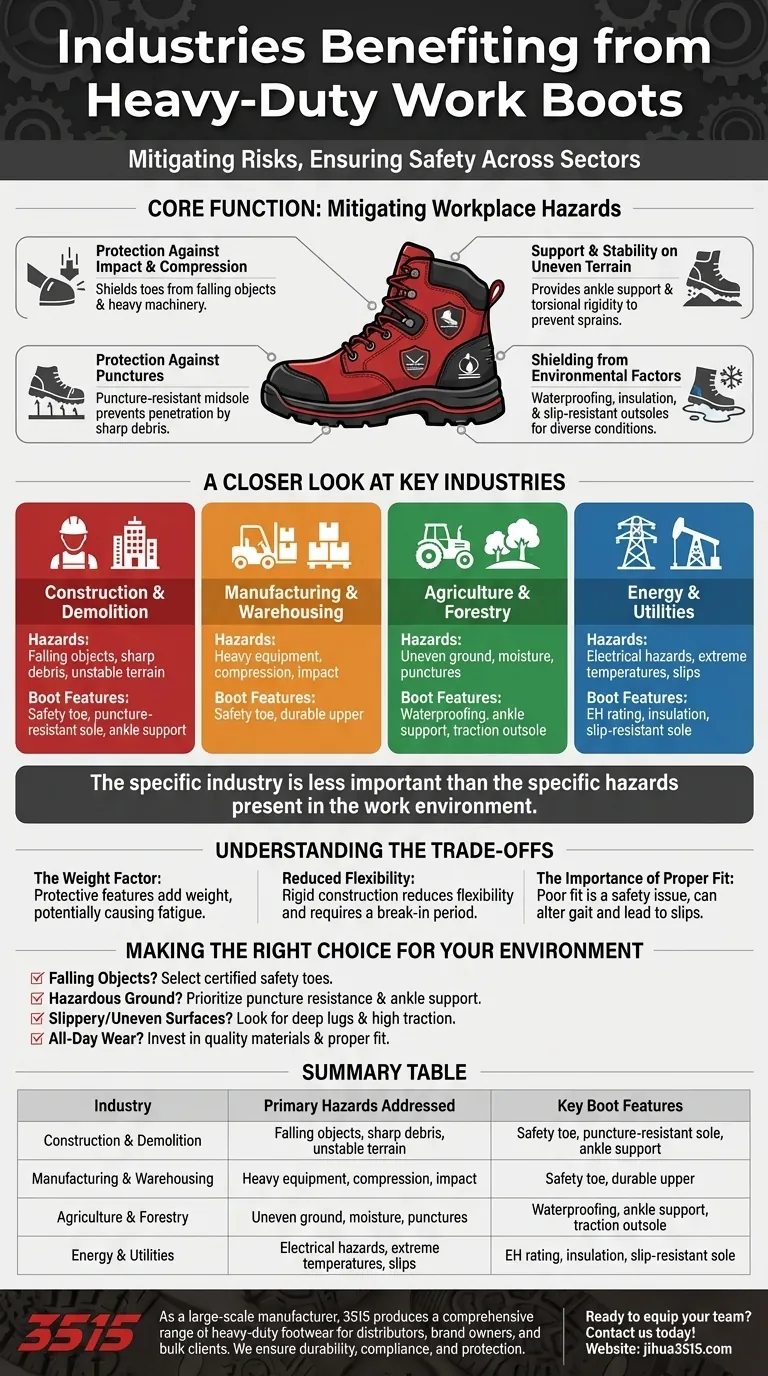
The Core Function: Mitigating Workplace Hazards
The primary purpose of a heavy-duty work boot is to serve as the first line of defense for your feet. Their design directly corresponds to common dangers found in manual labor and industrial settings.
Protection Against Impact and Compression
The most recognized feature of a safety boot is the protective toe cap. Typically made of steel, alloy, or composite materials, it shields the toes from falling objects and compression from heavy machinery, a constant risk in construction, warehousing, and manufacturing.
Protection Against Punctures
Job sites in demolition, waste management, or metal fabrication are often littered with nails, screws, and other sharp debris. Puncture-resistant midsoles are integrated into the sole to prevent these objects from piercing the bottom of the boot and injuring the foot.
Support and Stability on Uneven Terrain
Workers in agriculture, forestry, and outdoor construction spend their days on rough, unpredictable ground. Heavy-duty boots provide crucial ankle support and torsional rigidity to prevent sprains and maintain stability, reducing fatigue and the risk of falls.
Shielding from Environmental Factors
Beyond physical objects, these boots protect against the environment itself. Features like waterproofing, insulation, and high-traction, slip-resistant outsoles are critical for workers in industries ranging from commercial fishing to utilities and oil extraction.
A Closer Look at Key Industries
While the hazards dictate the need, several industries consistently require the protection of heavy-duty boots due to the nature of their work.
Construction and Demolition
This is the quintessential environment for heavy-duty boots. Workers face a constant combination of impact risks from tools and materials, puncture threats from site debris, and the need for stability on scaffolding and uneven ground.
Manufacturing and Warehousing
In these settings, the primary risks often involve heavy, moving equipment like forklifts and pallets. Compression and impact protection are paramount to prevent crushing injuries to the feet.
Agriculture and Forestry
Long hours on rugged, often wet terrain demand boots that are not only durable and supportive but also waterproof. Protection from the elements is as important as protection from a dropped tool.
Energy and Utilities
Whether on an oil rig or maintaining power lines, workers in the energy sector require specialized protection. This can include features like electrical hazard (EH) ratings, extreme slip resistance, and insulation against severe temperatures.
Understanding the Trade-offs
Choosing heavy-duty boots involves balancing maximum protection with practical, all-day usability. Understanding these trade-offs is key to making an informed decision.
The Weight Factor
There is no escaping physics: protective features add weight. Steel toes, thick puncture-proof soles, and durable leather uppers make for a heavier boot than a standard shoe. This can contribute to fatigue over a long shift if you are not accustomed to it.
Reduced Flexibility
The same rigid construction that provides excellent ankle support and protects against torsion also reduces the boot's flexibility. This often requires a "break-in" period and can feel cumbersome compared to lighter footwear.
The Importance of Proper Fit
Because of their rigid nature, a poor fit in a heavy-duty boot is more than just uncomfortable—it's a safety issue. An improper fit can cause blisters, chafing, and even alter your gait, potentially leading to slips or falls.
Making the Right Choice for Your Environment
Your choice should be guided by a clear assessment of your daily work environment.
- If your primary focus is protection from falling objects: You must select boots with certified safety toes (steel, composite, or alloy).
- If your primary focus is working on hazardous ground: Prioritize boots with both puncture-resistant midsoles and excellent ankle support.
- If your primary focus is stability on slippery or uneven surfaces: Look for boots with deep lugs, a defined heel, and a high-traction outsole material.
- If your primary focus is all-day wear in a demanding role: Never compromise on fit; invest in high-quality materials that offer long-term durability and support.
Ultimately, the right heavy-duty boot is a critical piece of equipment tailored to the specific risks you face every day.
Summary Table:
| Industry | Primary Hazards Addressed | Key Boot Features |
|---|---|---|
| Construction & Demolition | Falling objects, sharp debris, unstable terrain | Safety toe, puncture-resistant sole, ankle support |
| Manufacturing & Warehousing | Heavy equipment, compression, impact | Safety toe, durable upper |
| Agriculture & Forestry | Uneven ground, moisture, punctures | Waterproofing, ankle support, traction outsole |
| Energy & Utilities | Electrical hazards, extreme temperatures, slips | EH rating, insulation, slip-resistant sole |
As a large-scale manufacturer, 3515 produces a comprehensive range of heavy-duty footwear for distributors, brand owners, and bulk clients. Our production capabilities encompass all types of safety boots and work shoes designed to meet the specific hazards of your industry. We ensure durability, compliance, and protection for your workforce.
Ready to equip your team with the right PPE? Contact us today to discuss your requirements and get a quote!
Visual Guide
Related Products
- Wholesale Heavy-Duty Waterproof Steel Toe Work Boots OEM Manufacturer
- Durable Leather Work Boots for Wholesale & Custom Manufacturing
- Durable Leather Work Boots for Wholesale & Custom OEM Manufacturing
- Wholesale Customizable Safety Boots Durable & Protective Footwear Manufacturing
- Durable Leather Work Boots Wholesale Manufacturer & Custom Factory
People Also Ask
- What are the pros and cons of steel toe work boots? A Guide to Maximum Protection vs. Comfort
- What are the different types of steel toe work boots? Choose the Right Boot for Your Job
- What is the history of steel toe work boots? From German Invention to Modern Safety Standard
- How much weight can steel toe work boots withstand? Unpacking the 3,372 lb. Safety Standard
- What are some common myths about steel toe work boots? Debunked for Modern Workers