
At their core, military boots are engineered using a strategic combination of durable cattlehide leather and rugged nylon fabrics. This pairing is not accidental; it provides a carefully calibrated balance between the sheer toughness and support of leather and the lightweight, breathable properties of modern textiles.
The selection of materials for military footwear is driven by a single purpose: to achieve the optimal balance of durability, environmental protection, foot support, and weight for the intended operational conditions. There is no single "best" material, only the right material for the mission.
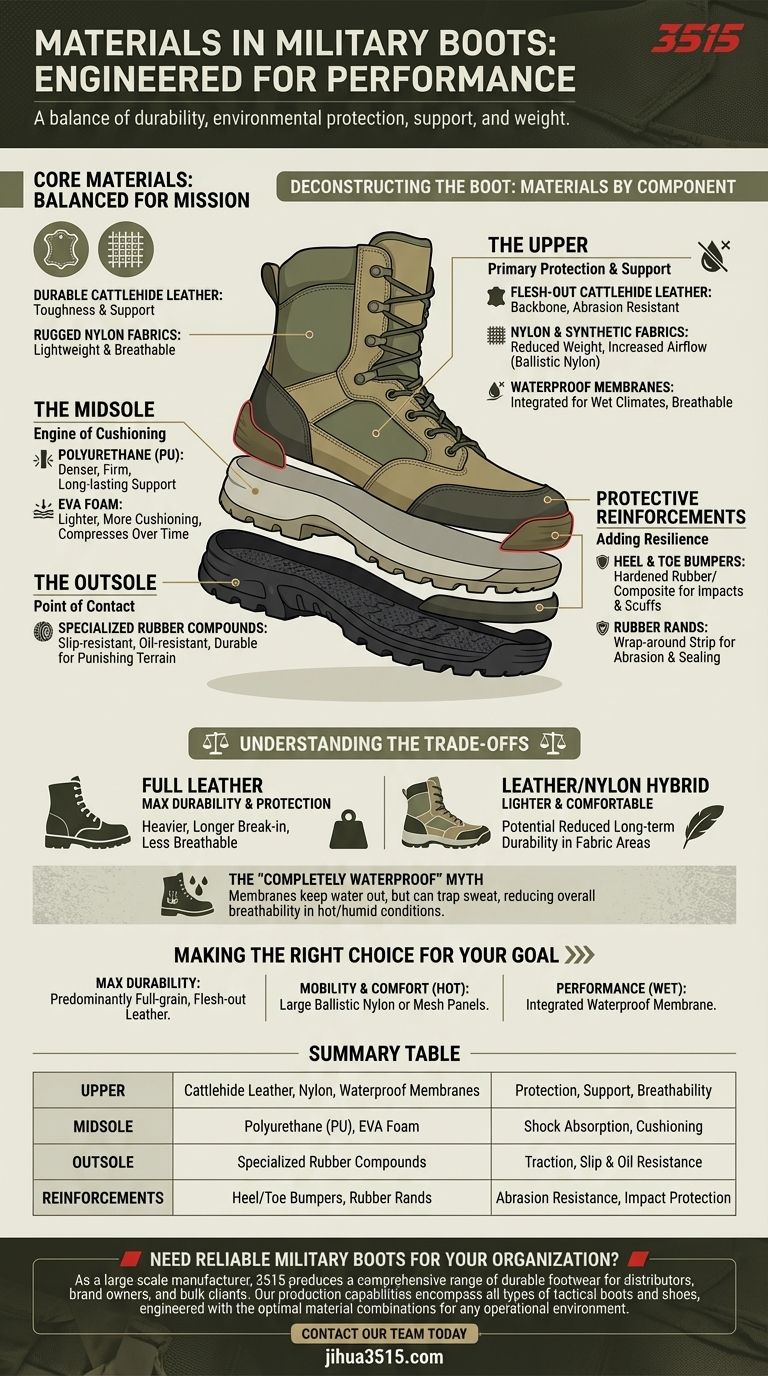
Deconstructing the Military Boot: Materials by Component
A military boot is a system of materials working together. Understanding the role of each component clarifies why specific materials are chosen.
The Upper: Balancing Strength and Breathability
The upper is the part of the boot that wraps around your foot and ankle, providing the primary layer of protection and support.
Flesh-Out Cattlehide Leather: This is the backbone of most military boots. It is a type of full-grain leather where the rougher, "flesh-out" side faces outwards. This provides exceptional durability and resistance to abrasion while maintaining some natural moisture resistance.
Nylon and Synthetic Fabrics: To reduce weight and increase airflow, manufacturers integrate panels of durable synthetic fabrics, such as ballistic nylon. These textiles are highly resistant to tearing and allow moisture vapor from sweat to escape, which is critical in warm environments.
Waterproof Membranes: For boots intended for wet climates, a waterproof, breathable membrane is often laminated between the outer materials and the inner lining. This allows sweat to escape while preventing external water from getting in.
The Midsole: The Engine of Cushioning
Located between your foot and the outsole, the midsole's job is to absorb shock and provide cushioning.
Polyurethane (PU) and EVA Foam: These are common materials for midsoles. PU is denser and more durable, offering firm, long-lasting support, while EVA is lighter and offers more cushioning, though it can compress over time.
The Outsole: The Point of Contact
The outsole is the part that meets the ground, and its material composition is critical for traction and longevity.
Rubber Compounds: Modern military boot outsoles are made from specialized rubber compounds. These are formulated to be slip-resistant, oil-resistant, and durable enough to withstand punishing terrain without wearing down quickly.
Understanding the Trade-offs
The choice of materials always involves a compromise between competing performance characteristics. Being aware of these trade-offs is key to selecting the right boot.
Full Leather vs. Leather/Nylon Hybrid
A boot made almost entirely of leather offers maximum durability and protection from the elements. However, it will be heavier, require a longer break-in period, and be significantly less breathable.
A hybrid design with large nylon panels is much lighter and more comfortable in hot weather right out of the box. The trade-off is a potential reduction in long-term durability in the fabric areas compared to a full-leather build.
The Myth of "Completely Waterproof"
Boots with waterproof membranes are excellent for keeping external water out. However, this membrane can reduce the boot's overall breathability.
In very hot and humid conditions, this can trap sweat inside the boot faster than the membrane can vent it, leading to damp feet even on a dry day.
Protective Reinforcements
Beyond the primary materials, key features add to a boot's resilience.
Heel and Toe Bumpers: Extra layers of hardened rubber or composite material are placed over the heel and toe areas. These protect the wearer from impacts and shield the boot's leather from high-wear scuffs and cuts.
Rubber Rands: A rubber rand is a strip of rubber that wraps around the boot where the upper meets the outsole. This adds another layer of abrasion resistance and helps seal out water and debris.
Making the Right Choice for Your Goal
Your intended use case should dictate the ideal material composition of your boot.
- If your primary focus is maximum durability and protection: Choose a boot constructed predominantly from full-grain, flesh-out leather, which will withstand the most severe abrasion.
- If your primary focus is mobility and comfort in hot climates: Prioritize boots with large ballistic nylon or mesh panels to maximize breathability and minimize weight.
- If your primary focus is performance in consistently wet environments: Look for a boot with an integrated waterproof membrane, but be mindful of the potential for reduced breathability.
Ultimately, understanding these materials allows you to select a boot that functions as a true tool, optimized for your specific operational environment.
Summary Table:
| Component | Key Materials | Primary Function |
|---|---|---|
| Upper | Cattlehide Leather, Nylon, Waterproof Membranes | Protection, Support, Breathability |
| Midsole | Polyurethane (PU), EVA Foam | Shock Absorption, Cushioning |
| Outsole | Specialized Rubber Compounds | Traction, Slip & Oil Resistance |
| Reinforcements | Heel/Toe Bumpers, Rubber Rands | Abrasion Resistance, Impact Protection |
Need reliable military boots for your organization? As a large-scale manufacturer, 3515 produces a comprehensive range of durable footwear for distributors, brand owners, and bulk clients. Our production capabilities encompass all types of tactical boots and shoes, engineered with the optimal material combinations for any operational environment. Contact our team today to discuss your specific requirements and discover how we can support your supply chain with high-quality, performance-driven footwear.
Visual Guide
Related Products
- Durable Military Combat Boots with Water Drainage for Wholesale & OEM
- High-Traction Suede Tactical Boots Wholesale & Custom Manufacturing
- Durable High-Ankle Tactical Boots for Wholesale & Custom Manufacturing
- Durable Mid-Cut Tactical Boots for Wholesale & Private Label
- Wholesale Waterproof Tactical Boots Custom Suede & High-Traction Soles
People Also Ask
- Why must gait validation for military applications be conducted in combat boots? Ensure Data Accuracy for Soldiers
- What are the common types of combat boots? Find the Right Boot for Your Mission
- What factors should be considered when choosing military boots for hiking? Durability vs. Weight for Your Terrain
- What are the key considerations when choosing military boots? Prioritize Compliance, Environment & Fit
- How should the midfoot and heel fit in military boots? Achieve a Snug, Secure Fit for Blister Prevention



















