
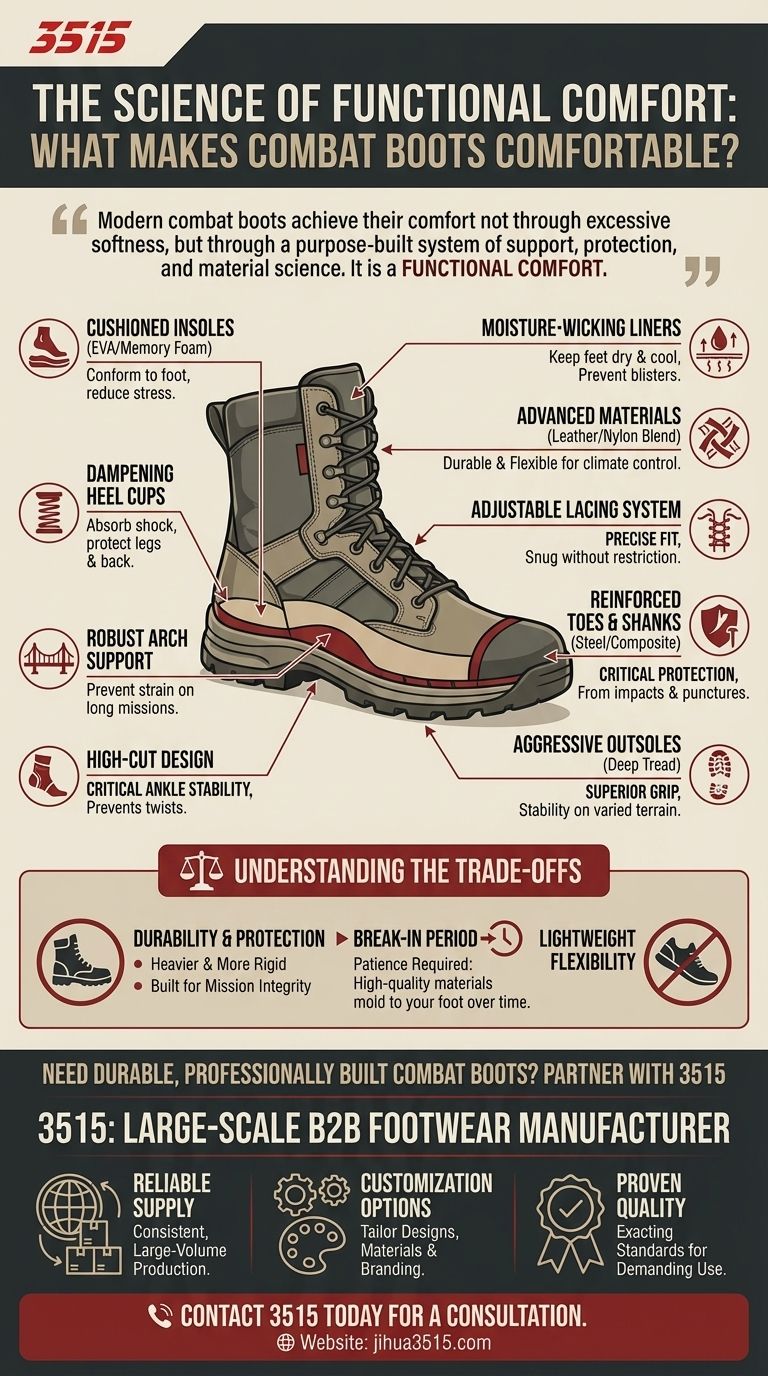
Modern combat boots achieve their comfort not through excessive softness, but through a purpose-built system of support, protection, and material science. Key features include anatomically supportive insoles, shock-absorbing heel cups, moisture-wicking liners, and adjustable lacing systems, all working together to reduce fatigue and prevent injury during prolonged, demanding use.
The comfort found in a combat boot is fundamentally different from that of a casual shoe. It is a functional comfort, engineered to provide the stability, protection, and fatigue-resistance needed to maintain performance in harsh conditions, not the plush cushioning of a sneaker.
The Anatomy of Functional Comfort
To understand combat boot comfort, you must look at how each component contributes to a single goal: keeping the wearer effective and free from injury over long durations. It’s a system where every part has a distinct role.
Cushioning and Impact Absorption
The most obvious comfort feature is the boot's cushioning system. High-quality boots use cushioned insoles made from materials like EVA foam or memory foam to conform to the foot's shape.
Many designs also incorporate dampening heel cups specifically to absorb the shock of each step, reducing the cumulative stress that travels up the legs and back.
Structural Support and Stability
True long-term comfort comes from proper support, not just softness. Combat boots provide robust arch support to prevent foot strain during long marches or periods of standing.
Their signature high-cut design is critical for ankle support. By bracing the ankle with less flexible materials, the boot helps prevent the twists and sprains common on uneven terrain.
The Importance of a Precise Fit
No amount of technology can make an ill-fitting boot comfortable. A proper fit should be snug without being restrictive, allowing the toes to move while preventing the foot from sliding, which causes blisters.
An adjustable lacing system allows the user to fine-tune the fit across different parts of the foot. For the best assessment, it's wise to try on boots at the end of the day when your feet are naturally more swollen.
Advanced Materials for Climate Control
Comfort is heavily influenced by temperature and moisture. Modern boots are often constructed from a blend of durable leather and flexible nylon panels.
These are paired with breathable, moisture-wicking liners that pull sweat away from the skin. This keeps feet drier and cooler, which is the single most effective way to prevent blisters and fungal infections.
Protection as a Form of Comfort
A key principle of combat boot design is that the ultimate discomfort is an injury. Therefore, features designed for protection are intrinsically linked to the boot's overall comfort and usability.
Reinforced Toes and Shanks
Features like reinforced or steel toe caps protect the foot from crushing impacts.
A rigid shank, a piece of supportive material embedded between the insole and outsole, protects the underside of the foot from punctures from sharp objects on the ground.
Aggressive Outsoles for Secure Traction
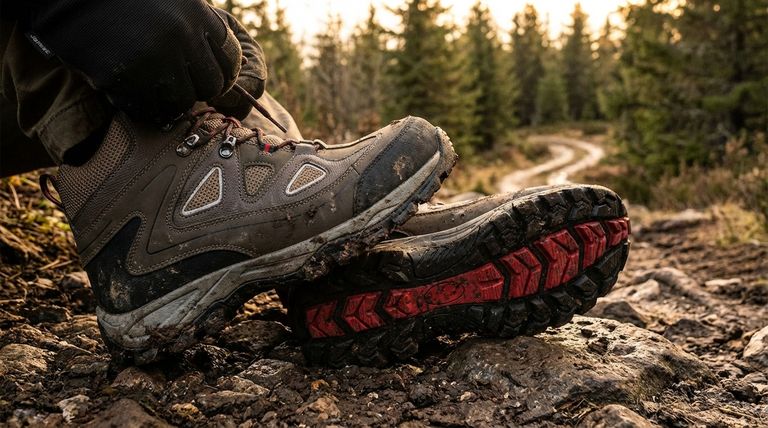
The deep, aggressive tread patterns on a combat boot's outsole are designed for superior grip on varied terrains like mud, rock, and loose gravel.
This secure footing provides stability, which reduces the constant micro-adjustments your leg muscles must make, thereby decreasing fatigue and preventing slips that can cause serious injury.
Understanding the Trade-offs
It is critical to recognize that combat boots are specialized tools. Their comfort is always balanced against the non-negotiable requirements of durability and protection.
Designed for the Mission
Combat boots are intentionally heavier and more rigid than tactical or hiking boots. This is because they are built to withstand the harshest conditions imaginable, prioritizing the boot's integrity and the user's safety over lightweight flexibility.
The Break-In Period
High-quality materials, especially full-grain leather, require a break-in period. The initial stiffness gives way to a custom, comfortable fit as the material molds to your foot, but this requires patience.
Function Over Aesthetics
Every feature on a combat boot serves a practical purpose. While they have been adopted by various subcultures, their design is driven by functionality, not fashion. This focus ensures every element contributes to performance.
Making the Right Choice for Your Goal
Selecting the right boot depends entirely on your intended use. Prioritize the features that align with your primary objective.
- If your primary focus is maximum protection for rugged work: Seek out boots with reinforced toe caps, puncture-resistant shanks, and durable full-grain leather construction.
- If your primary focus is long-duration comfort for rucking or extended hikes: Prioritize models with high-quality cushioned insoles, excellent arch support, and proven moisture-wicking liners.
- If your primary focus is stability on uneven or unpredictable terrain: Concentrate on a high-cut design that offers significant ankle support and a secure, highly adjustable lacing system.
Ultimately, a combat boot's comfort lies not in its softness, but in its ability to empower you to perform reliably and without injury in demanding environments.
Summary Table:
| Key Comfort Feature | Function |
|---|---|
| Cushioned Insoles & Heel Cups | Absorb shock, reduce fatigue, and protect joints. |
| Robust Arch & Ankle Support | Provide stability and prevent strain on uneven terrain. |
| Moisture-Wicking Liners | Keep feet dry and cool to prevent blisters and discomfort. |
| Reinforced Toes & Shanks | Offer critical protection from impacts and punctures. |
| Aggressive Outsoles | Ensure secure traction to prevent slips and reduce muscle fatigue. |
Need Durable, Professionally Built Combat Boots?
As a large-scale manufacturer, 3515 produces a comprehensive range of high-performance footwear for distributors, brand owners, and bulk clients. Our production capabilities encompass all types of durable boots designed with the functional comfort and protection detailed above.
We help our partners by providing:
- Reliable Supply: Consistent, large-volume production to meet your demand.
- Customization Options: Tailor designs, materials, and branding to your specific market needs.
- Proven Quality: Boots built to the exacting standards required for demanding use.
Let's discuss your project. Whether you need a reliable supply line or a custom boot developed for your brand, our team is ready to assist.
Contact 3515 today for a consultation
Visual Guide
Related Products
- Durable Military Combat Boots with Water Drainage for Wholesale & OEM
- Durable Leather Tactical Boots Wholesale & Custom Manufacturing for Brands
- High-Traction Suede Tactical Boots Wholesale & Custom Manufacturing
- Wholesale Lightweight Tactical Boots Custom Manufacturer for Desert & Combat Use
- Durable Mid-Cut Tactical Boots for Wholesale & Private Label
People Also Ask
- Why must gait validation for military applications be conducted in combat boots? Ensure Data Accuracy for Soldiers
- What are the common types of combat boots? Find the Right Boot for Your Mission
- What factors should be considered when choosing military boots for hiking? Durability vs. Weight for Your Terrain
- What are the key considerations when choosing military boots? Prioritize Compliance, Environment & Fit
- How should the midfoot and heel fit in military boots? Achieve a Snug, Secure Fit for Blister Prevention

















