
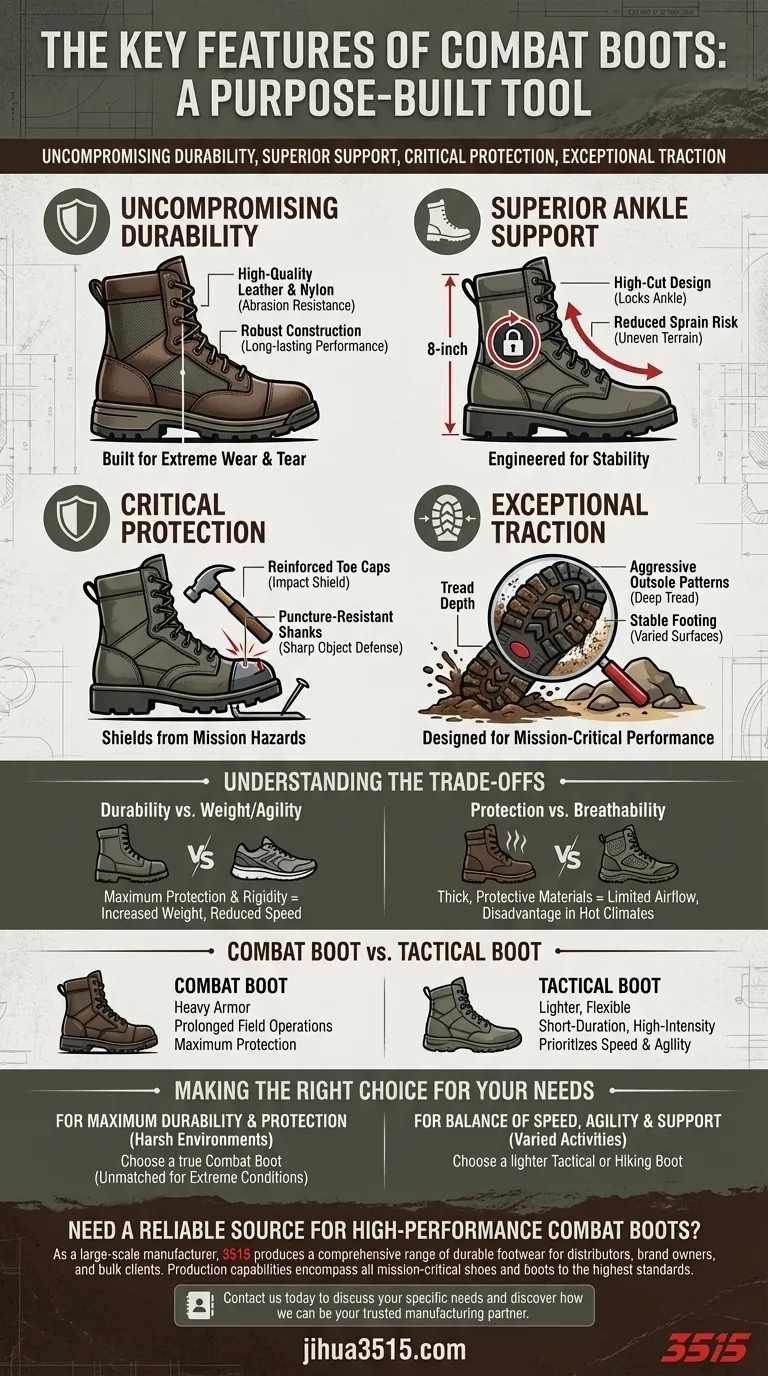
At their core, combat boots are defined by four key features. These are uncompromising durability from robust materials, superior ankle support from a high-cut design, critical protection via reinforced elements, and exceptional traction from aggressive outsoles. Every component is engineered to ensure performance and safety in harsh, mission-critical environments.
The design philosophy of a combat boot is straightforward: prioritize maximum protection and durability above all else. This focus makes them distinct from other footwear, as they are purpose-built tools for functioning in the most demanding conditions imaginable.
The Anatomy of a Purpose-Built Tool
A combat boot is not simply a piece of footwear; it is a system where each component serves a specific, protective function. Understanding how these features work together reveals the boot's core purpose.
Built for Uncompromising Durability
The foundation of any combat boot is its ability to withstand extreme wear and tear. This is achieved through material selection and construction.
High-Quality Leather and Nylon: Most combat boots are made from full-grain or flesh-out cattlehide leather, valued for its incredible strength and resistance to abrasion. This is often blended with rugged nylon panels to reduce weight without sacrificing toughness.
Robust Construction: The methods used to join the sole to the upper part of the boot are designed for longevity, ensuring the boot will not fall apart under high stress.
Engineered for Protection and Stability
In unpredictable terrain, protecting the foot and ankle from injury is paramount. This is where the boot's structure is most critical.
Superior Ankle Support: Combat boots feature a high-cut design, typically 8 inches. This height, combined with less flexible materials, locks the ankle in place, drastically reducing the risk of sprains and twists on uneven ground.
Reinforced Toe Caps: A hardened toe box protects the wearer from impacts from falling objects or collisions, a common hazard in combat or field operations.
Puncture-Resistant Shanks: A rigid piece of material, often steel or composite, is placed between the insole and outsole. This "shank" protects the bottom of the foot from being punctured by sharp objects like nails or debris.
Designed for Mission-Critical Performance
Beyond pure defense, a combat boot must enable the wearer to perform effectively.
Aggressive Outsole Traction: The soles of combat boots have deep, aggressive tread patterns. This design provides a superior grip on a wide variety of surfaces, from mud and sand to rocks and concrete, ensuring stable footing.
Functional Comfort: While not built for luxury, modern combat boots incorporate features like cushioned insoles and moisture-wicking linings. These elements help manage foot fatigue and health during long periods of use.
Understanding the Trade-offs
It is crucial to recognize that the combat boot's specialized design involves clear trade-offs. Its strengths in one area create limitations in others.
Durability vs. Weight and Agility
The heavy leather and reinforced components that provide maximum protection also make combat boots significantly heavier and more rigid than other boots. This focus on durability comes at the expense of speed and agility.
Protection vs. Breathability
While some designs incorporate breathable panels, the thick, protective materials inherently limit airflow. In hot climates, this can be a significant disadvantage compared to lighter, more ventilated footwear.
The Combat Boot vs. The Tactical Boot
Many people confuse combat and tactical boots. A combat boot is the "heavy armor," built for prolonged field operations and maximum protection. A tactical boot is lighter and more flexible, prioritizing speed and agility for short-duration, high-intensity situations, like those faced by law enforcement.
Making the Right Choice for Your Needs
Selecting the right boot depends entirely on your intended use. The extreme features of a combat boot are only beneficial when the environment demands them.
- If your primary focus is maximum durability and protection in harsh, rugged environments: A true combat boot is the correct choice, as its design is unmatched for surviving extreme conditions.
- If your primary focus is a balance of speed, agility, and support for varied activities: You will likely be better served by a lighter tactical boot or a sturdy hiking boot.
Ultimately, a combat boot is a specialized tool engineered for the single purpose of protecting the wearer in the most unforgiving circumstances.
Summary Table:
| Key Feature | Core Function | Benefit |
|---|---|---|
| Uncompromising Durability | Withstands extreme wear and tear | Long-lasting performance in harsh conditions |
| Superior Ankle Support | Locks ankle in place with high-cut design | Reduces risk of sprains on uneven terrain |
| Critical Protection | Reinforced toe caps and puncture-resistant shanks | Shields feet from impacts and sharp objects |
| Exceptional Traction | Aggressive outsole tread patterns | Provides stable footing on varied surfaces |
Need a reliable source for high-performance combat boots?
As a large-scale manufacturer, 3515 produces a comprehensive range of durable footwear for distributors, brand owners, and bulk clients. Our production capabilities encompass all types of mission-critical shoes and boots, built to the highest standards of protection and durability.
Contact us today to discuss your specific needs and discover how we can be your trusted manufacturing partner.
Visual Guide
Related Products
- Durable Military Combat Boots with Water Drainage for Wholesale & OEM
- Durable Leather Tactical Boots Wholesale & Custom Manufacturing for Brands
- High-Traction Suede Tactical Boots Wholesale & Custom Manufacturing
- Wholesale Lightweight Tactical Boots Custom Manufacturer for Desert & Combat Use
- Durable Mid-Cut Tactical Boots for Wholesale & Private Label
People Also Ask
- Why must gait validation for military applications be conducted in combat boots? Ensure Data Accuracy for Soldiers
- What are the common types of combat boots? Find the Right Boot for Your Mission
- What factors should be considered when choosing military boots for hiking? Durability vs. Weight for Your Terrain
- What are the key considerations when choosing military boots? Prioritize Compliance, Environment & Fit
- How should the midfoot and heel fit in military boots? Achieve a Snug, Secure Fit for Blister Prevention

















