
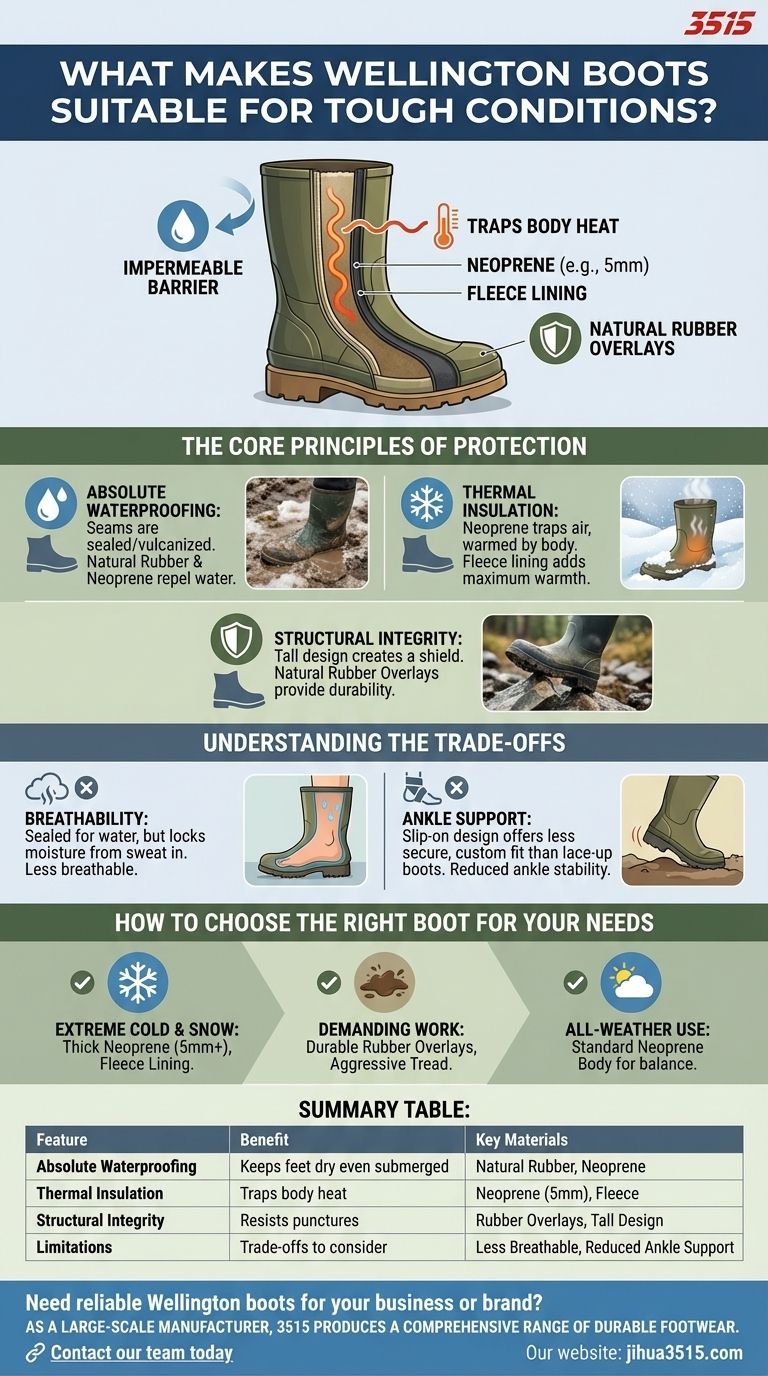
At their core, Wellington boots are suitable for tough conditions because they combine a completely waterproof design with effective thermal insulation. Materials like natural rubber and neoprene create an impermeable barrier against water, while integrated linings like fleece and the neoprene itself trap heat, keeping your feet dry and warm in cold, wet environments.
The true advantage of a Wellington boot in harsh conditions isn't just one feature, but its construction as a unified, seamless system. It's designed from the ground up to create a total seal against external elements, primarily water and cold.
The Core Principles of Protection
To understand why Wellingtons excel, it's helpful to break down the fundamental problems they solve: preventing water ingress and retaining heat. Unlike many other types of footwear, they achieve this through their core structure rather than added treatments.
Absolute Waterproofing
The primary defense of a Wellington boot is its material composition. They are typically made from natural rubber or neoprene, both of which are inherently waterproof.
This is fundamentally different from water-resistant boots, which often use treated leather or synthetics. A Wellington's seams are sealed or vulcanized, creating a single, continuous barrier that prevents moisture from seeping in, even when submerged in slush or mud.
Thermal Insulation
Keeping feet warm is the second critical function. High-quality Wellingtons integrate insulation directly into their structure to protect against cold.
A common and highly effective material is neoprene, often in thicknesses like 5mm for extreme conditions. This is the same material used in wetsuits. It traps a layer of air, which is then warmed by your body heat, providing excellent thermal protection. For maximum warmth, this is often paired with an internal fleece lining.
Structural Integrity
The classic tall design of a Wellington boot offers more than just waterproofing for your lower leg. It provides a robust shield against mud, brush, and other environmental hazards.
The use of natural rubber overlays adds an extra layer of durability and puncture resistance in high-wear areas, making the boots suitable for demanding work environments.
Understanding the Trade-offs
While exceptional for wet and cold conditions, the design of Wellington boots presents some inherent trade-offs. Acknowledging these limitations is key to choosing the right tool for the job.
Breathability
The very features that make Wellingtons completely waterproof also make them non-breathable. A sealed rubber or neoprene boot will not allow moisture from sweat to escape.
This can lead to dampness inside the boot from perspiration during high-exertion activities. While some boots include sweat-absorbent insoles, this remains a primary limitation compared to boots made with breathable membranes.
Ankle Support and Fit
Wellington boots are designed for easy slip-on access. This convenience comes at the cost of the snug, customized fit provided by lace-up boots, such as military or tactical work boots.
The lack of laces means they offer less ankle support, which can be a disadvantage on highly uneven or treacherous terrain where the risk of twisting an ankle is higher.
How to Choose the Right Wellington for Your Needs
Selecting the correct boot depends entirely on the specific conditions you anticipate facing.
- If your primary focus is extreme cold and snow: Look for boots with thick neoprene insulation (5mm or more) and a warm fleece lining for maximum thermal protection.
- If your primary focus is demanding work in wet, muddy environments: Prioritize boots with durable natural rubber overlays for puncture resistance and an aggressive tread for superior traction.
- If your primary focus is general all-weather use: A standard Wellington with a neoprene body will offer an excellent balance of waterproofing, moderate insulation, and flexibility.
By understanding how materials and construction directly address the challenges of cold and water, you can confidently select the boot that will perform best for your specific needs.
Summary Table:
| Feature | Benefit | Key Materials |
|---|---|---|
| Absolute Waterproofing | Keeps feet dry even when submerged | Natural Rubber, Neoprene |
| Thermal Insulation | Traps body heat to protect against cold | Neoprene (e.g., 5mm), Fleece Lining |
| Structural Integrity | Resists punctures and abrasions | Rubber Overlays, Tall Design |
| Limitations | Trade-offs to consider | Less Breathable, Reduced Ankle Support |
Need reliable Wellington boots for your business or brand?
As a large-scale manufacturer, 3515 produces a comprehensive range of durable footwear, including high-performance Wellington boots built for the toughest conditions. We offer solutions for distributors, brand owners, and bulk clients, ensuring quality, volume, and customization to meet your specific market needs.
Contact our team today to discuss your requirements and discover how we can support your supply chain with robust, reliable footwear.
Visual Guide
Related Products
- Durable Waterproof Rain Boots | Custom Manufacturer for Wholesale & Brands
- Durable Goodyear Welt Leather Work Boots for Wholesale & Private Label
- Wholesale Durable Leather Work Boots | 8-Inch Goodyear Welt Manufacturer
- High-Traction Suede Tactical Boots Wholesale & Custom Manufacturing
- Premium Wholesale Tactical Style Safety Shoes Boots with Quick Lacing
People Also Ask
- What are the main materials for waterproof rain boots? Choose the Right Material for Durability & Comfort
- What is the overall recommendation for choosing rain boot materials? A Guide to Rubber vs. PVC
- How does boot height affect waterproofing? Choose the Right Height for Ultimate Protection
- Why are rain boots more flexible and comfortable than snow boots? The Key Differences Explained
- What are the best types of shoes for different gardening conditions? Find Your Perfect Match.



















