
Yes, but not in the way you might think. A high-quality Wellington boot's rubber shell is engineered for durability and will not significantly stretch. The feeling of a boot "giving" over time comes almost entirely from the compression and molding of its internal lining, not from the rubber itself changing shape.
The core principle to understand is that the structural integrity of a Wellington boot comes from its rubber shell, which is designed to hold its form. The perceived "stretch" is actually the boot's inner lining—like neoprene, wool, or leather—conforming to the unique shape of your foot and calf.
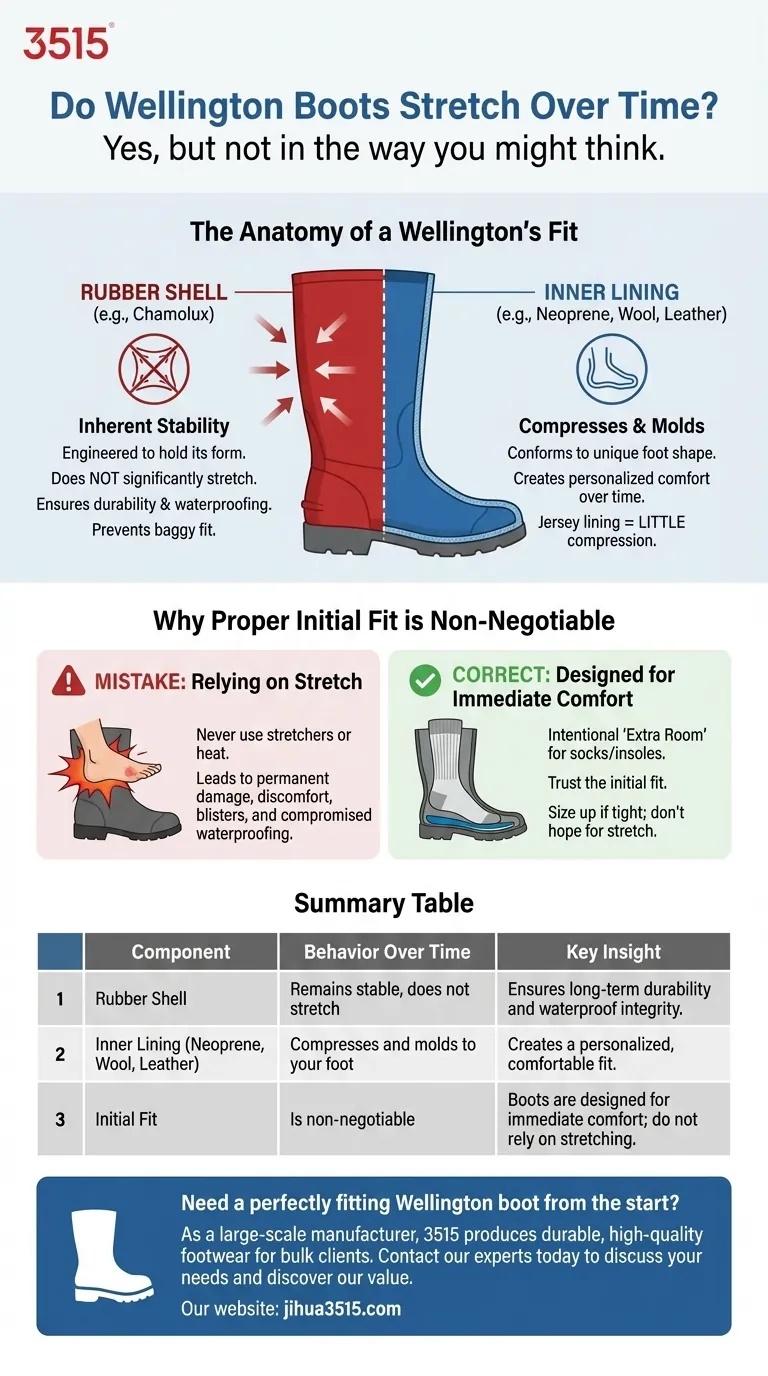
The Anatomy of a Wellington's Fit
To solve fit issues, you must distinguish between the boot's outer shell and its inner lining. These two components behave very differently.
The Inherent Stability of Rubber
High-quality Wellington boots are typically made from natural rubber, such as Chamolux. This material is prized for being supple and durable, allowing it to flex with your movement without permanently stretching or losing its shape.
This stability is a feature, not a flaw. It ensures the boot remains supportive and waterproof over years of use, preventing the baggy, loose fit that can develop in lesser materials.
Where the "Molding" Happens: The Lining
The sensation of a boot becoming more comfortable is due to the lining. Different linings have different properties.
- Neoprene, Wool, and Leather: These materials are known for their ability to conform. Over time, they will compress and mold around the contours of your foot, creating a more personalized and comfortable fit.
- Jersey: A jersey lining, by contrast, offers very little compression. Boots with this lining will feel consistent in their fit from the first day to the last.
Why a Proper Initial Fit is Non-Negotiable
Unlike traditional leather footwear, Wellington boots are not designed to be "broken in." The concept of buying a tight boot and waiting for it to stretch is a mistake.
Designed for Immediate Comfort
Wellingtons are engineered for comfort right out of the box. While a short adjustment period might be needed for the lining to settle, the fundamental size and shape of the boot will not change.
The Intentional "Extra Room"
Many premium Wellingtons are designed to be slightly oversized. This isn't a sizing error; it's a deliberate choice to accommodate thick socks for cold weather or the addition of custom insoles for better support.
Understanding the Risks and Pitfalls
Attempting to force a Wellington boot to fit can lead to permanent damage and discomfort.
The Danger of Deliberate Stretching
Never use boot stretchers, heat, or other methods to try and expand a rubber boot. This will weaken the rubber, stress the seams, and can easily compromise the boot's waterproof integrity.
Relying on Stretch Leads to Discomfort
Choosing a size that is too small in the hope that it will "give" is a recipe for failure. The unyielding rubber will create pressure points, leading to blisters and foot pain, as the boot will always be fighting to return to its original shape.
How to Achieve the Perfect Fit
Your goal should be to find a boot that fits correctly from the start, rather than hoping it will change over time.
- If your boot feels slightly snug in specific areas: A boot with a neoprene or leather lining may conform to those pressure points after a few wears. However, the boot's overall length and width will not change.
- If your boot feels genuinely tight or short: You must size up. No amount of wear will make a boot that is fundamentally too small fit correctly.
- If you're buying a new pair: Always try them on with the thickest socks you intend to wear. The ideal fit allows for this layering without feeling restrictive.
Ultimately, trust the initial fit, not the hope of a future stretch, to ensure long-term comfort and durability.
Summary Table:
| Component | Behavior Over Time | Key Insight |
|---|---|---|
| Rubber Shell | Remains stable, does not stretch | Ensures long-term durability and waterproof integrity. |
| Inner Lining (Neoprene, Wool, Leather) | Compresses and molds to your foot | Creates a personalized, comfortable fit. |
| Initial Fit | Is non-negotiable | Boots are designed for immediate comfort; do not rely on stretching. |
Need a perfectly fitting Wellington boot from the start?
As a large-scale manufacturer, 3515 produces a comprehensive range of durable, high-quality footwear for distributors, brand owners, and bulk clients. Our production capabilities encompass all types of boots, including Wellingtons engineered for superior, immediate comfort and long-lasting performance.
Let us help you source or create the ideal boot for your market. Contact our experts today to discuss your needs and discover our value.
Visual Guide
Related Products
- Durable Waterproof Rain Boots | Custom Manufacturer for Wholesale & Brands
- Durable Goodyear Welt Leather Work Boots for Wholesale & Private Label
- Wholesale Durable Leather Work Boots | 8-Inch Goodyear Welt Manufacturer
- Premium Wholesale Tactical Style Safety Shoes Boots with Quick Lacing
- Durable High-Ankle Tactical Boots Wholesale Manufacturer for Custom & Bulk Orders
People Also Ask
- What are the main materials for waterproof rain boots? Choose the Right Material for Durability & Comfort
- What is the overall recommendation for choosing rain boot materials? A Guide to Rubber vs. PVC
- How does boot height affect waterproofing? Choose the Right Height for Ultimate Protection
- Why are rain boots more flexible and comfortable than snow boots? The Key Differences Explained
- What are the best types of shoes for different gardening conditions? Find Your Perfect Match.



















