Rain boots are most useful in conditions involving standing water, deep mud, or heavy, persistent downpours where complete waterproofing is the primary goal. They serve as an impenetrable barrier for everything from a wet-weather commute to outdoor chores.
The true value of a rain boot isn't just its ability to repel falling rain, but its capacity to protect your feet from full immersion in puddles, mud, and muck. Their utility is defined by the depth of the hazard, not merely the presence of precipitation.
The Core Function: An Impenetrable Barrier
The design of a rain boot is simple and highly specialized. Unlike water-resistant footwear, which can eventually fail under sustained exposure, a rain boot creates a seamless shield.
Protection from Standing Water
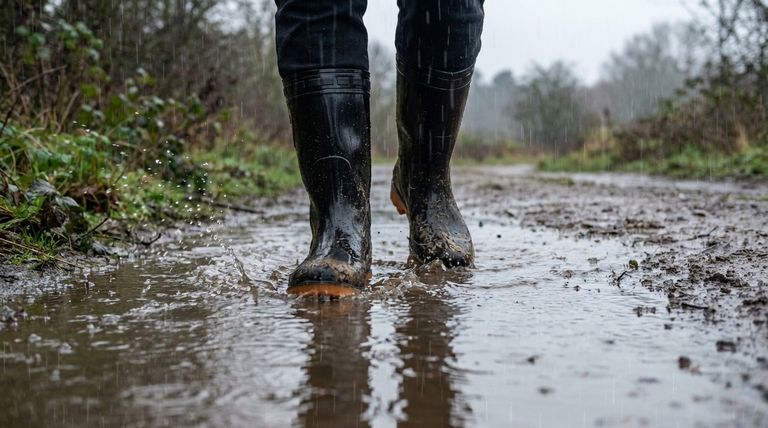
The most significant advantage of a rain boot is its performance against puddles and flooded areas. Its tall, seamless construction allows you to walk through standing water on sidewalks or paths without a second thought.
Water-resistant shoes or low-cut boots will inevitably allow water to seep in over the top or through the laces when submerged.
Defense Against Mud and Grime
Rain boots are the ideal choice for navigating mud, wet soil, or grime. Their non-porous rubber or PVC surface doesn't just block moisture; it's also incredibly easy to hose off and clean.
This makes them essential for activities like gardening, attending outdoor festivals, or walking through soggy fields.
Complete Coverage in a Downpour
During a heavy downpour, rain doesn't just fall from above—it runs down your legs. The height of a typical rain boot prevents this runoff from seeping into your footwear, a common issue with lower-cut shoes.
Ideal Use Cases for Rain Boots
While the core function is simple, its application extends to many common scenarios where other footwear falls short.
The Daily Wet-Weather Commute
For those who walk to public transit or from distant parking lots, rain boots ensure you arrive at your destination with completely dry feet and socks. This simple comfort can set the tone for the entire day.
Outdoor Chores and Recreation
They are the perfect tool for tasks like gardening, washing the car, or walking the dog in a saturated park. Their durability and easy-to-clean nature make them a practical, low-maintenance choice.
Year-Round Versatility
While often associated with spring showers, rain boots can be used year-round. In colder months, pairing them with thick wool or thermal socks provides both waterproofing and insulation.
Understanding the Trade-offs
To use rain boots effectively, you must also understand their limitations. Their specialized design comes with clear trade-offs in comfort and performance.
Lack of Breathability
The same rubber or PVC that makes rain boots waterproof also makes them completely non-breathable. On warm or humid days, your feet can become sweaty and uncomfortable over time.
Limited Support and Traction
Most traditional rain boots offer minimal arch support and cushioning. They are not designed for long-distance walking or hiking. Furthermore, their simple treads may provide poor traction on slick, smooth surfaces or ice.
Inherent Bulkiness
Rain boots are, by nature, bulky and less flexible than other shoes. This makes them less comfortable for driving or for all-day indoor wear once you've arrived at your destination.
Making the Right Choice for Your Goal
Your choice of footwear should always match the specific conditions and your planned activity.
- If your primary focus is navigating deep puddles or muddy fields: A tall rain boot is your most reliable option for complete protection.
- If your primary focus is walking in light rain on paved surfaces: A waterproof sneaker or a well-treated leather boot may offer a better balance of protection and comfort.
- If your primary focus is all-day wear with only a chance of rain: Standard shoes paired with a good umbrella is often the most practical choice, avoiding the breathability issues of waterproof footwear.
Choosing the right footwear is about selecting the right tool for the job, ensuring your feet stay both dry and comfortable.
Summary Table:
| Scenario | Why Rain Boots Excel |
|---|---|
| Standing Water & Puddles | Tall, seamless design prevents water from seeping in over the top. |
| Mud & Wet Soil | Non-porous material provides an impenetrable barrier and is easy to clean. |
| Heavy, Persistent Rain | Height stops runoff from soaking your feet; superior to water-resistant shoes. |
| Outdoor Chores (Gardening, Festivals) | Durable, low-maintenance protection against grime and moisture. |
Need reliable rain boots for your business or bulk orders?
As a large-scale manufacturer, 3515 produces a comprehensive range of durable, high-quality rain boots and other footwear for distributors, brand owners, and bulk clients. Our production capabilities ensure you get the right product for any wet-weather scenario.
Contact us today to discuss your needs and get a quote!
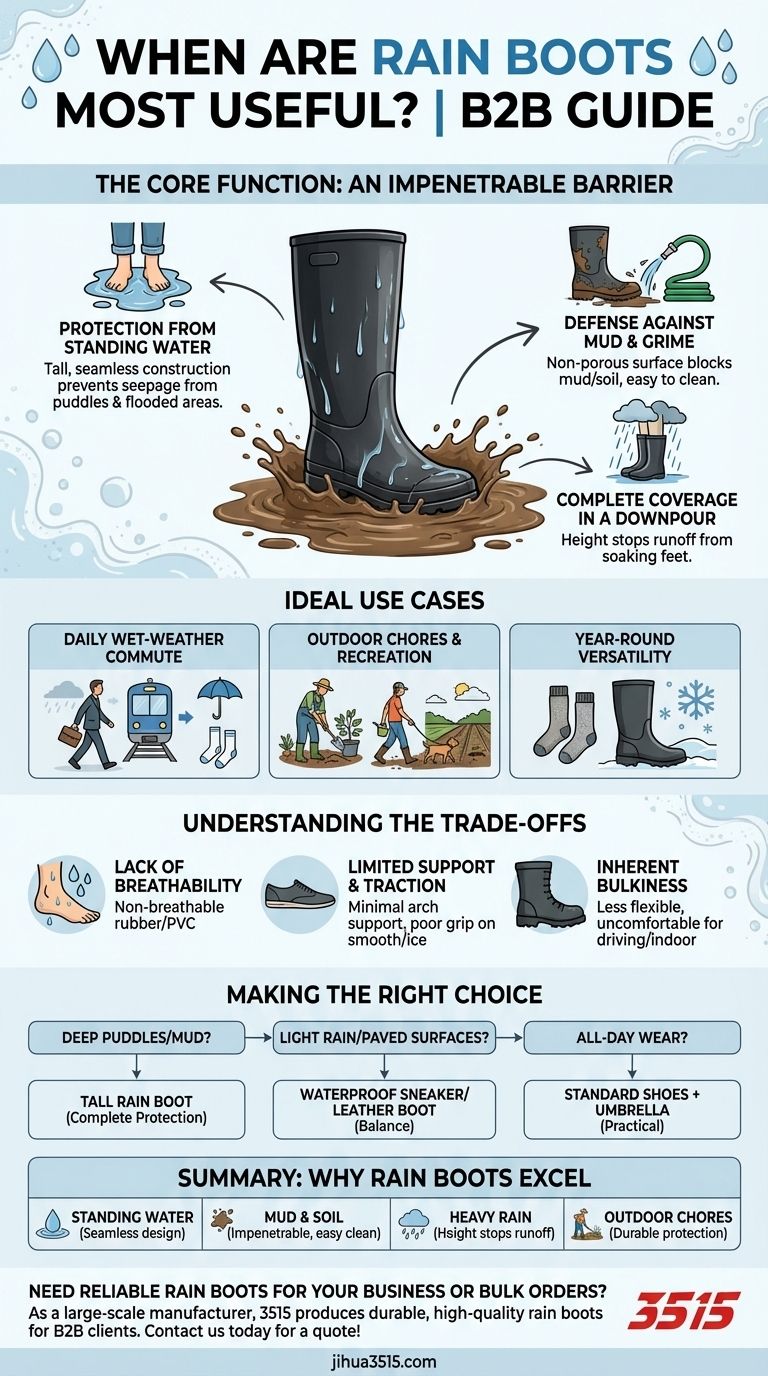
Visual Guide
Related Products
- Factory Direct Wholesale Rain Boots Durable Waterproof & Fully Customizable
- Durable Waterproof Rain Boots | Custom Manufacturer for Wholesale & Brands
- Durable Military Combat Boots with Water Drainage for Wholesale & OEM
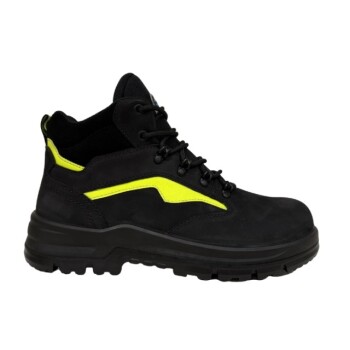
- Premium Wholesale Waterproof Safety Boots High Performance Protection for Industrial Markets
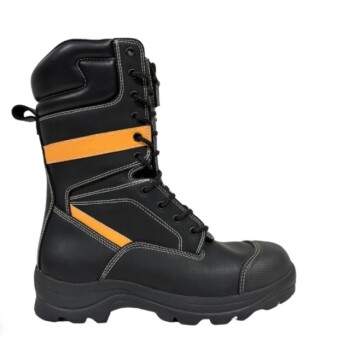
- High Performance Fire-Retardant Waterproof Safety Boots
People Also Ask
- What are the characteristics of rain boots? A Guide to Waterproof Footwear for Every Need
- What factors should be considered when choosing rain boots? Find the Perfect Boot for Your Needs
- What are the main differences between rain boots and snow boots? Choose the Right Boot for Your Climate
- How should one decide between PVC and rubber for rain boots? A Guide to Choosing the Right Material
- Why are rain boots more flexible and comfortable than snow boots? The Key Differences Explained