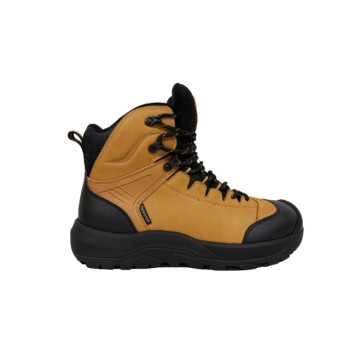
At their core, insulated boots are ideal for cold environments because they are engineered as a complete system. They combine five critical elements: effective insulation for warmth, robust water resistance to block external moisture, breathability to manage internal moisture (sweat), durability for harsh conditions, and reliable traction for safety on snow and ice.
The effectiveness of an insulated boot isn't just about how much insulation it has. It’s about the intelligent balance of keeping external elements out while allowing internal moisture to escape, all while providing a stable, durable platform for your feet.
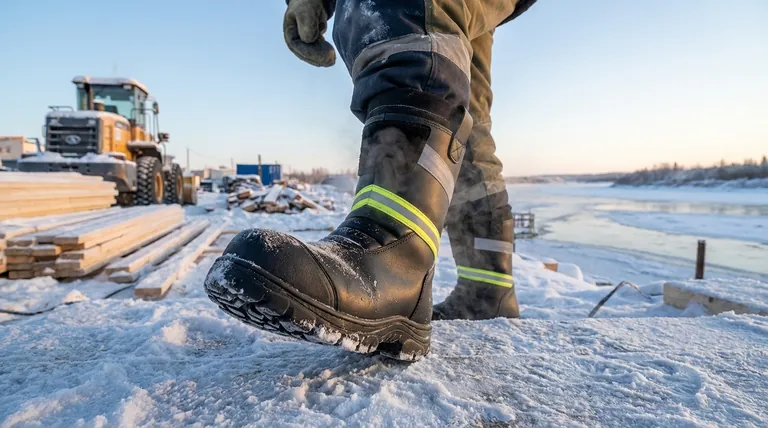
Beyond Warmth: The Core System of an Effective Boot
A common mistake is to focus solely on the insulation rating. In reality, a truly effective cold-weather boot operates as a system where each component supports the others to keep your feet warm, dry, and secure.
The Foundation: Insulation for Thermal Regulation
Insulation's primary job is to slow down heat loss from your feet. It works by trapping a layer of air, which is a poor conductor of heat, between your foot and the cold exterior of the boot.
This thermal barrier is what maintains a comfortable temperature inside the boot, even when the outside temperature plummets.
The Outer Shield: Waterproofing and Durability
Keeping your feet dry from the outside is the first rule of staying warm. Once water penetrates the boot, insulation becomes ineffective, and your feet will get cold rapidly.
Materials like denier Cordura and treated leather, combined with waterproof membranes, create this essential barrier against snow, slush, and water. A durable outsole, often made of polyurethane, adds another layer of protection and longevity.
The Critical Balance: Why Breathability Matters
This is the most misunderstood, yet most crucial, feature. While a boot must keep water out, it must also let perspiration escape.
Your feet sweat, even in the cold. If that sweat vapor is trapped, it will condense, making your socks and feet damp. Wet feet lose heat up to 25 times faster than dry feet.
Effective boots use technology that blocks large water molecules from entering but allows smaller sweat vapor molecules to pass through, ensuring your feet stay dry from the inside out.
The Connection to the Ground: Traction and Stability
Warmth is useless if you can't stay upright. The outsole of a winter boot is designed with deep lugs and specialized rubber compounds that remain flexible in freezing temperatures to grip snow and ice.
Furthermore, a sturdy construction, often extending above the ankle, provides crucial support. This helps prevent twists and sprains on uneven, slippery terrain, adding a vital layer of safety.
Understanding the Trade-offs
No single boot is perfect for every situation. Choosing the right one means understanding the inherent compromises in its design.
Warmth vs. Weight
Heavier insulation provides more warmth but also adds significant weight and bulk to the boot. This can lead to fatigue on long hikes or during high-exertion activities.
Waterproofing vs. Breathability
The most impenetrable waterproof barriers can sometimes limit breathability. For high-output activities like winter running or fast-paced hiking, this can lead to sweaty feet, defeating the purpose of the system.
Durability vs. Flexibility
Extremely rigid and durable boots, like some packer or work styles, offer maximum protection and support. However, this rigidity can feel restrictive and less comfortable for activities that require more ankle flexion, like climbing or hiking on varied terrain.
Selecting the Right Boot for Your Activity
Your choice should be dictated by your specific environment and activity level.
- If your primary focus is extreme cold with low activity (e.g., ice fishing, spectating): Prioritize the highest insulation rating and robust waterproofing, as generating body heat will be minimal.
- If your primary focus is active pursuits (e.g., winter hiking, snowshoeing): Seek a balance of moderate insulation with excellent breathability and a flexible-yet-supportive design to manage sweat and allow for movement.
- If your primary focus is work in wet, cold conditions (e.g., construction, shoveling): Emphasize durability, steadfast waterproofing, and safety features like ankle support and a high-traction outsole.
Ultimately, the right insulated boot is the one that correctly matches its engineered system to the demands you will place upon it.
Summary Table:
| Key Feature | Why It Matters |
|---|---|
| Insulation | Traps body heat to maintain a warm internal temperature. |
| Waterproofing | Creates a barrier against external snow, slush, and moisture. |
| Breathability | Allows sweat vapor to escape, keeping feet dry from the inside. |
| Durability | Withstands harsh conditions and rough terrain for long-term use. |
| Traction | Provides a secure grip on snow and ice to prevent slips and falls. |
Ready to source high-performance insulated boots for your customers?
As a large-scale manufacturer, 3515 produces a comprehensive range of insulated footwear for distributors, brand owners, and bulk clients. Our production capabilities encompass all types of insulated boots, engineered with the perfect balance of warmth, waterproofing, and durability for any cold-weather activity.
Let us help you equip your customers with the right footwear for their needs.
Contact our team today for quotes, catalogs, and custom manufacturing options!
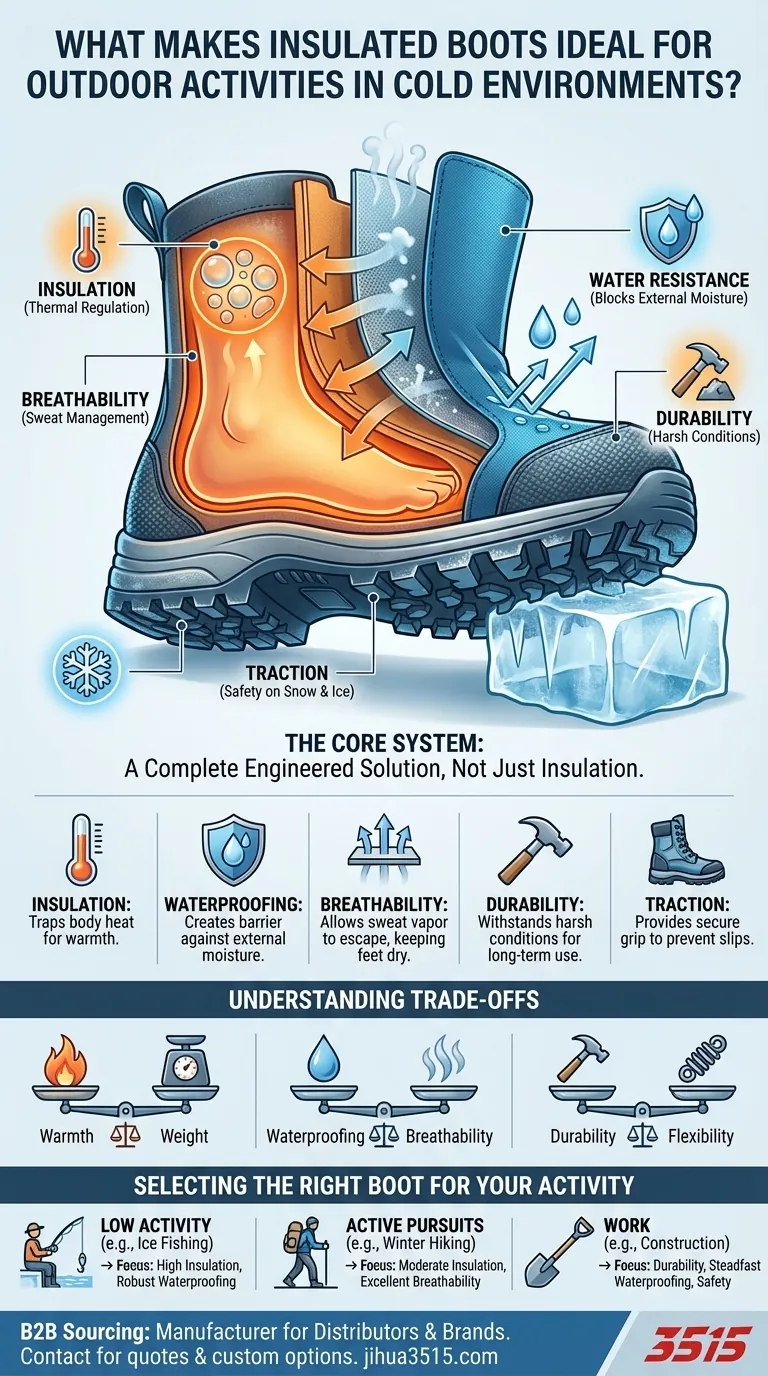
Visual Guide
Related Products
- Premium Insulated Safety Boots and Shoes for Wholesale & Bulk Orders
- Premium Wholesale Waterproof Safety Boots High Performance Protection for Industrial Markets
- High Performance Fire-Retardant Waterproof Safety Boots
- Factory Direct Wholesale Rain Boots Durable Waterproof & Fully Customizable
- Wholesale Waterproof Tactical Boots Custom Suede & High-Traction Soles
People Also Ask
- What are the recommended insulation ratings for mild winter conditions? A Guide for Active & Stationary Workers
- How does insulation thickness correlate with temperature ranges? A Guide to Choosing the Right Warmth
- What insulation level is needed for severe cold and stationary work? 1200g or Higher is Essential
- What safety advantages do insulated boots offer beyond warmth? Dielectric Protection & Superior Grip
- How does fleece lining contribute to the warmth of insulated boots? Trapping Air for Superior Cold Protection