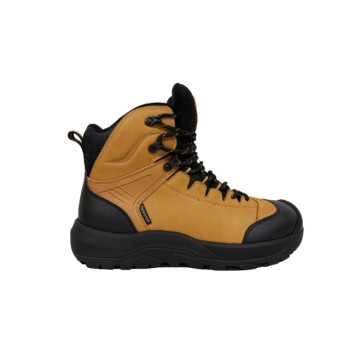
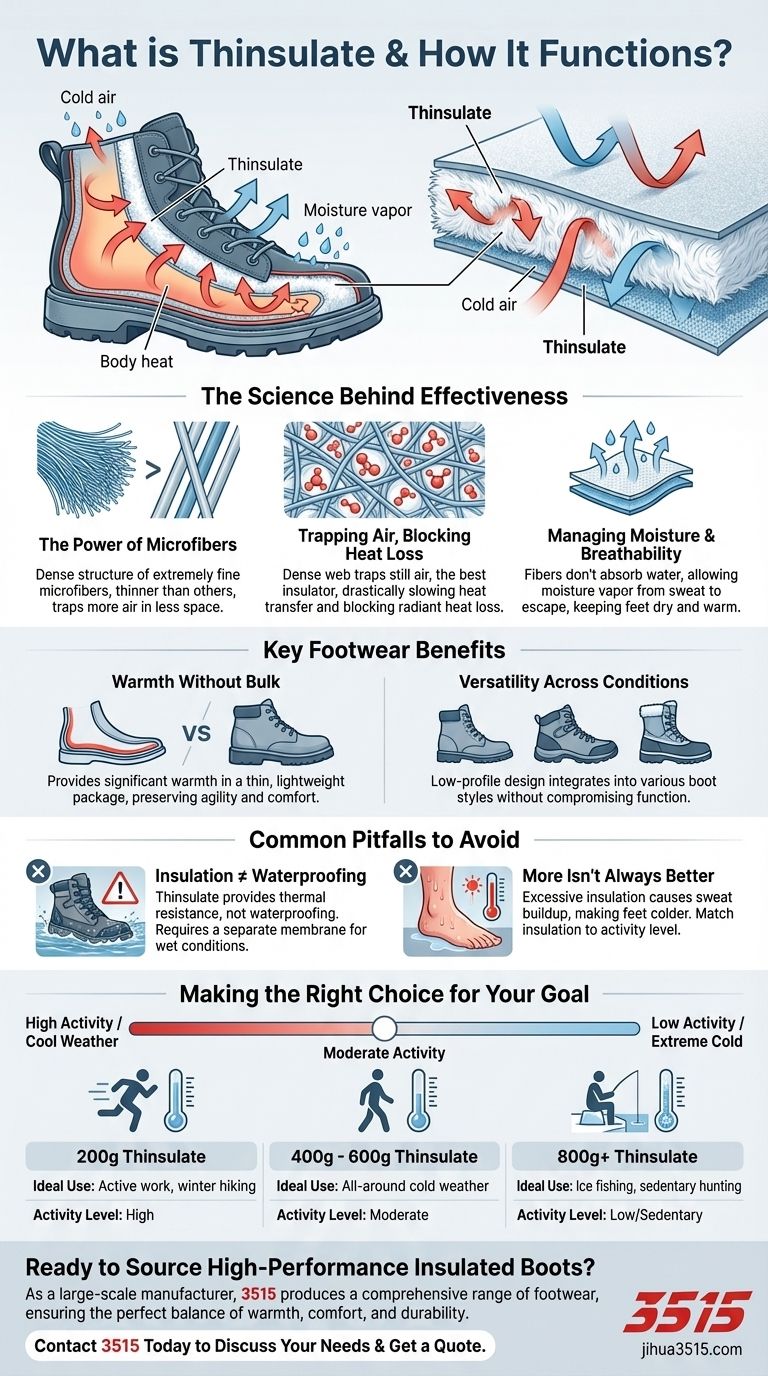
At its core, Thinsulate is a brand of synthetic insulation known for its exceptional warmth-to-thickness ratio. Developed by 3M, it is engineered from extremely fine microfibers that are far thinner than those used in most other synthetic insulations. This dense structure allows it to trap more air in less space, effectively blocking your body's radiant heat from escaping while remaining lightweight and flexible within a boot.
The crucial advantage of Thinsulate in footwear is its ability to provide significant warmth without the restrictive bulk of traditional materials. This preserves boot flexibility and comfort while allowing moisture from sweat to escape, keeping your feet both warm and dry.

The Science Behind Thinsulate's Effectiveness
To understand why Thinsulate is so widely used in performance footwear, we need to look at its specific method of action. It's not just about adding a layer; it's about engineering a highly efficient thermal barrier.
The Power of Microfibers
The key to Thinsulate's performance is the diameter of its fibers. They are exceptionally fine, which allows more fibers to be packed into the same amount of space compared to thicker, more conventional polyester fibers.
This density of fibers creates a vast number of tiny air pockets.
Trapping Air, Blocking Heat Loss
Still air is one of the best insulators. The dense web of microfibers in Thinsulate is incredibly efficient at trapping air molecules between your foot and the cold outside environment.
This trapped air drastically slows down the transfer of heat, keeping the warmth generated by your body from escaping. The material also helps block the loss of radiant heat, which is a primary way our bodies lose warmth in the cold.
Managing Moisture and Breathability
A critical function of any effective boot insulation is its ability to manage moisture. Cold feet are often caused by sweat that cools and chills the skin.
Thinsulate fibers do not absorb water, and their structure allows moisture vapor to pass through and escape from the boot. This breathability is essential for maintaining warmth and comfort during physical activity.
Why This Matters in Footwear
The scientific principles behind Thinsulate translate directly into practical benefits that make it ideal for insulated boots.
Warmth Without Bulk
The most noticeable benefit is the lack of bulk. Traditional insulation required thick, heavy layers to be effective, resulting in stiff and clumsy boots.
Thinsulate provides excellent insulation in a thin, lightweight package, allowing for more agile, comfortable, and better-fitting footwear.
Versatility Across Conditions
Because it is so low-profile, Thinsulate can be integrated into a wide range of boot styles without compromising their intended function.
This includes everything from rugged work boots with composite safety toes to more flexible hiking boots, providing reliable thermal performance across different activities and environments.
Common Pitfalls to Avoid
While Thinsulate is a highly effective technology, its performance depends on the entire boot system and understanding its specific role.
Insulation is Not Waterproofing
A common misconception is that an insulated boot is automatically a waterproof one. Thinsulate provides thermal resistance, but it will not stop external water from soaking your foot.
For wet conditions, you must ensure the boot also features a dedicated waterproof membrane (like GORE-TEX) in addition to the Thinsulate insulation.
More Grams Isn't Always Better
Thinsulate is measured by its weight in grams per square meter (e.g., 200g, 400g, 800g). Choosing a boot with the highest gram weight is a frequent mistake.
Excessive insulation for your activity level will cause your feet to sweat profusely, leading to moisture buildup that can ultimately make your feet colder. The right choice depends on balancing ambient temperature with your expected exertion.
Making the Right Choice for Your Goal
Select the level of Thinsulate insulation that directly matches your activity level and the environmental conditions you will face.
- If your primary focus is high-activity use in cool weather (e.g., active work, winter hiking): Look for boots with around 200g of Thinsulate for breathable warmth that won't cause overheating.
- If your primary focus is all-around cold weather use with moderate activity: A boot with 400g to 600g of Thinsulate offers a versatile balance for most winter conditions.
- If your primary focus is low-activity use in extreme cold (e.g., ice fishing, hunting from a blind): Boots with 800g or more are designed for maximum warmth in sedentary situations.
By understanding how Thinsulate works, you can choose footwear that is precisely engineered to keep you warm, dry, and effective in your specific environment.
Summary Table:
| Thinsulate Gram Weight | Ideal Use Case | Activity Level |
|---|---|---|
| 200g | High-activity in cool weather (e.g., work, hiking) | High |
| 400g - 600g | All-around cold weather with moderate activity | Moderate |
| 800g+ | Low-activity in extreme cold (e.g., ice fishing) | Low/Sedentary |
Ready to source high-performance insulated boots?
As a large-scale manufacturer, 3515 produces a comprehensive range of footwear for distributors, brand owners, and bulk clients. Our production capabilities encompass all types of insulated boots and shoes, ensuring your customers get the perfect balance of warmth, comfort, and durability.
Contact 3515 today to discuss your specific needs and get a quote.
Visual Guide
Related Products
- Premium Insulated Safety Boots and Shoes for Wholesale & Bulk Orders
- High Performance Fire-Retardant Waterproof Safety Boots
- Premium Wholesale Waterproof Safety Boots High Performance Protection for Industrial Markets
- Premium Grain Leather Safety Boots for Bulk Supply
- High-Traction Suede Tactical Boots Wholesale & Custom Manufacturing
People Also Ask
- What are the recommended insulation ratings for mild winter conditions? A Guide for Active & Stationary Workers
- How does insulation thickness correlate with temperature ranges? A Guide to Choosing the Right Warmth
- What insulation level is needed for severe cold and stationary work? 1200g or Higher is Essential
- What safety advantages do insulated boots offer beyond warmth? Dielectric Protection & Superior Grip
- How does fleece lining contribute to the warmth of insulated boots? Trapping Air for Superior Cold Protection