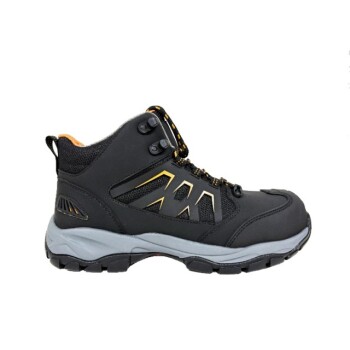
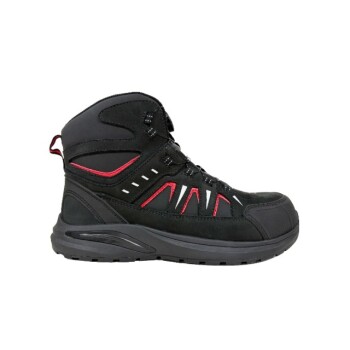
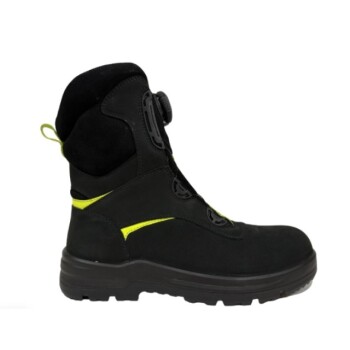
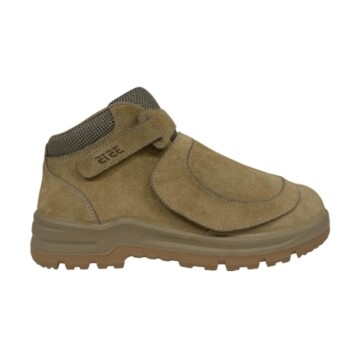
Reinforced ankle support and impact-resistant toe caps serve as the primary mechanical defense system for the foot and lower leg in professional environments. By absorbing and redistributing force during collisions, falls, or crush incidents, these structural components significantly reduce the severity of acute trauma, specifically fractures that lead to prolonged immobility.
The structural importance of these features extends beyond immediate injury prevention; they are critical for minimizing the risk of permanent functional impairment. By preventing complex fractures, high-quality protective footwear directly reduces recovery times and protects long-term career viability.
The Mechanics of Ankle Stabilization
Mitigating Rotational Forces
Reinforced ankle supports are designed to mechanically limit the ankle's range of motion during a traumatic event.
By restricting excessive twisting or rolling, these structures prevent the ligaments and bones from being forced beyond their breaking point.
Absorbing Lateral Impact
In the event of a collision or a fall on hard surfaces, the ankle reinforcement acts as rigid armor.
It dissipates the kinetic energy of the impact, protecting the vulnerable malleolus (ankle bone) from shattering upon contact.
Reducing Fracture Severity
When injuries do occur, structural support helps maintain alignment of the bones.
This distinction is often the difference between a simple hairline fracture and a complex compound fracture requiring surgery.
The Role of Impact-Resistant Toe Caps
Deflecting Blunt Force
Toe caps create a hardened shell around the phalanges (toes), which are highly susceptible to breakage.
This structural rigidity is essential for deflecting falling objects in industrial settings or absorbing frontal impacts in tactical scenarios.
Preventing Crush Injuries
Heavy machinery, vehicles, or debris pose a significant crush hazard in professional environments.
A rigid toe cap maintains the boot's structural integrity under extreme pressure, preventing catastrophic damage to the soft tissue and bone structure of the foot.
Understanding the Trade-offs
Weight vs. Fatigue
The materials required for high-level structural protection, such as steel or heavy composites, add mass to the boot.
Increased weight can lead to faster leg fatigue during long shifts, potentially reducing the wearer's agility over time.
Stiffness vs. Mobility
Rigid ankle supports provide maximum safety against fractures but inherently limit flexibility.
Professionals who need to crouch, run, or climb frequently may find that maximum structural support restricts the natural range of motion required for their specific tasks.
Making the Right Choice for Your Environment
To select the appropriate protective footwear, assess your specific environmental risks.
- If your primary focus is heavy industry or construction: Prioritize maximum impact resistance and crush protection, accepting a heavier boot for superior safety.
- If your primary focus is tactical agility: Seek composite materials that offer structural support while minimizing weight to reduce fatigue.
- If your primary focus is riding or vehicle operation: Ensure the ankle support includes armor capable of sliding protection and preventing twisting during high-speed incidents.
True protection is measured not just by injury prevention, but by the preservation of your long-term mobility and career.
Summary Table:
| Feature | Primary Mechanism | Key Benefit |
|---|---|---|
| Reinforced Ankle Support | Limits rotational range & absorbs lateral kinetic energy | Prevents ligament tears and malleolus fractures |
| Impact-Resistant Toe Cap | Creates a hardened shell to deflect blunt force | Protects phalanges from falling objects and crush hazards |
| Composite Materials | High strength-to-weight ratio | Provides structural safety while reducing user fatigue |
| Structural Alignment | Maintains bone position during impact | Reduces fracture severity and shortens recovery time |
Partner with 3515 for Professional-Grade Footwear Solutions
As a premier large-scale manufacturer serving global distributors and brand owners, 3515 delivers uncompromising safety through advanced engineering. Whether you require our flagship Safety Shoes with superior crush resistance or specialized tactical and work boots, our production capabilities meet the most rigorous industrial standards.
Our Value to You:
- Comprehensive Portfolio: From high-performance sneakers and training shoes to polished Dress & Formal footwear.
- Bulk Manufacturing Excellence: Scalable production tailored to distributors and large-scale brand requirements.
- Expert Engineering: Optimized balance between structural stiffness and wearer mobility.
Ready to elevate your product line with boots built for maximum protection? Contact us today to discuss your bulk requirements.
References
- Linnea Kjeldgård, Emilie Friberg. Sickness absence and disability pension after road traffic accidents, a nationwide register-based study comparing different road user groups with matched references. DOI: 10.1016/j.heliyon.2024.e28596
This article is also based on technical information from 3515 Knowledge Base .
Related Products
- Wholesale Leather Safety Boots with Customizable Protective Toe
- Wholesale Durable Safety Boots | Custom Steel Toe & Puncture-Resistant Manufacturing
- Puncture-Resistant Velcro Safety Boots for Wholesale & Custom Manufacturing
- Wholesale Safety Footwear Manufacturer for Bulk & Custom OEM Orders
- Premium Sport Style Safety Boots for Bulk Orders
People Also Ask
- How do safety boots provide toe protection? A Guide to Steel vs. Composite Caps
- What workplace hazards do safety toe boots protect against? Comprehensive Protection Guide
- What are the OSHA and ASTM standards for safety toe boots? Ensure Your Footwear is Fully Compliant
- What do the symbols M, F, I, and C represent on safety toe boots? Decode ASTM F2413 for Maximum Protection
- What are the different types of safety toe boots available? Choose the Right Protection for Your Job