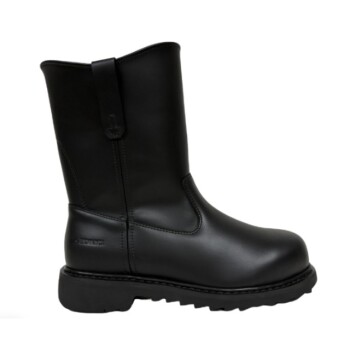
At its core, the design of a cowboy boot heel is a direct reflection of its intended function. The classic, high-angled heel is not merely a style choice; it is a critical safety feature engineered specifically for horseback riding, designed to secure a rider's foot in the stirrup.
The heel of a cowboy boot is the primary indicator of its purpose. The choice between a high, angled riding heel and a low, flat roper heel represents a fundamental trade-off between stability in the saddle and comfort on the ground.
The Original Purpose: A Rider's Tool
The cowboy boot was developed as essential equipment for working on horseback. Its heel was one of the most important innovations, designed to solve a specific and dangerous problem.
Securing the Foot in a Stirrup
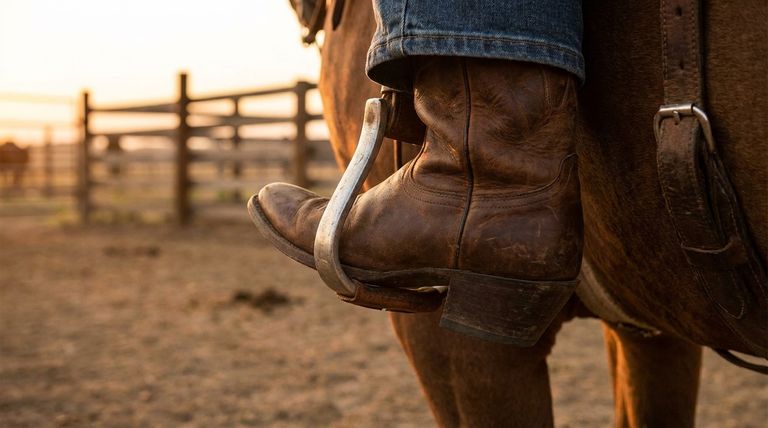
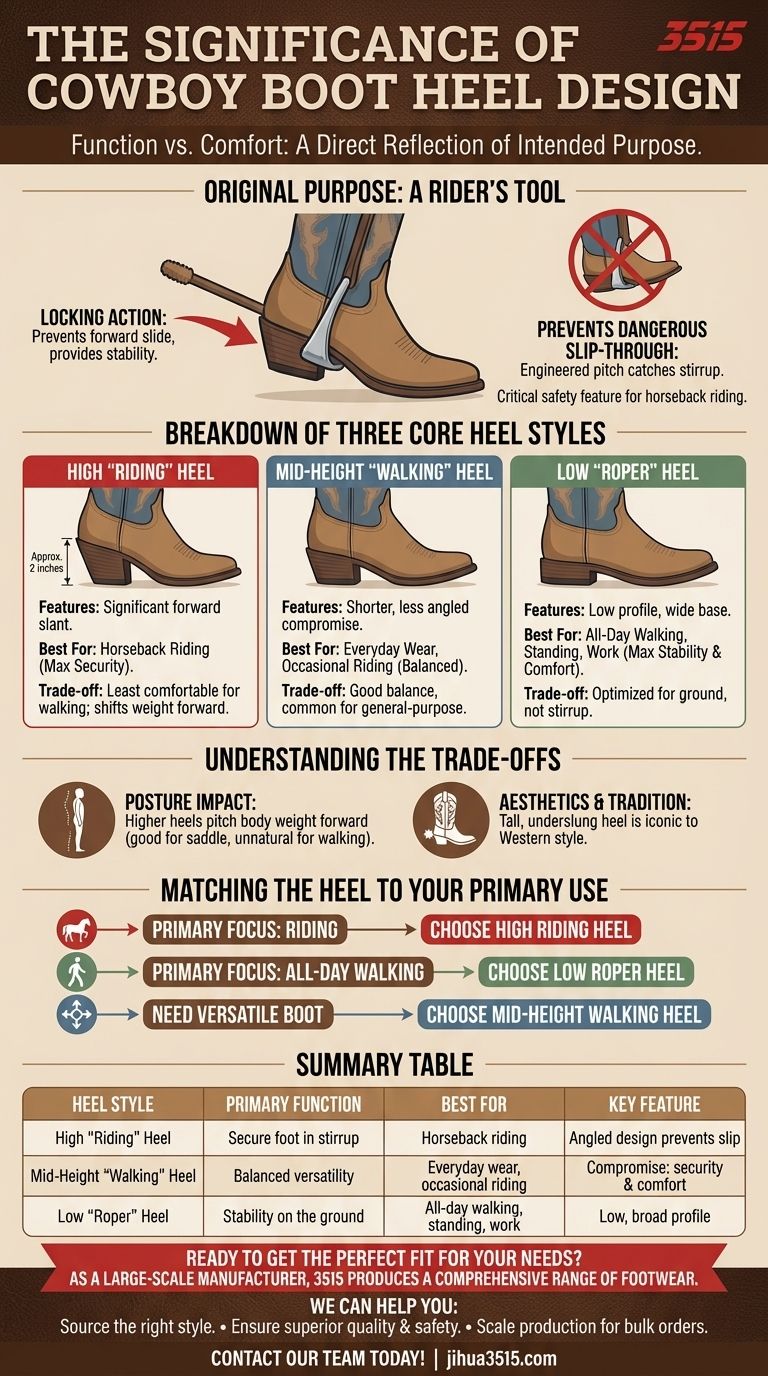
The most significant function of the traditional high, angled "riding" heel is to prevent the boot from sliding forward through the stirrup.
This "locking" action provides the rider with crucial stability and control, especially during abrupt movements or while working.
Preventing a Dangerous Slip-Through
A foot slipping all the way through a stirrup is a major safety hazard. If a rider were to fall, their foot could become trapped, leading to serious injury.
The specific angle, or pitch, of the heel is engineered to catch the back of the stirrup, making this scenario far less likely.
A Breakdown of the Three Core Heel Styles
While the original design was for riding, the modern cowboy boot has evolved to suit various needs. This has led to three distinct heel categories.
The High "Riding" Heel
This is the classic cowboy boot heel, typically around two inches high with a significant forward-slanted angle.
It offers maximum security in the stirrup but is the least comfortable for extended periods of walking, as it shifts your weight forward.
The Mid-Height "Walking" Heel
This heel is a compromise between the two extremes. It is shorter and often less angled than a riding heel.
It provides a good balance for those who may ride occasionally but spend more time on their feet. It is a common choice for general-purpose and fashion boots.
The Low "Roper" Heel
The roper heel is low, broad, and often nearly flat, similar to the heel on a traditional work boot. Its name comes from the rodeo event of "roping," which requires cowboys to dismount quickly and run on foot.
This design offers the most stability and comfort for walking and standing, making it the standard for work-focused Western boots.
Understanding the Trade-offs
Choosing a heel style is about understanding what you gain and what you give up with each design. There is no single "best" heel, only the best one for a specific task.
Function vs. Comfort
The fundamental trade-off is riding safety versus walking comfort. A high, angled heel is optimized for the stirrup, while a low, flat heel is optimized for the ground.
Using a high-heeled riding boot for a full day of walking can cause foot fatigue and alter your natural gait.
Impact on Posture
The stacked design of any cowboy boot heel provides a slight lift that can affect your posture.
A higher heel will pitch your body weight forward, which can be advantageous in a saddle but may feel unnatural during long walks if you are not accustomed to it.
Aesthetics and Tradition
Beyond pure function, the heel is a defining visual element. The tall, underslung riding heel is an iconic look that is central to the traditional Western aesthetic.
For many, the choice is as much about honoring that style as it is about practical application.
Matching the Heel to Your Primary Use
To make the right choice, honestly assess how you will be spending most of your time in the boots.
- If your primary focus is horseback riding: The high, angled riding heel is the correct choice for optimal safety and control in the saddle.
- If your primary focus is all-day walking or standing: The low roper heel will provide the necessary stability and long-term comfort.
- If you need a versatile, everyday boot: A mid-height walking heel offers the best compromise between the classic look and practical comfort.
By understanding its purpose, you can select a heel that truly fits both your foot and your lifestyle.
Summary Table:
| Heel Style | Primary Function | Best For | Key Feature |
|---|---|---|---|
| High 'Riding' Heel | Secure foot in stirrup | Horseback riding | Angled design prevents foot from slipping through |
| Mid-Height 'Walking' Heel | Balanced versatility | Everyday wear, occasional riding | Compromise between riding security and walking comfort |
| Low 'Roper' Heel | Stability on the ground | All-day walking, standing, work | Low, broad profile for maximum ground comfort |
Ready to Get the Perfect Fit for Your Needs?
As a large-scale manufacturer, 3515 produces a comprehensive range of footwear for distributors, brand owners, and bulk clients. Our production capabilities encompass all types of shoes and boots, including specialized cowboy boots with the precise heel design your customers require.
We can help you:
- Source the right style for your target market, from authentic riding heels to comfortable ropers.
- Ensure superior quality and safety in every pair.
- Scale production to meet your bulk order demands efficiently.
Let's discuss your specific requirements. Contact our team today to get started!
Visual Guide
Related Products
- Durable Leather Moc Toe Work Boots for Wholesale & Custom Manufacturing
- Wholesale Durable Safety Boots | Custom Steel Toe & Puncture-Resistant Manufacturing
- Wholesale Customizable Safety Boots Durable & Protective Footwear Manufacturing
- Wholesale Leather Ankle Boots with Lug Soles for Custom Brand Manufacturing
- Wholesale Leather Work Boots with Customizable Wedge Sole for Brands
People Also Ask
- What are moc toe work boots designed for? Superior Comfort and Mobility for Tradespeople
- What are the key features to look for when purchasing moc toe boots? A Guide to Durability & Fit
- How did moc toe boots originate? A Legacy of Workwear Durability and Style
- What clothing items complement the Outdoorsman/Heritage Look with moc toe boots? Build a Timeless, Rugged Wardrobe
- What types of outfits can moc toe boots be worn with? Versatile Style Guide