
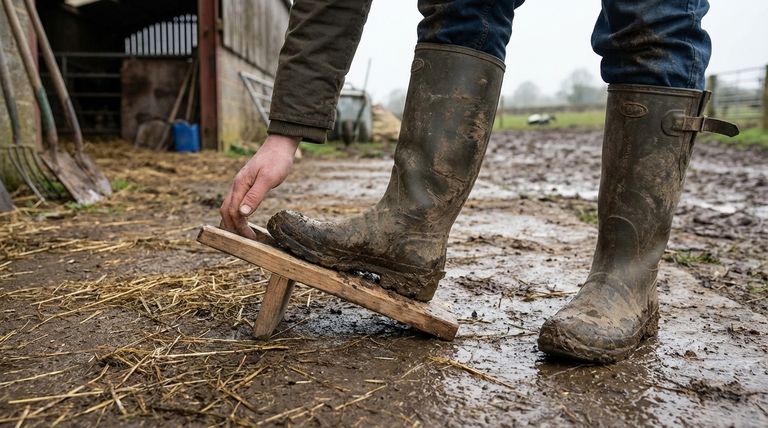
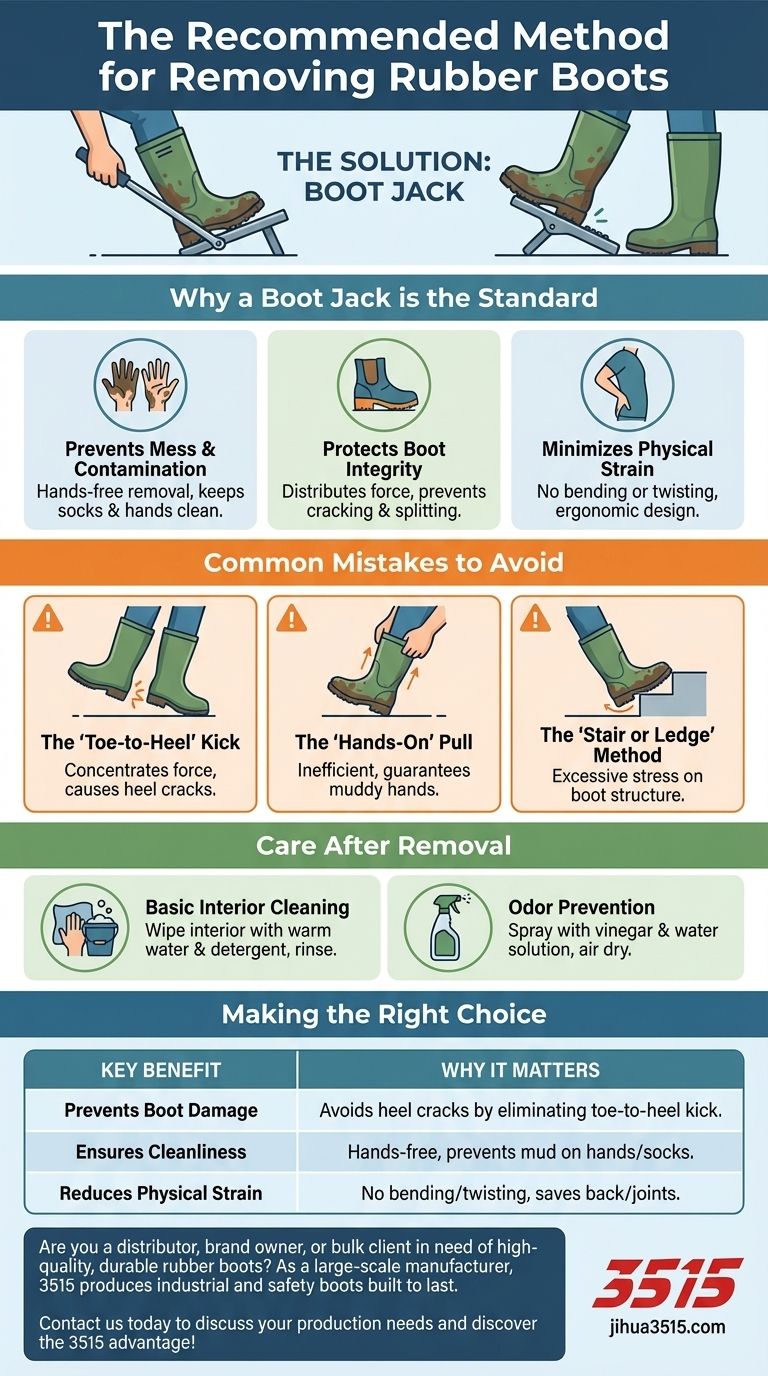
The recommended method for removing rubber boots is to use a boot jack. This simple tool allows you to remove boots in a single, fluid motion without bending over or using your hands, which keeps you clean and prevents damage to the boot itself.
The core challenge with rubber boots is removing them cleanly and without causing long-term damage. The standard solution is a boot jack, which protects the boot's structure, minimizes physical strain, and prevents the transfer of mud and dirt.
Why a Boot Jack is the Standard Method
A boot jack is a Y-shaped tool that provides leverage to remove boots effortlessly. It is considered the best practice for several key reasons.
It Prevents Mess and Contamination
Using a boot jack means you do not have to touch a muddy boot with your hands.
This also prevents you from getting your socks dirty by trying to kick the boot off with your other foot. It's a cleaner, more efficient process.
It Protects the Boot's Integrity
The most common way people damage their boots is by repeatedly pushing on the heel with their other foot. This action puts immense stress on the heel counter.
Over time, this focused pressure can cause the rubber to weaken, crack, and split, significantly shortening the lifespan of your boots. A boot jack distributes the force evenly and safely.
It Minimizes Physical Strain
Bending and twisting to pull off a tight-fitting boot can put unnecessary strain on your back and joints.
A boot jack allows you to remain upright, using simple leverage to slide your foot out with minimal effort.
Common Mistakes to Avoid
Without a proper tool, people resort to methods that can cause damage to their gear or themselves. Understanding these pitfalls highlights the value of the correct technique.
The 'Toe-to-Heel' Kick
This is the most frequent mistake. Prying one boot off with the toe of the other concentrates all the force on a single point on the heel, leading directly to cracks and splits over time.
The 'Hands-On' Pull
Grabbing the boot and yanking it off is not only strenuous but also guarantees muddy hands. This is inefficient and messy, defeating the purpose of wearing protective footwear in the first place.
The 'Stair or Ledge' Method
Using a stair, curb, or trailer hitch to hook the heel and pull your foot out causes the same concentrated damage as the toe-to-heel kick. It puts excessive stress on the boot's construction.
A Note on Care After Removal
Proper removal is the first step in boot maintenance. Once they are off, a quick cleaning ensures they are ready for their next use.
Basic Interior Cleaning
To clean the inside, mix one teaspoon of heavy-duty laundry detergent with two cups of warm water. Wipe the interior with a cloth dampened with this solution.
Follow up by wiping it down again with a second cloth soaked in only warm water to rinse away any soap residue.
Odor Prevention
For persistent odors, you can spray the inside of the boots with a simple solution of equal parts white vinegar and water. Allow them to air dry completely.
Making the Right Choice for Your Goal
Adopting the right technique is simple and has immediate benefits for both you and your equipment.
- If your primary focus is preserving your gear: Use a boot jack to avoid putting stress on the heel, which is the most common cause of splitting.
- If your primary focus is cleanliness and convenience: A boot jack allows for hands-free removal in one motion, preventing muddy hands and socks.
- If your primary focus is avoiding physical strain: Using a boot jack eliminates the need to bend, twist, or pull, making it the easiest and most ergonomic option.
Ultimately, using a boot jack is the definitive method for maintaining your boots and making your daily routine easier.
Summary Table:
| Key Benefit | Why It Matters |
|---|---|
| Prevents Boot Damage | Avoids cracking the heel by eliminating the 'toe-to-heel' kick method. |
| Ensures Cleanliness | Hands-free removal prevents mud and dirt from getting on your hands and socks. |
| Reduces Physical Strain | No bending or twisting required, minimizing strain on your back and joints. |
Are you a distributor, brand owner, or bulk client in need of high-quality, durable rubber boots?
As a large-scale manufacturer, 3515 produces a comprehensive range of footwear built to last. Our production capabilities encompass all types of industrial and safety boots, designed with durability and user experience in mind. Let us help you supply your customers with reliable footwear that stands up to the toughest conditions.
Contact us today to discuss your production needs and discover the 3515 advantage!
Visual Guide
Related Products
- Factory Direct Wholesale Rain Boots Durable Waterproof & Fully Customizable
- Durable Rubber Sole Outdoor Shoes Wholesale & Custom Manufacturing
- Wholesale Durable Camouflage Canvas Shoes with High-Traction Cleated Rubber Sole
- Wholesale Durable Leather Work Boots | 8-Inch Goodyear Welt Manufacturer
- Durable Goodyear Welt Leather Work Boots for Wholesale & Private Label
People Also Ask
- What are the characteristics of rain boots? A Guide to Waterproof Footwear for Every Need
- What factors should be considered when choosing rain boots? Find the Perfect Boot for Your Needs
- What are the main differences between rain boots and snow boots? Choose the Right Boot for Your Climate
- How should one decide between PVC and rubber for rain boots? A Guide to Choosing the Right Material
- Why are rain boots more flexible and comfortable than snow boots? The Key Differences Explained
















