
For optimal comfort, your wellington boots should fit snugly around your heel and calf but leave a small amount of room for your toes to move freely. The best starting point is your standard shoe size, as most wellies are designed to accommodate a reasonably thick sock without needing to size up.
The ideal welly fit is a balancing act: secure enough to prevent your heel from rubbing and lifting, yet spacious enough to allow for insulating air circulation and the socks you intend to wear.

The Core Principles of a Perfect Welly Fit
A proper fit prevents the two most common complaints: blisters from rubbing and cold feet from a lack of circulation. Getting it right involves checking three key areas.
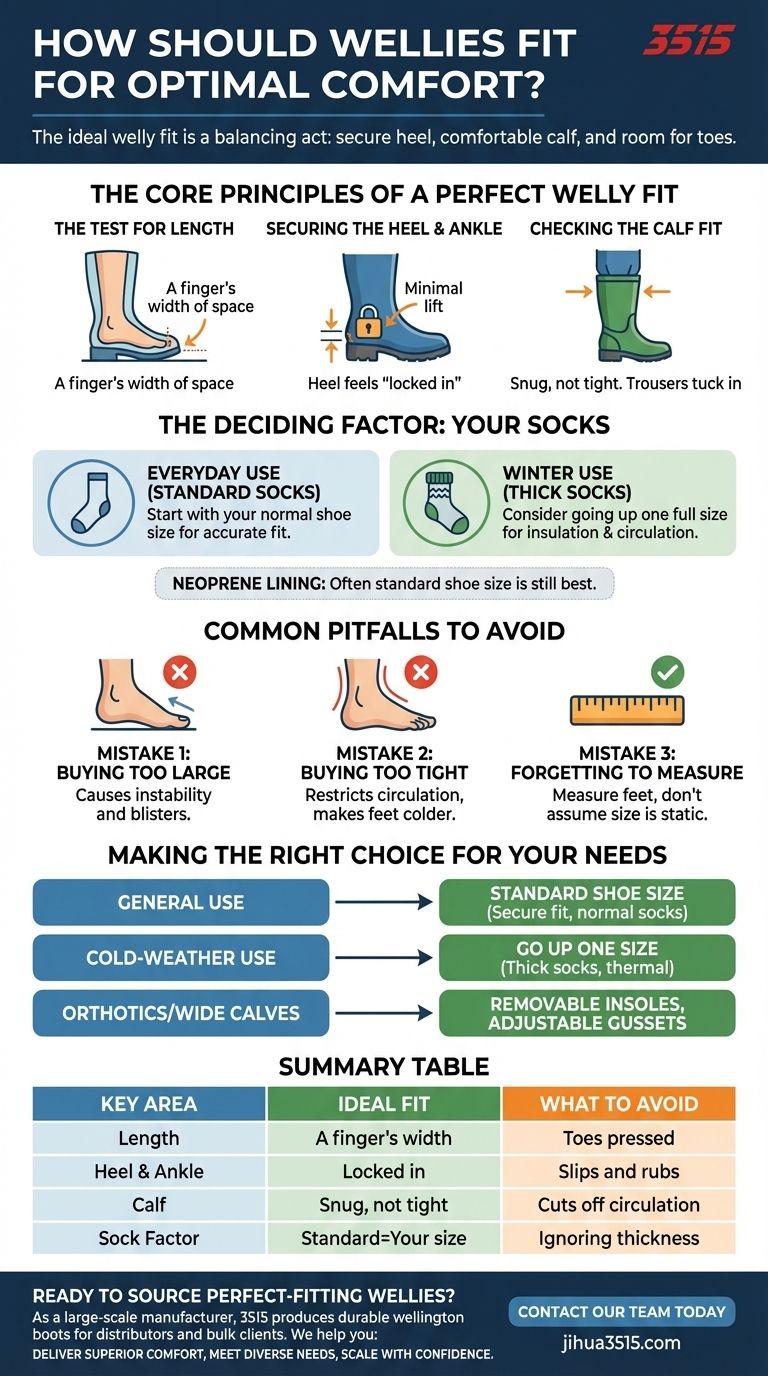
The Test for Length
Your toes should not be pressed against the end of the boot. A good rule of thumb is to have a small gap, roughly a finger's width, between your longest toe and the front of the welly. This prevents discomfort, especially when walking downhill.
Securing the Heel and Ankle
This is the most critical element. Your heel should feel "locked in" with minimal lift as you walk. Too much movement will cause friction and lead to painful blisters. The boot should feel secure around your ankle without being restrictive.
Checking the Calf Fit
The boot should be snug around your calf but not tight. You should be able to tuck your trousers in comfortably without cutting off circulation. If you have wider calves, look for brands that offer adjustable side gussets or wider fit options.
The Deciding Factor: Your Socks
The single biggest variable in choosing a size is the type of socks you will wear most often.
For Everyday Use with Standard Socks
If you plan to wear your wellies for general tasks with regular socks, start with your normal shoe size. This is the baseline manufacturers use and will provide the most accurate fit.
For Winter Use with Thick Socks
If your primary use is for cold weather requiring thick, thermal socks, you may need to go up one full size. This ensures you have enough room to accommodate the extra bulk without compressing the insulation of the sock or restricting blood flow.
The Neoprene Lining Effect
Wellies with a built-in neoprene lining offer significant insulation. They will feel snugger than a standard boot. For these models, your standard shoe size is often still the best choice, as the lining provides warmth without the need for exceptionally thick socks.
Common Pitfalls and How to Avoid Them
Making the wrong choice can lead to immediate regret. Understanding the trade-offs between too loose and too tight is key.
Mistake 1: Buying Too Large
It's tempting to size up for "extra room," but this is a mistake. An oversized boot allows your foot to slide, causing instability on uneven ground and creating significant heel rubbing—the primary cause of blisters.
Mistake 2: Buying Too Tight
A boot that is too tight is not just uncomfortable; it's also colder. The pressure restricts circulation and eliminates the pocket of air around your foot that acts as a natural insulator.
Mistake 3: Forgetting to Measure
Don't assume your shoe size is static. It's wise to measure your foot from heel to toe while standing and compare that measurement to the specific manufacturer's size chart, as sizing can vary between brands.
Making the Right Choice for Your Needs
Use your intended purpose as the final guide for your decision.
- If your primary focus is general, year-round use: Start with your standard shoe size for a secure fit with normal socks.
- If your primary focus is cold-weather wear: Consider going up one size to ensure you can fit thick, thermal socks comfortably.
- If you use custom orthotics or have wider calves: Look for models with removable insoles and check the calf measurements on the brand's size chart before buying.
By prioritizing a secure heel and planning for your typical sock choice, you will find a welly that provides comfort and protection for years to come.
Summary Table:
| Key Area | Ideal Fit | What to Avoid |
|---|---|---|
| Length | A finger's width of space for toes | Toes pressed against the front |
| Heel & Ankle | Heel is locked in with minimal lift | Heel slips and rubs excessively |
| Calf | Snug but not tight, trousers tuck in easily | Cuts off circulation |
| Sock Factor | Standard socks = your shoe size; Thick socks = consider sizing up | Ignoring sock thickness when choosing size |
Ready to Source Perfect-Fitting Wellies for Your Customers?
As a large-scale manufacturer, 3515 produces a comprehensive range of durable and comfortable wellington boots for distributors, brand owners, and bulk clients. Our production capabilities ensure consistent sizing and quality across all types of footwear.
We help you:
- Deliver Superior Comfort: Our boots are engineered for the optimal fit that prevents blisters and keeps feet warm.
- Meet Diverse Needs: We offer a wide variety of styles, including options for wider calves and different sock thicknesses.
- Scale with Confidence: Benefit from our large-scale manufacturing expertise to meet your volume demands reliably.
Let's discuss your specific requirements. Contact our team today to request a catalog and get a quote.
Visual Guide
Related Products
- Durable Waterproof Rain Boots | Custom Manufacturer for Wholesale & Brands
- Durable Goodyear Welt Leather Work Boots for Wholesale & Private Label
- Wholesale Durable Leather Work Boots | 8-Inch Goodyear Welt Manufacturer
- High-Traction Suede Tactical Boots Wholesale & Custom Manufacturing
- Premium Wholesale Tactical Style Safety Shoes Boots with Quick Lacing
People Also Ask
- What are the main materials for waterproof rain boots? Choose the Right Material for Durability & Comfort
- What is the overall recommendation for choosing rain boot materials? A Guide to Rubber vs. PVC
- How does boot height affect waterproofing? Choose the Right Height for Ultimate Protection
- Why are rain boots more flexible and comfortable than snow boots? The Key Differences Explained
- What are the best types of shoes for different gardening conditions? Find Your Perfect Match.



















