When choosing the right size of wellies for a child, you must measure their foot while they are wearing thick socks and ensure there is a small amount of "wiggle room" at the end. The goal is a fit that is secure enough to prevent slipping but spacious enough to accommodate growth and warm layers without restricting movement.
The most common mistake is sizing for the bare foot or for future growth alone. The correct approach balances current comfort and safety with a practical allowance for thick socks and natural growth, ensuring the boot is functional from day one.
The Foundation: Accurate Measurement
Getting the initial measurement right is the most critical step. A child's perception of "feeling right" can be unreliable, so objective measurements provide an essential baseline.
Measure, Don't Guess
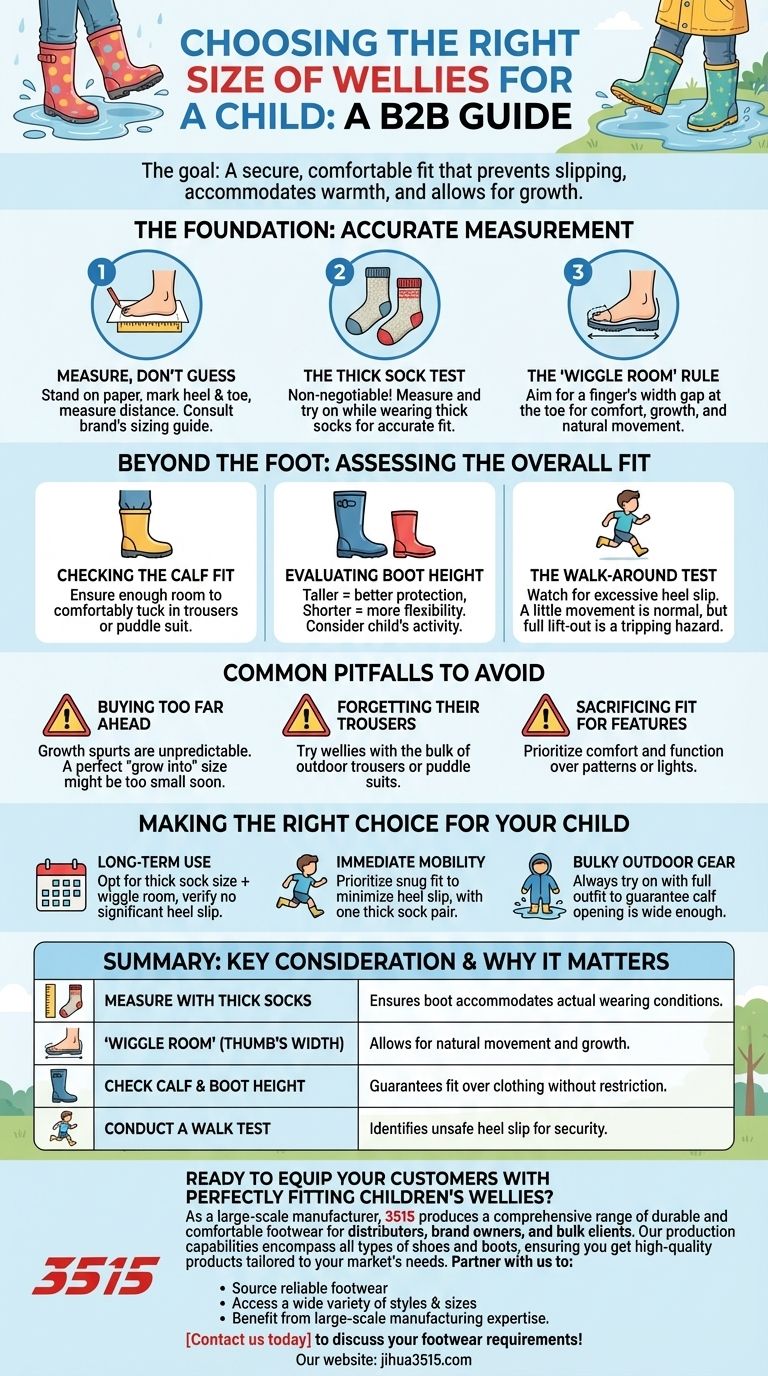
Before you even look at boots, measure your child's foot. Have them stand on a piece of paper and mark the back of the heel and the tip of their longest toe. Use a ruler to measure the distance between the marks.
Always consult the specific brand's sizing guide, as sizes can vary significantly between manufacturers.
The Thick Sock Test
This is a non-negotiable step. Wellies are almost always worn with thicker socks for warmth and comfort.
Have your child wear the type of socks they will most likely use with the boots when you measure their feet and when they try the wellies on. This simple action provides the most accurate assessment of the final fit.
The "Wiggle Room" Rule
A child's foot needs space. The boot should not be tight against the toes.
Aim for a small gap, typically about a finger's width, between the end of your child's longest toe and the front of the welly. This allows for comfort, some growth, and natural foot movement while walking.
Beyond the Foot: Assessing the Overall Fit
A welly that fits the foot but is wrong everywhere else is still the wrong boot. Pay close attention to how the boot interacts with the rest of your child's leg.
Checking the Calf Fit
The top opening of the boot is crucial for both comfort and practicality.
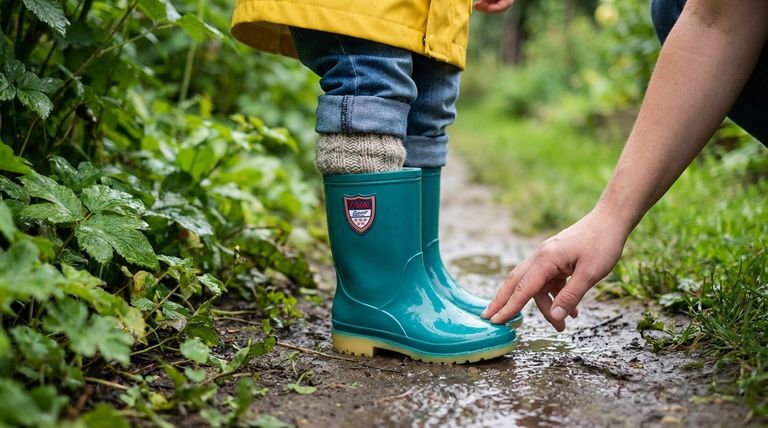
There should be enough room to comfortably tuck in trousers or the bottom of a puddle suit. If the fit is too tight, it will be uncomfortable and difficult to wear with winter clothing.
Evaluating the Boot Height
The height of the welly affects both protection and mobility.
A taller boot offers better splash protection but can sometimes hinder a smaller child's ability to run and bend their knees freely. A shorter boot is more flexible but offers less coverage.
The Walk-Around Test
Never judge the fit while the child is sitting down. Have them walk, jump, and even run a little.
Watch for excessive heel slip. A little movement is normal, but if their heel is lifting completely out of the boot with each step, the wellies are too big and could become a tripping hazard.
Common Pitfalls to Avoid
Parents often make a few common mistakes with the best of intentions. Being aware of them can save you time, money, and discomfort for your child.
Buying Too Far in Advance
It's tempting to buy wellies in an end-of-season sale for the following year, but children's feet grow in unpredictable spurts. A perfect "grow into" size today might be too small in just a few months.
Forgetting Their Trousers
Trying on wellies with shorts or leggings can be misleading. Always consider the bulk of the outdoor trousers or all-in-one suits your child will wear, as this directly impacts the calf fit.
Sacrificing Fit for Features
Fun patterns, light-up heels, and large handles are great, but they cannot compensate for a poor fit. Prioritize comfort and function first; find the fun features in a boot that fits correctly.
Making the Right Choice for Your Child
Use your child's primary activity as your guide to prioritize the different aspects of fit.
- If your primary focus is long-term use: Opt for a size that allows for thick socks plus a little extra wiggle room, but verify there is no significant or unsafe heel slip.
- If your primary focus is immediate mobility for an active child: Prioritize a snugger fit that minimizes heel slip to prevent tripping, while still ensuring comfort with one pair of thick socks.
- If your child wears bulky outdoor gear (like a puddle suit): Always have them try on wellies while wearing their full outfit to guarantee the calf opening is sufficiently wide.
A well-fitted welly is the key to comfortable, confident outdoor adventures.
Summary Table:
| Key Consideration | Why It Matters |
|---|---|
| Measure with Thick Socks | Ensures the boot accommodates the actual wearing conditions for warmth and comfort. |
| "Wiggle Room" (Thumb's Width) | Allows for natural foot movement, accommodates growth, and prevents toes from being cramped. |
| Check Calf & Boot Height | Guarantees the boot fits over trousers or puddle suits without being restrictive. |
| Conduct a Walk Test | Identifies unsafe heel slip, ensuring the boot is secure and won't cause tripping. |
Ready to equip your customers with perfectly fitting children's wellies?
As a large-scale manufacturer, 3515 produces a comprehensive range of durable and comfortable footwear for distributors, brand owners, and bulk clients. Our production capabilities encompass all types of shoes and boots, ensuring you get high-quality products tailored to your market's needs.
Partner with us to:
- Source reliable footwear that prioritizes safety and comfort for young adventurers.
- Access a wide variety of styles and sizes to meet diverse customer demands.
- Benefit from our large-scale manufacturing expertise for consistent quality and competitive pricing.
Contact us today to discuss your footwear requirements and place your order!
Visual Guide
Related Products
- Lightweight Breathable Sneakers with Wet-Traction Grip for Wholesale & Private Label
- Wholesale Lightweight Cushioned Athletic Sneakers for Custom Bulk Production
- Wholesale Breathable Athletic Sneakers - Custom Lightweight Cushioned Footwear Manufacturer
- Lightweight Breathable Training Shoes for Wholesale & Custom OEM Manufacturing
- Durable Waterproof Rain Boots | Custom Manufacturer for Wholesale & Brands
People Also Ask
- Why are breathable sneakers necessary for tropical commuting? Stay Cool and Dry in High Humidity
- What role do lightweight training shoes play in urban traffic? Boost Agility and Reaction for Safer City Navigation
- How do lightweight shoes provide support? The Science of Efficient Cushioning & Stability
- How do lightweight shoes improve breathability? Discover the Science of Cool, Dry Feet
- How do lightweight shoes contribute to healthier feet? Reduce Fatigue & Prevent Foot Problems